
Privacy, Zoning & Spatial Planning for Better Acoustic Comfort
A practical guide to acoustic privacy and spatial planning, covering zoning, room adjacency, thresholds, circulation paths, buffer spaces, doors, shared walls and the planning decisions that reduce acoustic conflict before construction details are finalised.


.avif)
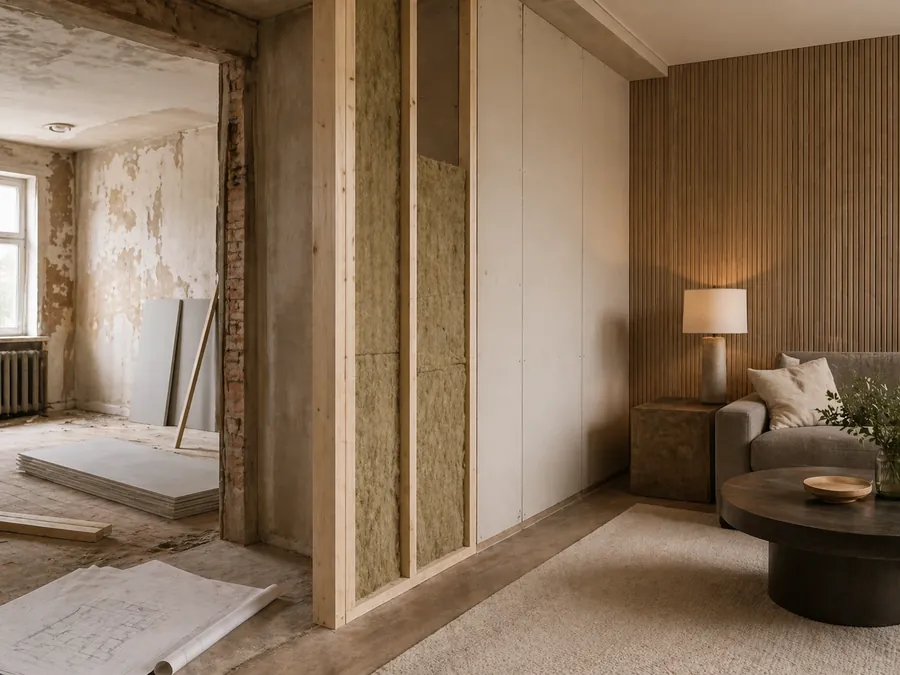
Acoustic privacy begins with the plan
Acoustic privacy is often treated as a wall or door problem. A room is too noisy, so the first instinct is to upgrade the partition, add seals or install treatment.
Those details can be important, but many privacy problems begin earlier. They begin with the plan.
Where rooms are placed, how they connect, what sits between them, where doors open, how circulation moves and how noisy and quiet uses are grouped together all affect acoustic comfort. A wall can only do so much if the plan creates direct sound paths, poor adjacencies or no buffer between incompatible uses.
Good acoustic privacy is not only about stopping sound. It is about organising space so sound has fewer opportunities to become a problem.
This is where zoning and spatial planning become powerful acoustic tools. They reduce conflict before technical detailing is required.
Privacy is not the same as silence
Acoustic privacy does not always mean complete silence. In most homes, workplaces, schools, hospitality spaces and shared environments, that would be unrealistic and unnecessary.
Privacy is more often about reducing intrusion, improving separation and creating enough acoustic distance between activities. A bedroom does not need to be completely silent, but it should feel protected from ordinary living noise. A meeting room does not need to block all sound, but confidential speech should not be easily understood outside. A study area does not need to be isolated like a studio, but it should not sit directly in the path of constant household activity.
Acoustic privacy is about appropriateness. The level of separation should match the use of the room.
A good plan recognises which spaces need quiet, which spaces create noise and which spaces can sit between them.
Zoning separates compatible and incompatible uses
Zoning is one of the most important acoustic planning tools. It groups compatible activities and separates uses that are likely to conflict.
In a home, active zones might include kitchens, living rooms, play areas, laundries and media rooms. Quiet zones might include bedrooms, studies, nurseries and retreat spaces. In a workplace, collaboration areas, meeting rooms, focused work areas and social spaces all have different acoustic needs. In a school, classrooms, corridors, music rooms, breakout spaces and sensory-sensitive rooms need careful relationships.
Good zoning does not always require more walls. It can use distance, orientation, thresholds, storage, corridors, level changes, joinery or changes in material character.
The aim is to reduce acoustic conflict by design. The more the plan separates incompatible uses, the less pressure is placed on walls, doors and treatments later.
Room adjacency is one of the biggest acoustic decisions
Which rooms sit beside each other matters.
A bedroom beside a bathroom may be exposed to plumbing noise. A study beside a kitchen may be affected by appliance and conversation noise. A media room next to a bedroom may create low-frequency disturbance. A meeting room beside an open office may struggle with speech privacy. A music practice room beside a neighbour may create isolation challenges.
Some adjacencies are low risk. Others need stronger planning or construction.
Where a difficult adjacency is unavoidable, the design can still respond. A wardrobe can sit between the bed and the shared wall. A corridor can separate a meeting room from an open workspace. A store room can buffer a music room. A lobby can improve privacy at a consulting room. A laundry can be moved away from a sleep zone.
Good acoustic planning identifies these relationships before the room layout is fixed.
Buffer spaces can do quiet acoustic work
Buffer spaces are one of the most elegant ways to improve acoustic comfort. They create distance and separation without necessarily looking like acoustic measures.
Wardrobes, storage rooms, corridors, pantries, bathrooms, lobbies, service spaces, joinery zones and utility areas can all act as buffers between noisy and quiet spaces.
In a bedroom, a wardrobe wall can help separate the bed from a shared wall or hallway. In a workplace, a small lobby can reduce direct speech transmission from a meeting room. In a studio, storage can sit between a music space and a sensitive neighbour. In a school, circulation and support rooms can help separate loud and quiet learning areas.
A buffer does not replace proper wall or door design when high performance is required, but it can reduce the burden on those details.
The best buffer spaces feel like natural parts of the plan.
Door placement can make or break privacy
Doors are often the weakest acoustic part of a room. Their placement can also create direct sound paths.
A bedroom door opening directly into a living area will usually feel less private than one approached through a corridor or threshold. A meeting room door facing an open desk area may leak speech more directly. A consulting room with a door beside a waiting area may need careful sealing and orientation. A media room with a door near the speakers may leak more sound into adjoining spaces.
The door leaf, frame, seals and undercut all matter, but so does the door’s position.
Sometimes a small planning move can improve privacy significantly: turning a door, adding a short return, creating a lobby, offsetting openings or avoiding direct line-of-sight between noisy and quiet zones.
Door placement is an acoustic decision as well as a circulation decision.
Thresholds create acoustic transition
A threshold is the moment of transition between spaces. It might be a doorway, lobby, corridor, stair landing, change in ceiling height, joinery edge, curtain, screen or material shift.
Thresholds help signal a change in use. Acoustically, they can also reduce direct sound transfer and create a sense of separation.
A soft threshold between a living area and bedroom wing can improve the feeling of retreat. A lobby between a waiting room and consulting room can support confidentiality. A vestibule outside a studio can reduce leakage. A transition zone between a workplace café and focused work area can reduce acoustic shock.
Thresholds do not need to be heavy or obvious. They can be spatial, material or architectural. Their value is that they slow down direct acoustic connection.
Circulation paths carry sound
Circulation spaces are not acoustically neutral. Corridors, stairs, open halls, galleries and voids can all carry sound through a building.
An open stair can connect living noise to bedrooms above. A long corridor can transmit voices and footfall. A central hallway can expose bedrooms to front-door activity. An atrium can allow sound to travel between levels. A workplace circulation spine can carry social noise past focus areas.
Circulation needs to be considered as part of the acoustic plan.
Where privacy matters, the design can use turns, offsets, doors, soft finishes, thresholds, absorption or changes in geometry to reduce direct sound paths. Circulation can remain open and generous, but it should not accidentally become the main acoustic corridor of the building.
Open-plan spaces need internal zoning
Open-plan rooms are not acoustically simple just because they have fewer walls. They often contain several uses at once: kitchen, dining, lounge, study, media, play, circulation and entertaining.
Without internal zoning, sound from one activity can dominate the entire space. Cooking noise affects television. Dining conversation affects study. Children’s play affects work. Media sound affects quiet corners.
Internal zoning can improve comfort without closing the room down. Rugs, ceiling changes, curtains, furniture layout, screens, shelving, joinery, soft seating and lighting can all help define acoustic zones.
The goal is not to make open-plan spaces silent. It is to make them more legible and less acoustically chaotic.
Bedrooms need acoustic retreat
Bedrooms are among the most privacy-sensitive rooms in a home. They are used for sleep, recovery, dressing, rest and sometimes work or study. They need separation from activity.
Bedroom acoustic planning should consider adjacency to living rooms, kitchens, laundries, bathrooms, stairs, entries, common corridors, external noise sources and neighbouring dwellings.
A bedroom placed behind a wardrobe buffer, away from the main living area and with a carefully positioned door is starting from a stronger acoustic position than one placed directly beside a noisy zone. Door seals, wall construction and glazing can then build on that planning advantage.
Acoustic retreat is created by both layout and detail.
Studies and work rooms need more than quiet walls
A study, home office or focus room may not need full isolation, but it does need protection from distraction.
Noise can enter through doors, open circulation paths, nearby kitchens, living rooms, children’s areas, external windows or shared walls. If the room is visually connected to the active parts of the home, it may also feel less acoustically private even when the sound level is moderate.
Good planning can help by placing study areas away from the highest activity zones, using doors or thresholds, adding soft finishes and avoiding direct connection to kitchens, laundries or play spaces.
A study nook in an open-plan room can work well for light use, but serious focus usually benefits from stronger spatial separation.
Bathrooms, laundries and services need careful placement
Bathrooms, laundries and service areas can create noise through plumbing, fans, pumps, washing machines, dryers, cupboards, doors and hard finishes.
When these rooms sit beside bedrooms, studies, consulting rooms or quiet areas, acoustic conflict can occur. The issue may not be loudness alone. It may be intermittent sounds: pipes, taps, drainage, extraction, washing cycles or door activity.
Spatial planning can reduce this by placing services away from quiet zones, using buffers, locating plumbing on less sensitive walls, coordinating wall build-ups and avoiding direct adjacency where possible.
If adjacency is unavoidable, the construction and services detailing need to respond accordingly.
Media rooms and music spaces need separation from quiet zones
Media rooms, home theatres, listening rooms, music practice rooms and studios create more acoustic risk than ordinary living spaces. They often involve amplified sound, bass, repeated use or higher sound levels.
These rooms should be located carefully. Placing a media room directly beside or below a bedroom can create problems, especially with low-frequency sound. Placing a music room against a neighbour boundary may require much more serious isolation. Placing a studio in an asymmetrical or shared space may compromise both internal performance and neighbour impact.
The best planning move is often to locate these rooms where the building can support them: away from bedrooms, buffered by storage, separated from neighbours where possible and designed with services, doors and structure in mind.
Specialist rooms need specialist spatial thinking.
Speech privacy depends on the full sound path
Speech privacy is a common concern in workplaces, clinics, consulting rooms, meeting rooms, schools, homes and shared buildings.
It is not created by a partition alone. Speech can travel through doors, ceiling cavities, glazing, ventilation paths, corridors, floor junctions and poorly sealed openings. It can also be affected by the background noise level outside the room.
A meeting room with a high-rated wall but a poorly sealed door may still leak speech. A consulting room with a shared ceiling cavity may not provide confidentiality. A bedroom with a weak door and direct corridor exposure may feel less private than expected.
Planning should consider the whole sound path: source room, separating elements, receiver location, openings and background conditions.
Privacy can be visual and acoustic
Visual privacy and acoustic privacy often work together, but they are not the same.
A glass meeting room may appear enclosed but provide poor speech privacy. A bedroom behind a curtain may feel visually screened but not acoustically separated. A study nook may feel tucked away visually but still receive sound from the whole living area.
Acoustic privacy requires attention to sound paths, not only sightlines.
This matters because many modern interiors use transparency, openness and visual connection as design values. Those qualities can work beautifully, but they need acoustic planning if privacy is also expected.
A room can be visually connected and acoustically moderated, but the design needs to make that intention clear.
Shared buildings need spatial realism
Apartments, terraces, townhouses and shared buildings place different uses close together. This increases the importance of zoning and spatial planning.
A neighbour’s bedroom may be on the other side of a wall. A living room may sit above another apartment. A corridor may run past bedrooms. A service riser may connect multiple levels. A balcony may expose adjacent rooms to outdoor conversation.
In shared buildings, acoustic privacy is often constrained by construction and strata limitations. Good planning becomes even more important because there may be less freedom to correct problems later.
Where possible, noisy uses should be located away from sensitive boundaries. Where that is not possible, wall, floor, ceiling, façade and door details need to be considered early.
Renovations can improve zoning, not just finishes
Renovation projects often focus on surfaces: new flooring, joinery, bathrooms, kitchens and finishes. But they can also improve acoustic zoning.
A renovation might move a door, add a lobby, create a bedroom buffer, rework a hallway, relocate a laundry, add storage between rooms or change how a living space connects to bedrooms. These planning changes can sometimes improve acoustic comfort more effectively than finishes alone.
This is especially useful in older homes where room relationships were not designed for modern open-plan living, media use, home offices or shared occupancy.
A renovation is an opportunity to reconsider how sound moves through the home.
Acoustic treatment is not a substitute for poor zoning
Acoustic treatment can reduce reverberation and improve the sound inside a room, but it cannot fully compensate for poor spatial planning.
Panels in a living room will not make a bedroom private if the door opens directly into the noise source. A rug will not isolate a media room from a bedroom below. Curtains may soften a glazed space but not solve a badly placed meeting room beside a quiet workstation. Absorption in a corridor may help, but it may not fix a direct speech path through an unsealed door.
Treatment is useful, but it works best when the plan already supports the acoustic goal.
The first acoustic tool is often not a product. It is the plan.
Construction details still matter
Planning can reduce acoustic conflict, but construction still matters. Walls, doors, glazing, floors, ceilings, seals, services and junctions all contribute to privacy and separation.
Good zoning does not remove the need for appropriate detailing. Instead, it makes detailing more effective and often less extreme.
A well-located bedroom may still need a solid door and good seals. A meeting room may still need suitable wall construction. A studio may still need isolation. A quiet room may still need services control.
The best acoustic outcomes come from planning and detailing working together.
Buildability should guide the planning strategy
Some acoustic planning ideas are elegant but difficult to build. Others are simple and highly effective.
A buffer zone may be more buildable than a high-performance wall. A door relocation may be more effective than a complex seal retrofit. A ceiling treatment may be easier than treating several walls. A joinery buffer may provide both storage and acoustic benefit. A services relocation may prevent future noise issues.
Buildability should be considered early. The aim is not to create theoretical separation, but a practical room relationship that can be delivered within the project’s structure, budget and construction sequence.
Acoustic planning becomes valuable when it is realistic.
When to get acoustic advice
It is worth getting acoustic advice when a project includes privacy-sensitive rooms, open-plan layouts, bedrooms near active spaces, meeting rooms, consulting rooms, studios, music rooms, shared walls, apartments, workplaces or renovations where room relationships are still flexible.
Advice is especially useful before finalising the plan. At that stage, room locations, door positions, thresholds, circulation paths and buffer spaces can still be adjusted.
An early acoustic review can identify likely privacy risks and suggest planning moves before the project relies on more expensive construction fixes.
Final thought
Acoustic privacy is not created by one wall, one door or one material. It is created by the relationship between spaces.
Zoning, adjacency, circulation, thresholds, buffers, openings, services and construction all influence how private, calm and comfortable a space feels.
The strongest acoustic planning begins before the details are drawn. It asks which spaces need quiet, which spaces create sound and how the architecture can reduce conflict naturally.
When privacy is designed into the plan, acoustic comfort becomes easier to achieve, easier to build and easier to live with.
Frequently Asked Questions
Acoustic Privacy, Zoning & Spatial Planning Advice
Design-led acoustic input for room relationships, privacy, planning, thresholds and buildable separation strategies.
Acoustic Privacy, Zoning & Spatial Planning Advice
Design-led acoustic input for room relationships, privacy, planning, thresholds and buildable separation strategies.
Read Nicholas Marriott's bio