
Apartment, Boundary & Neighbour Noise in Sydney: What Can Actually Be Improved?
A practical guide to apartment, boundary and neighbour noise in Sydney, explaining airborne noise, impact sound, flanking paths, strata constraints, wall and ceiling upgrades, glazing, doors and when an acoustic consultation is worthwhile.


.avif)
Apartment and neighbour noise needs diagnosis before solutions
Neighbour noise can be one of the most frustrating acoustic problems in a home because it feels personal, unpredictable and difficult to control. It may affect sleep, privacy, concentration, relaxation or the basic sense that a home should feel like a retreat.
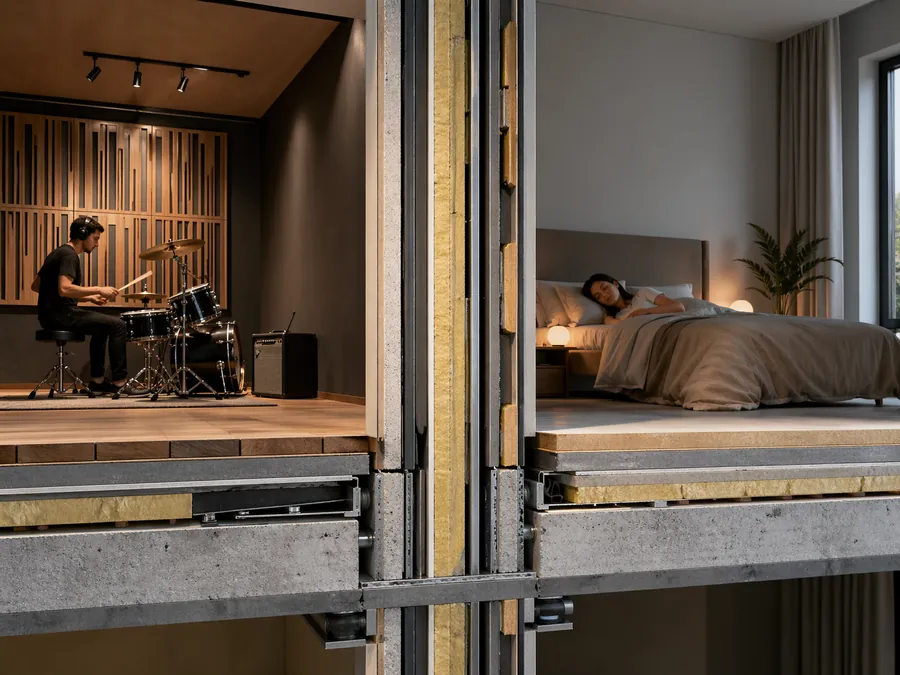
In Sydney apartments, terraces, townhouses and homes on tight boundaries, noise can travel through walls, floors, ceilings, windows, doors, balconies, service risers, building structure and external spaces. The source may be obvious, but the sound path is not always simple.
That is why a good acoustic response starts with diagnosis. Before deciding whether to upgrade a wall, ceiling, window or door, it is important to understand what kind of noise it is, where it is coming from and how it is entering the room.
The right solution depends on the sound path. The wrong solution can be expensive and disappointing.
Not all neighbour noise is the same
Neighbour noise is often described as one problem, but it can involve several different acoustic behaviours.
Airborne noise includes voices, television, music, dogs, traffic, outdoor activity and general living noise. It travels through air and enters a room through weak walls, doors, windows, gaps, ceilings, floors and openings.
Impact noise includes footsteps, dropped objects, scraping furniture and movement from above. It usually travels through the building structure before radiating into the room below or beside it.
Structure-borne noise can come from plumbing, mechanical plant, garage doors, pumps, lifts, subwoofers or vibration. It may be felt as much as heard.
External boundary noise can come from neighbours’ outdoor areas, pool equipment, air conditioning units, driveways, courtyards, laneways, roads or shared side passages.
Each of these noise types needs a different response. Acoustic panels, for example, may help reduce echo inside your own room, but they will not usually stop footstep noise from above or voices coming through a weak wall.
The first question is: where is the weakest path?
Sound usually finds the weakest path. That may be the wall, but it could also be a door, window, ceiling, floor, riser, duct, skirting junction, service penetration or shared structure.
A common mistake is to assume that the largest surface must be the problem. In practice, a small gap, a lightweight door or an untreated flanking path can undermine a much larger wall or ceiling.
For example, if neighbour voices are heard through a bedroom wall, the party wall may be weak. But sound may also be travelling through the ceiling cavity, floor junction, built-in robes, power outlets or adjacent façade. If only the obvious wall is treated, the improvement may be less than expected.
This is why site context matters. The building needs to be understood as a system, not as isolated surfaces.
Airborne noise through walls
Airborne noise through shared walls is one of the most common apartment and townhouse issues. Voices, television and music may be heard from neighbouring rooms, corridors or adjoining dwellings.
Possible upgrades can include independent wall linings, additional mass, resilient systems, cavity insulation, sealing and careful junction detailing. But the right solution depends on the existing wall construction and the surrounding paths.
A simple layer of plasterboard may not be enough. A poorly detailed wall lining can underperform if it is rigidly connected, unsealed or interrupted by services. Power points, skirtings, wardrobes, ceiling junctions and side-wall connections can all affect the result.
The aim is not simply to make the wall thicker. The aim is to improve the acoustic separation of the wall system and its weak points.
Impact noise from above is more difficult
Footstep noise from an apartment above is one of the hardest residential noise problems to solve from below. This is because impact sound is usually generated in the floor structure above and then transmitted through the slab, ceiling, walls and building frame.
The most effective impact noise control is usually at the source: the floor above. This might involve acoustic underlay, carpet, resilient flooring systems or better floor construction. But if the floor above is controlled by another owner, strata or an existing build, that may not be possible.
Ceiling upgrades from below can sometimes help, but they need realistic expectations. A resilient ceiling system may reduce some transmitted noise, but it may not fully address structure-borne impact, especially in lightweight or complex buildings.
This is where acoustic advice is valuable. It can help identify whether a ceiling upgrade is likely to be worthwhile or whether the main issue needs to be addressed through the floor above, strata process or building management.
Flanking paths can limit the result
Flanking paths are indirect sound paths. They allow sound to travel around the element that has been upgraded.
For example, a party wall may be upgraded, but sound may still pass through the ceiling cavity, façade junction, floor structure, shared services, side walls or built-in joinery. This is common in apartments, terraces and renovations where buildings have complex or older construction.
Flanking does not mean an upgrade is useless. It means the expected improvement needs to be considered carefully. In some cases, treating the main path will still make a noticeable difference. In others, the flanking path may dominate and limit the value of the work.
A good acoustic assessment should explain the likely main path and the likely limitations.
Windows and façade noise
Not all neighbour noise comes through shared walls. In many Sydney apartments and homes, external noise enters through windows, balcony doors, façade gaps or lightweight external elements.
This may include traffic, conversations from neighbouring balconies, courtyard noise, outdoor entertaining, pool equipment, air conditioning condensers or general street activity.
Window upgrades can help when the façade is the weak point. Options may include improved seals, better glazing, secondary glazing or complete window system upgrades. But the glass, frame, seals, operable sections and installation quality all matter.
A bedroom facing a noisy street may need a very different strategy from a living room affected by voices from a neighbouring balcony. Again, the sound path matters.
Boundary noise in houses, terraces and townhouses
Boundary noise is common where homes are close together. It may come from neighbouring outdoor areas, side passages, driveways, mechanical plant, pools, courtyards, barking dogs or entertainment areas.
Boundary noise can be difficult because outdoor sound does not behave like sound in a sealed room. Fences, walls, landscaping, building orientation, window placement and outdoor equipment locations can all influence the result.
A boundary fence alone may not solve the issue if sound has a clear line of sight to upper-level windows or travels over the top of the barrier. Likewise, a high wall may have limited effect if the main path is through windows, doors or roof elements.
The best approach usually combines source control, barriers, façade improvements and planning. In some cases, the solution is not at the boundary itself, but at the receiving room.
Strata constraints and realistic options
Apartment noise issues often involve strata constraints. You may not be able to change common property, external windows, floors above, façade elements or shared services without approval. There may also be by-laws, renovation rules and limits on what can be modified.
This does not mean nothing can be done. It means the acoustic strategy needs to be realistic and staged.
Some upgrades may be possible within your own lot, such as internal wall linings, door seals, soft finishes or some window treatments. Other changes may require strata approval, building management involvement or coordination with another owner.
In some cases, an acoustic report or technical advice may help clarify the issue, support a renovation proposal or explain why a particular upgrade is being recommended. This is not a substitute for legal advice, but it can provide technical clarity.
Soundproofing and acoustic treatment are different
Many neighbour noise problems are not solved by acoustic panels. This is because acoustic treatment and sound isolation are different things.
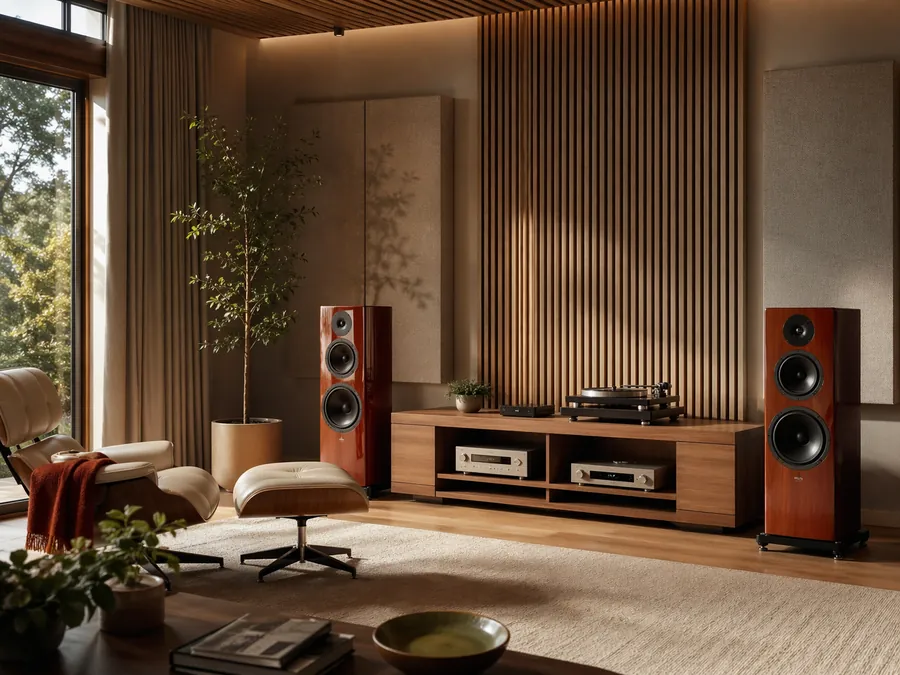
Acoustic treatment improves how sound behaves inside a room. It can reduce echo, soften reflections and make a space feel calmer.
Sound isolation reduces sound transfer between spaces. It involves walls, floors, ceilings, doors, windows, seals, junctions and construction details.
If the issue is neighbour voices, footsteps, traffic or external noise entering your apartment, the problem is usually sound isolation. Acoustic panels may make your room feel less reflective, but they will not usually stop the noise coming in.
This distinction is important because it prevents money being spent on the wrong products.
Some improvement is possible, but total silence is rare
A realistic acoustic upgrade aims for meaningful improvement, not a guarantee of silence. This is especially true in apartments and existing buildings.
The level of improvement depends on the noise type, construction, weak paths, budget, access, strata constraints and how much work can be done. Some problems can be significantly improved. Others can only be reduced to a limited degree.
This does not mean acoustic work is not worthwhile. It means the expected outcome should be clear before construction begins.
The most useful advice is honest. It should identify what can likely be improved, what may remain and which upgrades are most likely to provide value.
Renovation is the best time to address noise
Neighbour and boundary noise upgrades are easier to integrate during renovation. Once walls, ceilings, windows, flooring, joinery and services are finished, acoustic options become more limited and often more expensive.
During renovation, acoustic design can influence wall build-ups, ceiling systems, glazing, door selections, seals, services, penetrations, floor finishes and junction details. It can also help avoid decisions that create new acoustic weaknesses.
For example, replacing a solid wall with a lightweight partition, adding recessed lighting, cutting new services through a shared wall or installing hard flooring in an apartment can all affect acoustic performance.
Early acoustic input can prevent these issues before they become difficult to fix.
Buildability matters
Apartment and neighbour noise upgrades need careful detailing. The performance of a wall, ceiling or door system depends on how it is built.
Sealing, junctions, fixings, penetrations, framing, resilient mounts, cavity treatment and material layers all matter. A good specification can underperform if it is installed incorrectly or compromised by services.
This is particularly important in apartments where access is limited and existing construction may be unknown. A buildable solution should be clear enough for trades to follow and realistic enough for the project constraints.
The best acoustic upgrade is not always the heaviest or most expensive option. It is the option that targets the real path and can be executed properly.
When to get acoustic advice
It is worth getting acoustic advice when neighbour noise is affecting sleep, privacy, work, relaxation or day-to-day comfort. It is especially useful when the source is unclear, when strata is involved, when renovation work is being planned or before spending money on wall, ceiling, window or door upgrades.
An on-site acoustic consultation can help identify the likely noise type and sound path. It can also help clarify whether the issue is airborne noise, impact noise, external noise, flanking transmission or a combination of several paths.
In more complex cases, a written acoustic report or technical advice may be useful to support decision-making, renovation planning or communication with project teams.
Final thought
Apartment, boundary and neighbour noise can be frustrating because the solution is not always obvious. The wall you hear the sound from may not be the only path. The product that sounds promising may not treat the real problem. The best upgrade may depend on construction details you cannot see.
That is why diagnosis matters.
A successful acoustic response begins by identifying the sound type, the path and the constraints. From there, the options become clearer: what can be improved, what may be limited and where money is most likely to make a real difference.
For Sydney homeowners, apartment owners, strata residents and renovation teams, the strongest approach is practical and honest. Understand the building first. Then design the upgrade.
Frequently Asked Questions
Apartment & Neighbour Noise Acoustic Advice in Sydney
Practical acoustic diagnosis for apartment noise, boundary noise, shared walls, impact sound and residential privacy issues.

Apartment & Neighbour Noise Acoustic Advice in Sydney
Practical acoustic diagnosis for apartment noise, boundary noise, shared walls, impact sound and residential privacy issues.
Read Nicholas Marriott's bio