
Early Architectural Planning for Better Acoustic Outcomes
A practical guide to early acoustic planning, covering zoning, room adjacency, privacy, reverberation, services, sound isolation, material choices and the design decisions that are easiest to resolve before construction details are locked in.



.avif)
Acoustic outcomes are often decided before the acoustic details are drawn
Many acoustic problems are not created by the final wall build-up or the last material choice. They are created much earlier, when the room is planned, located and connected to the rest of the building.
By the time construction documentation begins, some of the most important acoustic decisions may already be fixed. Bedrooms may be beside noisy living areas. A music room may be placed under a sleeping space. A restaurant ceiling may be too hard and too high to treat subtly. A meeting room may have too much glazing. A studio may be given a room shape that makes monitoring difficult. A quiet study area may be placed beside circulation, services or plant.
Early architectural planning is where many acoustic outcomes are either protected or made difficult.
Good acoustic design is not only a technical layer added at the end. It is part of spatial thinking. It influences zoning, adjacency, thresholds, openings, services, materials, structure and buildability.
The earliest acoustic decision is usually room location
Where a room sits within a plan can have more influence than any single acoustic product.
A bedroom beside a kitchen, bathroom or stair can require more separation than one buffered by storage or circulation. A music room beside a neighbour may become difficult before the wall system is even chosen. A classroom facing a busy road may need a stronger façade strategy. A control room placed in an asymmetrical space may struggle with monitoring accuracy. A quiet work area next to a collaboration zone may require planning separation before treatment is considered.
Room location shapes both noise exposure and acoustic opportunity.
The best acoustic planning asks early questions: which rooms need quiet? Which rooms create noise? Which rooms need speech clarity? Which rooms require privacy? Which spaces can tolerate activity? Which uses should not share a wall, ceiling or floor?
When these questions are asked early, the architecture can do some of the acoustic work before specialist detailing begins.
Zoning is the foundation of acoustic comfort
Zoning is one of the most powerful acoustic tools in architecture. It groups compatible uses together and separates uses that are likely to conflict.
In a home, quiet zones might include bedrooms, studies and retreat spaces. Active zones might include kitchens, living rooms, media rooms, laundries and play areas. In a studio, control rooms, live rooms, booths, machine spaces and client areas all have different acoustic needs. In workplaces, focused work, collaboration, meetings, reception and breakout areas should not all be treated as acoustically equal.
Good zoning reduces the pressure on construction details. It can lower the amount of isolation required, reduce noise transfer, improve privacy and make the building feel more intuitive.
Poor zoning does the opposite. It forces walls, doors and ceilings to solve problems that could have been reduced by planning.
Acoustic design is strongest when it supports the plan, not when it has to rescue it.
Room adjacencies create or reduce conflict
Adjacency matters because sound travels between connected spaces. Some adjacencies are low risk. Others create predictable acoustic conflict.
A bathroom beside a bedroom may introduce plumbing noise. A laundry beside a study may create appliance noise. A media room below a bedroom may create low-frequency transfer. A meeting room beside an open office may create speech privacy issues. A music practice room beside a neighbour may create isolation challenges. A restaurant kitchen beside a dining area may affect both background noise and comfort.
Not every adjacency can be avoided. But when a risky adjacency is unavoidable, it should be recognised early so the design can respond.
That response might include a buffer zone, stronger separation, acoustic doors, reoriented openings, services coordination, ceiling treatment, wall upgrades or a change in room use. The key is that the decision is made with the acoustic consequence in view.
Buffer spaces can solve problems quietly
Some of the best acoustic solutions are not visible. They come from using buffer spaces intelligently.
Wardrobes, storage rooms, corridors, bathrooms, pantries, lobbies, joinery zones and service spaces can all provide separation between noisier and quieter rooms. A wardrobe wall behind a bedhead can help reduce direct exposure to a shared wall. A lobby outside a meeting room can improve privacy. Storage between a studio and a neighbouring space can reduce risk. Circulation can separate active and quiet zones.
Buffer spaces do not replace proper construction where high isolation is required, but they can reduce the burden on the acoustic envelope.
This is valuable because buffer spaces feel architectural rather than technical. They improve performance without adding obvious acoustic treatment.
Openings are acoustic weak points
Doors, windows, glazing, operable panels, vents and service openings are often the weakest acoustic points in a room.
A wall may be well specified, but a lightweight door with poor seals can undermine privacy. A façade may have adequate mass, but a poorly sealed window can allow traffic noise into a bedroom. A meeting room may have full-height glass that weakens speech separation. A studio may have a ventilation path that bypasses the isolation design.
Openings are not only visual and functional decisions. They are acoustic decisions.
Early planning should consider where openings are placed, what they connect to and how they affect privacy, noise transfer and room performance. In many projects, moving a door, changing its orientation or adding a small lobby can be more effective than trying to compensate later.
Circulation paths carry sound
Circulation is often treated as neutral space, but acoustically it can be very active. Corridors, stairs, foyers and connecting spaces allow sound to move through a building.
A bedroom door opening directly into a living space may feel less private. A stair void can carry sound between levels. A corridor serving multiple rooms can transmit voices and footfall. A reception area can send noise into adjacent workspaces. An open circulation spine can make a building feel lively, but it may also reduce acoustic separation between zones.
Circulation does not need to be silent. It simply needs to be understood.
Where privacy or quiet matters, thresholds, lobbies, turns, doors, soft finishes and spatial offsets can help reduce direct sound paths. These are planning moves as much as acoustic details.
Reverberation starts with room volume and surface intent
Reverberation is often addressed through finishes, but it begins with room volume, geometry and material intent.
A large room with hard floors, plasterboard walls, glass and a high ceiling will behave differently from a smaller room with soft furnishings and broken-up surfaces. A restaurant, classroom, living room, studio, gallery or workplace all need different reverberation conditions.
If reverberation is considered only after the finishes are selected, the options may become limited. The design may need visible acoustic panels where a more integrated ceiling, wall or joinery strategy could have been used earlier.
Early planning allows the project team to decide where absorption can be integrated. Ceilings, wall linings, curtains, joinery, acoustic plaster, timber systems, furniture and soft zones can all contribute when they are planned as part of the design.
The goal is not to over-soften the room. The goal is to make the room’s acoustic character suitable for its use.
Material choices carry acoustic consequences
Architectural materials are chosen for many reasons: durability, cost, warmth, texture, maintenance, light, visual identity and construction logic. They also have acoustic consequences.
Stone, tile, glass, polished concrete, plasterboard and hard timber can create beautiful interiors, but they often reflect sound. Soft furnishings, rugs, curtains, upholstery, acoustic plaster, fabric panels and absorptive linings can help create acoustic balance. Perforated timber, slatted systems and integrated acoustic joinery can provide both visual structure and sound control when detailed properly.
The point is not to avoid hard materials. It is to balance them.
Early acoustic planning helps the design team understand which surfaces can remain reflective and which surfaces need to carry acoustic work. This is especially important in refined interiors where late-stage acoustic additions may feel visually compromised.
Services should not be left until the end
Mechanical, electrical, hydraulic and building services can all affect acoustic outcomes.
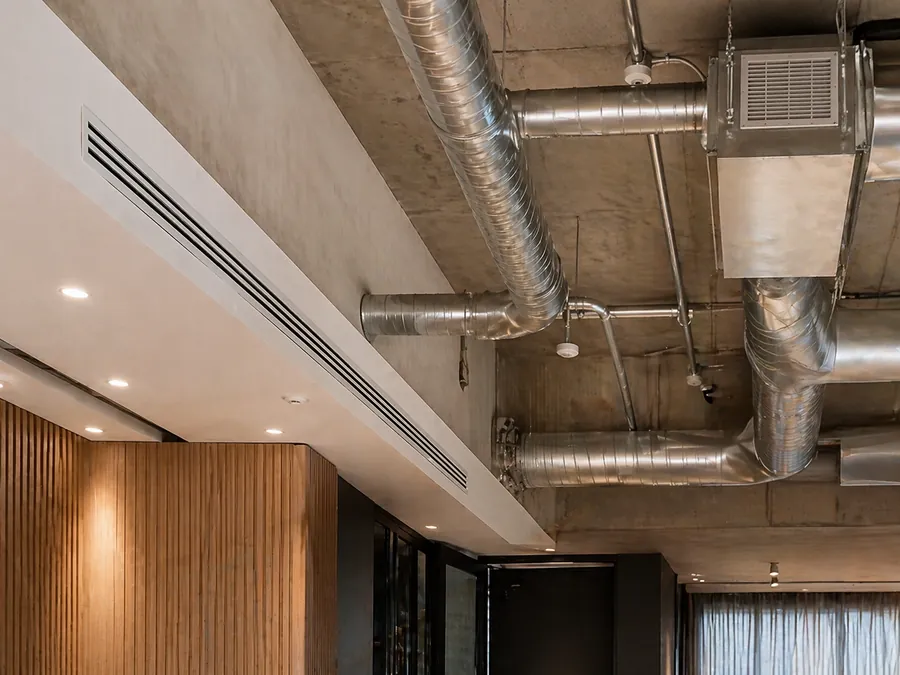
Air conditioning can create background noise. Ducts can become sound paths. Fans and plant can introduce vibration. Plumbing can disturb bedrooms and quiet rooms. Recessed lighting can compromise ceiling isolation. Power outlets can weaken party walls. Grilles can bypass acoustic separation. Equipment locations can create noise near sensitive spaces.
These issues are much easier to manage when services are coordinated early.
A quiet room needs not only quiet walls, but also quiet air movement, sensible plant location, controlled penetrations and good coordination between architecture, services and acoustic intent.
The acoustic design should not be forced to work around services after they have already created the sound path.
Structure can support or undermine acoustic design
Structure influences acoustic performance in ways that are not always obvious. Floors, slabs, beams, framing, columns and lightweight structures can all affect sound transfer, impact noise and vibration.
A room that requires high isolation may need structural separation, sufficient mass or careful detailing around junctions. A studio may need to consider vibration paths. An apartment floor may need impact control. A timber-framed building may behave differently from concrete construction. A lightweight roof may limit isolation from aircraft, rain or external noise.
Early planning helps identify whether acoustic goals are compatible with the intended structure.
This does not mean structure should be designed only for acoustics. It means acoustic constraints should be understood before the project relies on details that the structure cannot support.
Buildability should be considered from the beginning
Acoustic design fails when it cannot be built properly.
A wall type may look strong in a specification, but it may be difficult to seal at junctions. A ceiling system may require penetrations for lights and services. A door may be specified without a suitable threshold. A floating floor may be bridged by skirtings or services. A beautiful timber lining may not include the backing needed for absorption.
Buildability is not a late-stage contractor problem. It is part of acoustic design.
Early planning should ask whether the desired acoustic outcome can be achieved with the project’s budget, structure, trades, sequencing and level of documentation. The best acoustic solution is not always the most technically elaborate. It is the one that targets the real issue and can be built correctly.
Privacy should be designed, not assumed
Privacy is one of the most common acoustic expectations in homes, workplaces, clinics, schools and hospitality settings. Yet it is often assumed rather than designed.
Speech privacy depends on separation, background noise, room adjacency, doors, seals, wall performance, ceiling paths, openings and the level of speech in the source room. A meeting room with glass walls may look private but perform poorly if the door seals and ceiling paths are weak. A bedroom may feel exposed if the door opens directly into an active living zone. A consultation room may need more than a standard partition if confidential speech matters.
Privacy is not created by walls alone. It is created by the whole path between source and listener.
Early planning allows privacy to be treated as a design requirement rather than a complaint after occupation.
Some acoustic problems are expensive because they are late
Late acoustic fixes are often more expensive because they are working against completed decisions.
If a ceiling is already full of services, adding effective acoustic treatment may be difficult. If a door location creates a direct sound path, upgrading the door may help but not solve the planning issue. If a noisy room is already beside a quiet room, construction upgrades may be required. If a studio has been placed in a poor room shape, treatment may be forced to compensate for geometry.
Early acoustic planning does not remove all later detailing. It makes later detailing more efficient.
The earlier the acoustic issue is considered, the more likely it can be solved through planning, coordination and integrated design rather than expensive corrective work.
Early acoustic input does not need to slow the design
Some teams avoid acoustic input early because they assume it will complicate the project. In practice, early acoustic advice can make the design process clearer.
At concept stage, the advice may be strategic: room placement, zoning, risk areas, likely sound paths and uses that should be separated. At schematic design, it may become more specific: openings, wall types, ceiling opportunities, services coordination and material direction. At design development, it can move into detail: constructions, junctions, doors, seals, treatment locations and buildability.
The level of advice should match the stage of the project.
Early acoustic planning should not over-document the design before it is ready. It should help the team avoid the decisions that will become hard to fix later.
Acoustic design can protect architectural intent
A common fear is that acoustic requirements will compromise the architecture. This can happen when acoustics are considered too late and the only available solutions are visually intrusive.
When acoustic design is integrated early, it can protect the architectural intent.
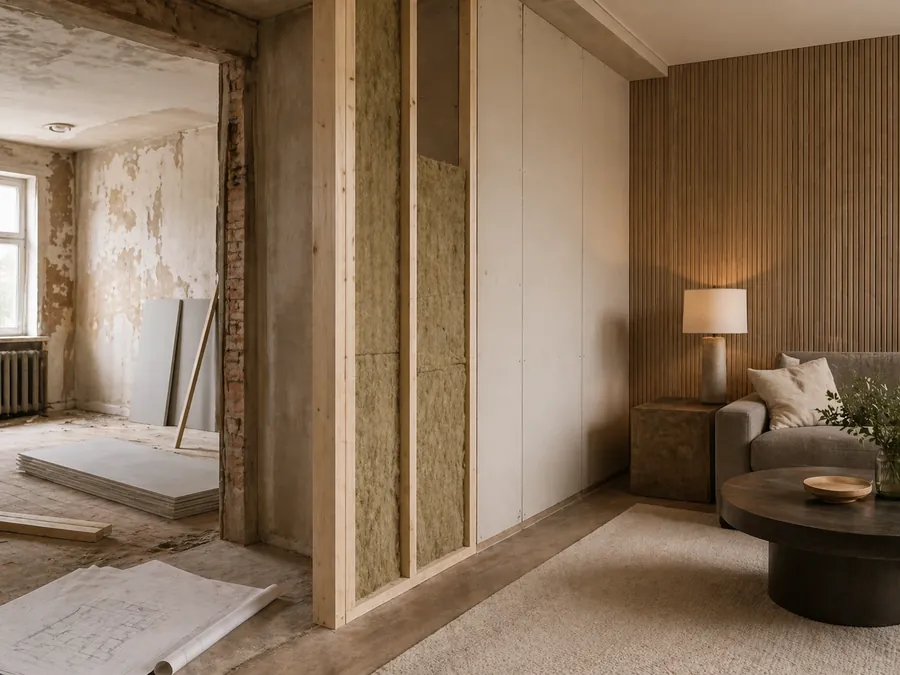
Treatment can be hidden in ceilings, expressed through timber linings, integrated into joinery, combined with curtains, coordinated with lighting, or embedded into wall systems. Isolation can be planned through layout and separation rather than only heavy retrofits. Privacy can be supported by thresholds and zoning rather than excessive technical additions.
Good acoustic design should not fight the architecture. It should help the architecture work better.
When to involve an acoustic consultant
It is worth involving an acoustic consultant early when a project includes noise-sensitive rooms, music spaces, studios, apartments, shared walls, schools, workplaces, hospitality spaces, open-plan interiors, specialist uses or any area where privacy, clarity or comfort will matter.
Early advice is especially useful when the project is still flexible enough to adjust room locations, openings, services, material strategy and construction approach.
An early acoustic review does not need to solve every detail at once. It can identify risks, priorities and opportunities so the project team can make better decisions before the design becomes harder to change.
Final thought
The best acoustic outcomes often begin before the acoustic specification.
They begin in the plan: which rooms sit together, which spaces are buffered, how circulation works, where openings are placed, how services are routed, how materials are balanced and how the building will actually be constructed.
Early architectural planning does not replace detailed acoustic design. It makes detailed acoustic design more effective.
For architects, interior designers, builders and project teams, the strongest approach is to consider acoustics while the design is still able to respond. That is when acoustic performance can become part of the architecture rather than a correction added at the end.
Frequently Asked Questions
Early-Stage Architectural Acoustic Design Advice
Design-led acoustic input for architects, interior designers and project teams before key planning and construction decisions are locked in.

Early-Stage Architectural Acoustic Design Advice
Design-led acoustic input for architects, interior designers and project teams before key planning and construction decisions are locked in.
Read Nicholas Marriott's bio