
Bedroom Acoustic Design in Sydney: Quieter Rooms for Sleep, Privacy and Recovery
A practical guide to bedroom acoustic design in Sydney, covering traffic noise, neighbour noise, glazing, doors, seals, planning and construction details that support quieter sleep and better residential privacy.


.avif)
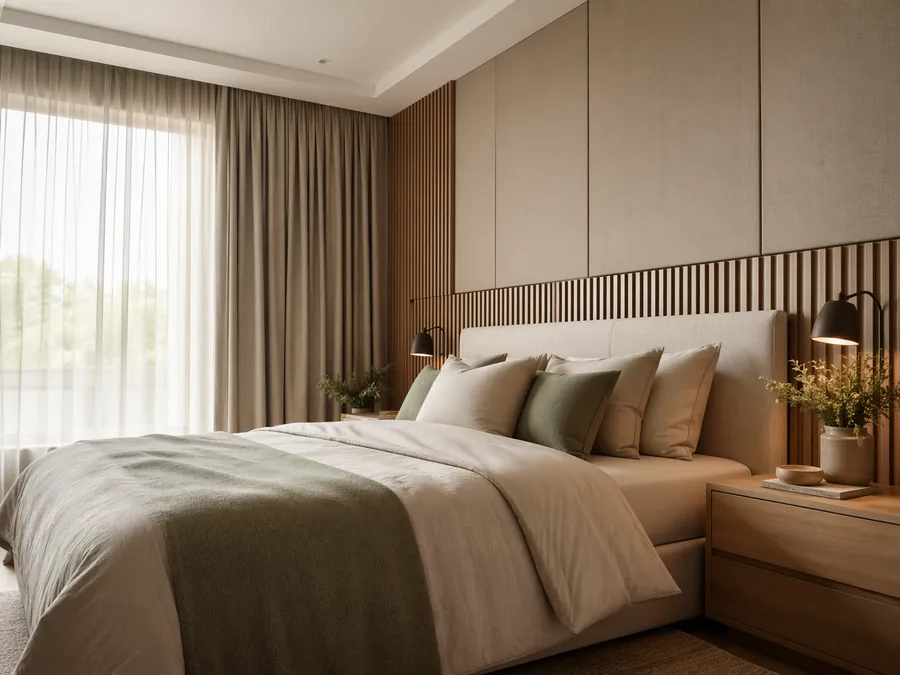
Bedroom acoustic design starts with the sound path
A quieter bedroom is usually created by improving three things: the sound entering the room from outside, the sound moving into the room from other parts of the home, and the way sound feels once you are inside the space.
That means bedroom acoustic design is not just about adding panels or buying a heavier curtain. It can involve windows, doors, seals, walls, ceilings, floors, planning decisions, services, finishes and build quality. The right solution depends on where the noise is coming from and how it is travelling.
In Sydney homes and apartments, bedroom noise can come from traffic, nearby venues, neighbours, corridors, plumbing, bathrooms, living areas, children, housemates or mechanical plant. The problem may feel simple — “the room is too noisy” — but the solution is rarely one-size-fits-all.
A good acoustic strategy begins with diagnosis.
Why bedrooms need a different acoustic approach
Bedrooms are different from living rooms, kitchens and open-plan areas. They are quieter by use, more personal by nature and more sensitive to small disturbances. A sound that feels acceptable during the day can become intrusive at night when the background level drops and the room is expected to support rest.
The acoustic goal is not always total silence. In many homes, especially apartments and urban locations, complete silence is not realistic. A better goal is a bedroom that feels calm, private and stable, with fewer sudden intrusions and less obvious sound transfer.
This is why bedroom acoustics need to be considered as part of residential design, not as an afterthought. The strongest outcomes usually come from combining planning, construction and interior decisions so the room performs well without looking technical or over-treated.
Step one: identify the type of noise
Before selecting a product or building detail, it is important to identify the noise type. Different noises travel in different ways.
Airborne noise includes voices, television, music, traffic and general activity. It usually travels through weak walls, doors, windows, gaps and openings.
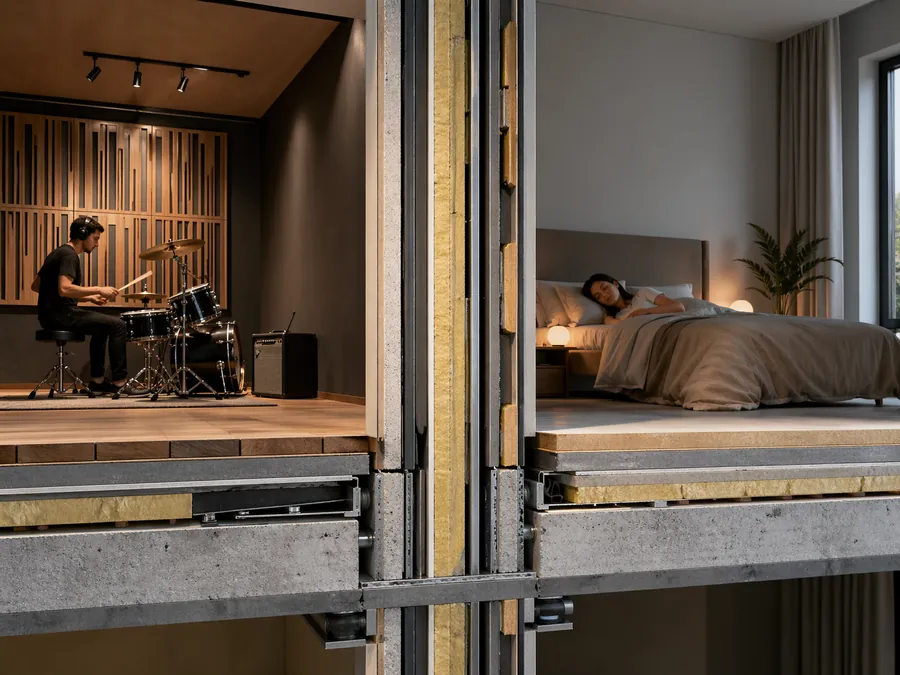
Impact noise includes footsteps, dropped objects and movement from above. It often travels through floors, ceilings and the building structure.
Services noise can come from plumbing, fans, pumps, lifts, air conditioning, garage doors and plant equipment. It may travel through air, structure or both.
Low-frequency noise, such as bass, heavy traffic rumble or mechanical vibration, can be more difficult because it often travels through structure and is less easily controlled by lightweight finishes.
This is why the first question should not be “what material should I buy?” It should be “where is the sound path?”
External noise: windows, façades and ventilation
For bedrooms facing roads, rail lines, flight paths, busy streets or external plant, the window system is often a major acoustic weakness. But the glass alone is not the whole story.
A window’s acoustic performance depends on the glass, frame, seals, operable sections, air gaps and installation quality. A good glass specification can still underperform if the frame leaks air or the installation leaves gaps. Similarly, heavy curtains can help the internal feel of a bedroom, but they should not be treated as a complete sound isolation solution.
In some rooms, the right approach may involve improved seals, upgraded glazing, secondary glazing or a more complete façade strategy. The decision depends on the existing construction, strata or heritage constraints, ventilation needs, budget and the level of improvement required.
Ventilation also needs careful thought. A bedroom can be well sealed acoustically but uncomfortable if fresh air and cooling are not considered. Acoustic design should support the way the room is lived in, not simply close it off from the outside world.
Internal privacy: doors, gaps and weak room connections
Many bedroom privacy issues come from inside the home. A lightweight door, a large undercut, a weak frame seal or a direct path to a living area can allow voices, television and household activity to enter the bedroom easily.
Door upgrades can be very effective when the door is the main weak point. A more solid door leaf, perimeter seals and an automatic drop seal can all help. But the door must be treated as a system. A heavy door with poor seals will still leak sound. A well-sealed door in a weak wall may also have limited benefit.
Privacy can also be affected by planning. Bedrooms beside bathrooms, laundries, stairwells, kitchens or media rooms often need stronger acoustic separation. In new builds and renovations, wardrobes, storage zones and circulation spaces can sometimes be used as useful acoustic buffers.
The best bedroom acoustic design often starts before construction details are finalised.
Neighbour noise and apartment bedrooms
Apartment bedrooms can be more complex because the sound path may not be fully within your control. Noise may come through shared walls, floors, ceilings, corridor doors, façade elements, service risers or the building structure.
This is where realistic diagnosis matters. Voices through a party wall are different from footsteps from above. Corridor noise is different from traffic through a façade. Plumbing noise is different from bass transfer. Each problem needs a different response.
Possible apartment bedroom upgrades may include wall linings, door sealing, glazing improvements, ceiling treatments, floor/ceiling coordination or targeted works around service penetrations. But strata rules, existing construction and access limitations can strongly influence what is practical.
A useful acoustic assessment should explain not only what could improve the room, but also what is unlikely to be worth doing.
Acoustic panels are not soundproofing
A common mistake is to use acoustic panels when the real issue is sound transfer. Acoustic panels can improve the sound inside a room, but they do not usually stop traffic noise, neighbour noise or household sound from entering the bedroom.
Soundproofing, more accurately described as sound isolation, is about reducing sound transfer between spaces. It depends on mass, sealing, separation, airtightness, junctions and weak points.
Acoustic treatment is different. It changes how sound behaves inside the room. Soft furnishings, curtains, rugs, upholstered bedheads and carefully placed absorptive materials can make a bedroom feel calmer and less reflective, but they are not a substitute for proper isolation.
Bedrooms often benefit from both ideas: reduce the sound entering the room, then soften the internal sound environment so the space feels more restful.
Soft finishes still matter
Soft finishes have an important role in bedroom acoustic comfort. Curtains, rugs, bedding, upholstered furniture and textured materials can reduce some internal reflections and make a room feel more settled.
This is especially useful in bedrooms with timber floors, plasterboard walls, large windows, minimal furniture or hard architectural finishes. A room may not be loud in a technical sense, but it can still feel sharp, exposed or unsettled.
Soft materials are most helpful when they are used honestly. They can improve the internal feel of the room. They can make voices and small sounds less sharp. They can support a calmer atmosphere. But they will not fix a leaking window, a hollow-core door, a weak party wall or impact noise from above.
Good acoustic design is about knowing which role each element plays.
Bedroom layout can reduce acoustic conflict
Some acoustic improvements come from layout rather than construction. In a renovation or new build, the position of the bed, wardrobes, doors and adjacent rooms can all affect comfort.
A bedhead placed against a noisy shared wall may make neighbour noise more noticeable. A bedroom door facing directly into a living area may reduce privacy. A wardrobe wall can sometimes create useful separation. A bathroom wall may need extra care if plumbing noise is likely to affect sleep.
These decisions are easier to make early. Once walls, doors and services are fixed, the acoustic options become more limited and often more expensive.
This is why residential acoustic advice is valuable during planning, not only after a problem has become frustrating.
Build quality can make or break the result
Bedroom acoustic upgrades can fail because of small details. Gaps around doors, unsealed penetrations, poor junctions, recessed fittings, service openings and incomplete installation can all reduce performance.
Acoustic design is not just a specification. It has to be buildable. A wall lining needs to connect properly to adjoining surfaces. A window upgrade needs the frame and seals to perform. A door upgrade needs the leaf, frame, threshold and hardware to work together.
This is particularly important in renovations, where existing construction may hide flanking paths or limit what can be achieved. The best solution is not always the most expensive product. It is the solution that targets the real weakness and can be installed correctly.
When to get acoustic advice
You may not need an acoustic consultant for every bedroom. But specialist advice is useful when the noise source is unclear, when sleep or privacy is being affected, when apartment or neighbour noise is involved, or when renovation work is already being planned.
It is also useful before spending money on glazing, doors, wall linings or ceiling upgrades. Many acoustic problems are made more expensive by treating the wrong surface or buying products before the sound path has been understood.
For Sydney homeowners, architects and builders, an on-site acoustic consultation can help clarify the likely causes, practical options and realistic level of improvement. This can prevent overbuilding in the wrong place and underbuilding where performance really matters.
Final thought
A quieter bedroom is created by the whole room, not by one product. Windows, doors, walls, seals, planning, finishes and construction details all contribute to how the space performs.
The strongest bedroom acoustic design is calm, practical and integrated. It improves sleep conditions and privacy without making the room feel like a studio or a technical space.
If the goal is a bedroom that feels genuinely quieter, start with the sound path. Once the source and route are clear, the design decisions become much more focused, realistic and effective.
Frequently Asked Questions
Residential Acoustic Design for Bedrooms in Sydney
Diagnosis, design advice and buildable acoustic upgrades for sleep, privacy and residential comfort.

Residential Acoustic Design for Bedrooms in Sydney
Diagnosis, design advice and buildable acoustic upgrades for sleep, privacy and residential comfort.
Read Nicholas Marriott's bio