
Home Studio Acoustic Design in Sydney: Where to Start and What Matters Most
A practical guide to home studio acoustic design in Sydney, covering room choice, speaker placement, bass control, treatment priorities, isolation expectations, recording workflow, ventilation and the decisions that matter most before buying panels or equipment.


.avif)
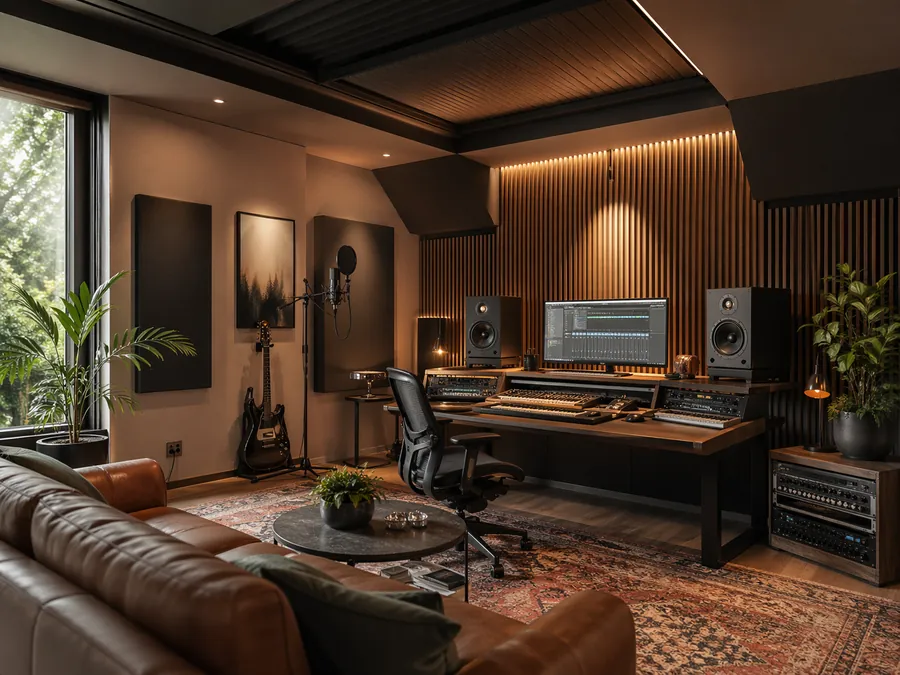
Home studio acoustic design should start before buying panels
A home studio is not made by adding foam to a spare room. It is shaped by the relationship between the room, the speakers, the listening position, the recording needs, the construction and the way the space will actually be used.
Many home studio projects begin in the wrong order. Equipment is purchased first. Panels are added later. The desk is placed where it fits. The speakers go where the desk allows. Then the room sounds boomy, harsh, dull or unreliable, and the owner starts trying to fix problems that could have been reduced with better planning.
Good home studio acoustic design starts earlier. It begins by understanding the purpose of the room, choosing the best available space, setting realistic expectations and prioritising the decisions that have the greatest impact.
In Sydney homes and apartments, a home studio may be a spare bedroom, garage, apartment room, converted study, garden studio, attic, basement or mixed-use creative space. Each of these rooms has different strengths and limits. The right design is not generic. It needs to suit the room, the music, the working method and the building around it.
Define what the studio needs to do
Before designing the acoustics, the studio’s purpose needs to be clear. A room used for electronic music production has different needs from a vocal recording room. A songwriter’s room is different from a mix room. A podcast studio is different from a drum space. A guitar writing room is different from a critical monitoring room.
The first question is not “how many panels do I need?” It is “what decisions need to be trusted in this room?”
For mixing, the room needs reliable monitoring. That means clear stereo imaging, controlled early reflections and bass that is consistent enough to make useful decisions.
For recording, the room needs an appropriate tone at the microphone position. A vocal area may need controlled reflections and low background noise. A guitar or instrument area may need a different balance of absorption and room character.
For production and writing, the room may need comfort, workflow and enough acoustic control to work for long sessions without fatigue.
A home studio does not have to do everything. The best results usually come when the room is designed around its main purpose.
Choose the room with the fewest compromises
Room choice is one of the most important acoustic decisions. It is also one of the decisions people often make too quickly.
A room’s size, shape, ceiling height, wall construction, openings, floor type, nearby neighbours and surrounding spaces all influence what can be achieved. Some rooms will always be easier to work with than others.
A small square room can create difficult bass problems. A narrow room may limit speaker placement. A room with large windows may have weak isolation and strong reflections. A garage may offer useful separation but introduce thermal, moisture and construction challenges. An apartment bedroom may be convenient but limited by neighbour impact and strata constraints.
The best room is rarely perfect. The aim is to choose the room with the fewest serious acoustic compromises and the most practical upgrade potential.
If several rooms are available, acoustic advice at this stage can save a lot of money later.
Symmetry matters for monitoring
In a home studio used for mixing or production, symmetry is one of the foundations of good monitoring. The left and right speakers should interact with the room in a similar way so that the stereo image is stable.
Problems often occur when one speaker is near a wall and the other is near a window, doorway, wardrobe or open space. The result may be an uneven stereo image, unreliable panning and a listening position that feels biased to one side.
Good symmetry does not mean the whole room must be perfectly symmetrical, but the front half of the room around the speakers and listening position should be considered carefully.
The desk, monitors, side walls, front wall and ceiling reflections all affect how the room presents sound. If the monitoring position starts in the wrong place, treatment has to work much harder.
Speaker placement comes before treatment placement
Speaker placement is often more important than people expect. Moving speakers and the listening position can change bass response, clarity and imaging before any treatment is added.
In many home studios, the speakers are placed for convenience rather than performance. They may be too close to a wall, too far from the front wall, too close to a corner, placed on an oversized desk or set at an unsuitable height. The listening position may be too close to the rear wall or located in a bass null where low frequencies disappear.
A better process is to establish the listening triangle, speaker height, front-wall relationship and listening position before finalising furniture and treatment.
The room should support the speakers. The speakers should not simply be fitted into whatever space is left after the desk and storage are chosen.
Bass control is usually the biggest challenge
Bass is where many home studios struggle. Low-frequency sound is strongly affected by room dimensions, boundaries, speaker position and listener position. In small rooms, bass can become uneven very quickly.
One bass note may sound too loud while another disappears. The kick drum may feel powerful at the back of the room but weak at the listening position. A mix may sound balanced in the studio but translate poorly to cars, headphones or other speakers.
Thin foam and light decorative panels do very little for low-frequency control. Bass problems require more serious thinking.
Good bass control may involve better speaker placement, listener positioning, broadband absorption, bass trapping, boundary treatment and sometimes construction changes. The goal is not to remove bass. The goal is to make bass more even and trustworthy.
For a home studio, reliable bass is often more valuable than a room that simply looks treated.
Early reflections affect clarity and imaging
Early reflections occur when sound from the speakers reflects from nearby surfaces and reaches the listener shortly after the direct sound. These reflections can blur imaging, affect tonal balance and make monitoring less precise.
Common early reflection points include side walls, the ceiling, the desk surface and sometimes nearby windows or shelving. Treating these areas can improve clarity and stereo focus, but the treatment needs to be placed in relation to the actual speaker and listening positions.
The aim is not to make the room completely dead. A studio that is over-absorbed in the wrong way can become dull and fatiguing while still having uncontrolled bass.
Good reflection control is targeted. It gives the listening position more accuracy without stripping the room of all life.
Recording needs should not be an afterthought
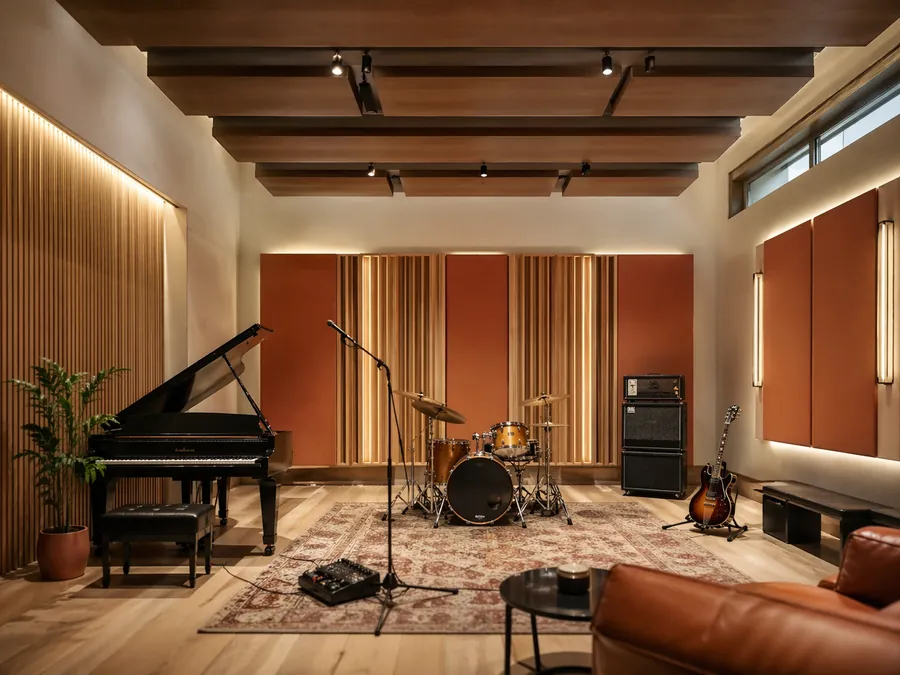
A home studio may need to record vocals, guitar, voiceover, podcasts, strings, percussion or other instruments. The recording area needs to be considered separately from the monitoring position.
A room that is good for monitoring is not automatically ideal for recording. The best place to sit and mix may not be the best place to place a microphone. Vocal recording may need controlled reflections and low background noise. Acoustic guitar may benefit from some natural room tone. Voiceover may need a cleaner and more consistent sound.
Very small, heavily treated recording corners can sound boxy or lifeless. Completely reflective rooms can sound uncontrolled and harsh.
A useful home studio design identifies where recording will happen and what kind of recording quality is needed. Treatment can then be planned around both listening and recording, instead of only one of them.
Soundproofing is different from acoustic treatment
One of the most important distinctions in home studio design is the difference between acoustic treatment and sound isolation.
Acoustic treatment improves the sound inside the room. It controls reflections, reverberation, tonal balance and bass behaviour.
Sound isolation reduces sound transfer between the studio and the rest of the building. It is what people often mean when they say “soundproofing.”
Acoustic panels do not usually stop sound from leaving the room. Foam does not stop bass from disturbing neighbours. Curtains do not turn a spare bedroom into an isolated recording studio.
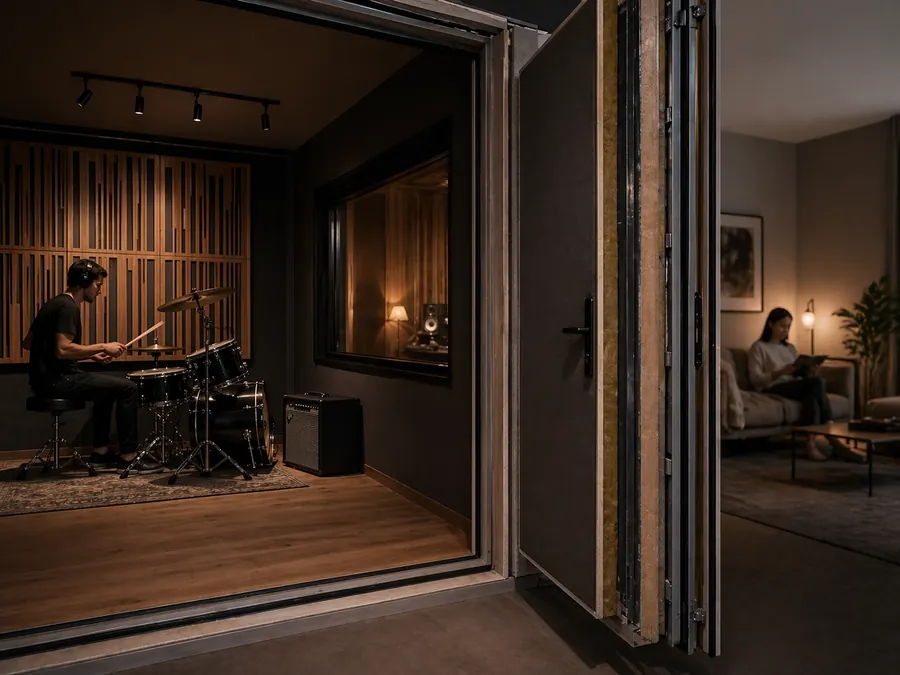
Sound isolation is a construction issue. It may involve walls, ceilings, floors, doors, windows, seals, penetrations, ventilation and structural flanking paths. It is usually much easier to plan during renovation or construction than after the room is finished.
A good home studio brief should be clear about whether the main priority is internal sound quality, isolation, or both.
Isolation expectations need to match the use
Not every home studio needs heavy isolation. A room used for quiet production, editing, writing or nearfield monitoring may only need modest separation from the rest of the home.
A room used for drums, amplified guitar, loud vocals, subwoofers or late-night playback needs a much more serious approach. The louder the source, the more important the building construction becomes.
Apartment studios need particular care. Even small monitors can be manageable, but subwoofers, drums and amplified instruments can create neighbour issues quickly. Bass and vibration are especially difficult in shared buildings because they can travel through structure.
This does not mean apartment studios are impossible. It means the intended use needs to be realistic. A good acoustic consultation can help clarify what the room can support and what level of isolation may be required.
Workflow affects acoustic performance
A studio is a working room. If the layout does not support workflow, the space may be frustrating even if the acoustic treatment is technically sensible.
The desk, equipment, speakers, instruments, storage, computer, lighting, cables and seating all need to work together. A desk that is too large can create strong reflections. Equipment racks in the wrong place can disrupt symmetry. Storage can clutter reflection points. Poor ventilation can make long sessions uncomfortable.
Good workflow also supports better acoustic discipline. When the room is organised, treatment is less likely to be blocked, speakers are less likely to be moved casually and the listening position is more likely to stay consistent.
A well-designed home studio should feel easy to use. The acoustic design should support creativity, not get in the way of it.
Avoid the common foam trap
Foam is often the first acoustic product people buy for home studios. It is visible, affordable and associated with studio imagery. But it is rarely enough.
Thin foam usually absorbs higher frequencies while doing very little for low-frequency problems. If too much foam is added, the room may become dull at the top while the bass remains uneven. This can create a room that sounds treated but still does not translate well.
Better acoustic treatment usually uses a combination of broadband absorption, low-frequency treatment, targeted reflection control and sometimes diffusion or hybrid systems. The right mix depends on the room size, speaker layout, purpose and budget.
The goal is not to cover the room. The goal is to treat the right problems.
Budget should follow priorities
Home studio budgets can disappear quickly. Speakers, interfaces, microphones, desks, software, panels, lights, stands and furniture all compete for attention.
The most effective budget sequence usually starts with the room and layout. If the monitoring position is poor, expensive equipment will still be limited. If bass is uncontrolled, more plugins will not solve translation. If the door leaks sound badly, decorative panels will not protect the rest of the home.
A staged approach can work well. First, choose the right room and layout. Then establish speaker placement and listening position. Then deal with the most important acoustic treatment. Then refine recording areas, comfort, workflow and isolation as needed.
This approach prevents money being spent on the most visible product instead of the most important problem.
Ventilation and background noise matter
Home studios often need quiet, comfortable air movement. Computers, equipment, closed doors and long sessions can make a room warm and uncomfortable. But fans, air conditioners, ducts, vents and equipment noise can all affect recording and monitoring.
Background noise matters because it masks detail. A noisy fan may make voice recording harder. Air-conditioning noise may reduce the ability to hear low-level mix detail. Equipment noise may become distracting during long sessions.
Ventilation should be considered early, particularly if isolation is part of the project. Sealing a room without planning air movement can create a space that performs acoustically but is uncomfortable to use.
A good studio needs to be quiet enough and comfortable enough to work in.
Measurement can help, but it is not the whole design
Acoustic measurement can be useful in a home studio. It can help identify room modes, frequency response problems, decay behaviour and the impact of treatment changes.
But measurement should support design rather than replace it. A graph can show what is happening at a measurement point, but the interpretation still matters. The room’s purpose, layout, construction, workflow and budget all need to be considered.
For home studios, measurement is most useful when it is tied to practical decisions: speaker placement, listening position, treatment priorities and verification after changes.
The aim is not to chase a perfect graph. The aim is to create a room that helps the user make better decisions.
Buildability is part of the acoustic design
A home studio acoustic design needs to be buildable. Treatment must fit around lights, power points, windows, doors, shelving, ventilation, desks and equipment. Isolation details need proper sealing and careful junctions. Wall and ceiling upgrades must work with the existing structure.
This is especially important in residential projects, where rooms often need to remain attractive, usable and flexible. A design that works technically but overwhelms the room visually or practically may not be the right solution.
The best home studio designs are clear, practical and scaled to the project. They improve performance without pretending every home room is a commercial studio.
When to get acoustic advice
It is worth getting acoustic advice before choosing the room, buying treatment or finalising the layout. It is especially useful if the studio will be used for mixing, recording, subwoofers, drums, amplified instruments, podcasts, voiceover or regular client work.
Advice is also useful when the studio is in an apartment, garage, shared house or room near bedrooms or neighbours. These conditions can affect isolation, background noise and what is realistic.
An on-site acoustic consultation can help identify the best available room, likely constraints, speaker layout, treatment priorities and whether isolation is required. This can save money by preventing the wrong upgrades from being made first.
Final thought
A good home studio is not defined by how many panels it has. It is defined by how well the room supports the work.
The best results come from starting with the fundamentals: purpose, room choice, speaker placement, listening position, bass control, reflection management, recording needs, isolation expectations and workflow.
For Sydney musicians, producers, engineers, podcasters and creators, a well-designed home studio can be practical, comfortable and genuinely useful. It does not need to be perfect. It needs to be understood, prioritised and built around the way the room will actually be used.
Frequently Asked Questions
Home Studio Acoustic Design in Sydney
Specialist acoustic advice for home studios, production rooms, writing spaces and residential recording setups.
Home Studio Acoustic Design in Sydney
Specialist acoustic advice for home studios, production rooms, writing spaces and residential recording setups.
Read Nicholas Marriott's bio