
Home Studio & Listening Room Acoustic Design in Sydney: Layout, Bass Control and Treatment
A practical guide to home studio and listening room acoustic design in Sydney, covering room selection, speaker placement, bass control, acoustic treatment, isolation, workflow and realistic performance in houses and apartments.


.avif)
Home studios and listening rooms need both precision and realism
A home studio or listening room is one of the most rewarding acoustic projects in a residential setting. It can support music production, mixing, recording, writing, practice, hi-fi listening, podcasting, film work or simply a more focused relationship with sound.
But these rooms also ask a lot from a home. They need to sound controlled and accurate, while still fitting within domestic space, budget, structure and lifestyle. A spare bedroom, garage, apartment room or converted study will rarely behave like a purpose-built commercial studio from the beginning.
That does not mean excellent results are out of reach. It means the acoustic design needs to be realistic, strategic and specific to the room.
Good home studio and listening room design is not about covering every surface with foam. It is about room selection, layout, speaker position, low-frequency control, reflection management, isolation expectations, workflow and buildability.
Start with the room, not the products
Many home studio projects begin with products: panels, bass traps, foam, diffusers, isolation pads or new monitors. These can all have a place, but the first decision should be the room itself.
Room size, shape, ceiling height, wall construction, openings, floor type and neighbouring spaces all influence what can be achieved. A small square room will behave differently from a longer rectangular room. A garage will have different opportunities and risks from a bedroom. An apartment room will have different constraints from a detached house.
The room determines the acoustic strategy. If the room has severe bass problems, poor symmetry, weak isolation or difficult openings, treatment alone may not solve everything.
A good design process begins by asking: what is this room capable of, and what is the most useful level of performance for the project?
Home studio, listening room or hybrid space?
The terms often overlap, but the design priorities can be different.
A home studio may need accurate monitoring, a practical workstation, good recording conditions, equipment storage and a workflow that supports long sessions.
A listening room may focus more on speaker placement, stereo imaging, tonal balance, bass smoothness and a comfortable seating position.
A hybrid room may need to support both. It might be used for production during the day, listening at night, occasional vocal recording, guitar writing, podcasting or video work.
The acoustic strategy should match the room’s purpose. A production room needs reliable decisions. A listening room needs immersion and musical balance. A hybrid room needs enough flexibility to work well across several uses.
Speaker placement is one of the most important decisions
Speaker placement has a major effect on home studio and listening room performance. Even excellent monitors or hi-fi speakers can underperform if they are placed poorly.
The relationship between the speakers, listener, front wall, side walls, ceiling and rear wall affects imaging, clarity and bass response. Small changes in position can produce noticeable changes in tonal balance.
In a home studio, symmetry is particularly important. If one speaker is near a side wall and the other is near an opening or window, the stereo image may become uneven. The listening position also matters. Sitting too close to a wall or in a strong room mode can make bass unreliable.
A good room layout usually starts with the speakers and listening position, then builds the workstation, treatment and furniture around that foundation.
Bass control is usually the hardest part
Low-frequency control is one of the biggest challenges in home studios and listening rooms. Bass is strongly affected by room dimensions, speaker placement, boundary conditions and listener position.
In small rooms, bass can be uneven. One note may sound too loud, another may disappear, and the response may change significantly from one seat to another. This can make mixing decisions unreliable and listening less satisfying.
Bass problems are rarely solved by thin foam or light decorative panels. Effective low-frequency control may involve bass trapping, careful speaker placement, room layout, multiple subwoofers in some listening rooms, boundary treatment and sometimes construction changes.
The goal is not to eliminate bass energy. The goal is to make it more even, controlled and trustworthy.
Early reflections affect clarity and imaging
When sound leaves a speaker, part of it travels directly to the listener and part of it reflects from nearby surfaces. These early reflections can affect stereo imaging, clarity and tonal balance.
In a home studio, uncontrolled early reflections can make it harder to judge panning, detail and depth. In a listening room, they can reduce the sense of focus and make the system sound less precise.
Treatment at first reflection points can help, but it should be designed in relation to the room, speakers and listening position. Side walls, ceiling, desk surface and rear wall behaviour all matter.
The aim is not to make the room completely dead. A room that is too dry can feel unnatural and fatiguing. The best result is controlled, balanced and comfortable.
Recording needs are different from monitoring needs
A home studio may need to support recording as well as listening. This adds another layer of acoustic design.
A good monitoring position is not always the best place to record vocals, guitar or voiceover. Recording areas may need a different balance of absorption, reflection and background noise control. A very small, heavily treated corner may sound dull or boxy. A reflective room may sound lively but uncontrolled.
For vocals and voice recording, the goal is often a clean, controlled tone without excessive room sound. For acoustic instruments, a little room character may be desirable. For drums or loud instruments, isolation and room volume become much more important.
The room’s intended recording use should be clear before treatment is planned.
Isolation expectations need to be realistic
Many people use the word “soundproofing” when they mean two different things: stopping sound from leaving the room, and improving the sound inside the room.
Acoustic treatment helps the room sound better internally. It does not usually stop music, bass or recording noise from reaching neighbours, bedrooms or other parts of the home.
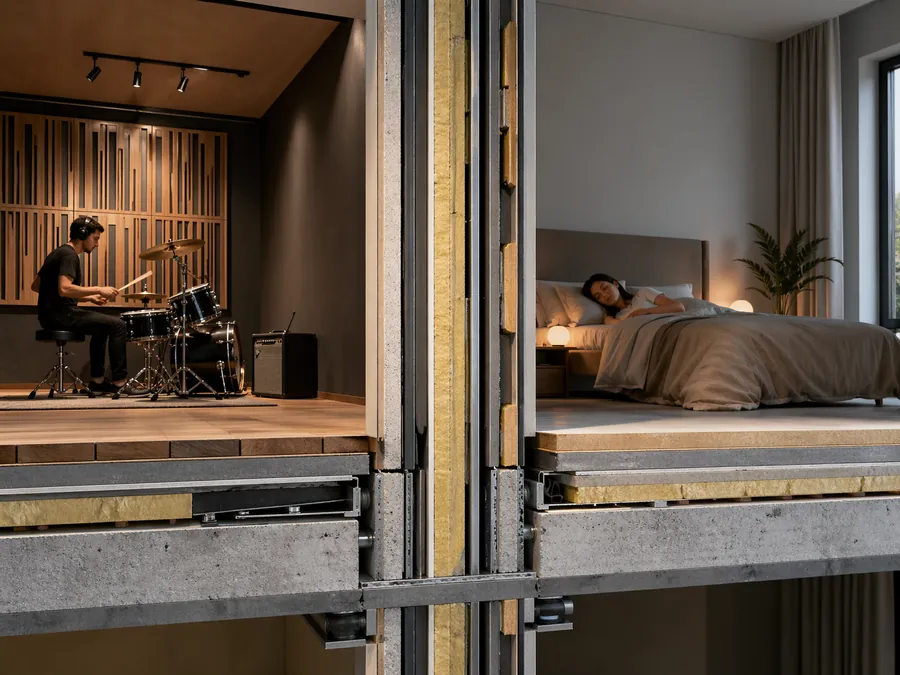
Sound isolation is a construction issue. It may involve walls, ceilings, floors, doors, windows, seals, penetrations, ventilation and structural flanking paths. It is much easier to design during renovation or construction than after the room is finished.
For home studios, isolation expectations need to be honest. A room for quiet production and nearfield monitoring may require modest isolation. A room for drums, amplified guitar, subwoofers or late-night loud playback may require a much more serious construction strategy.
Apartments and shared buildings need extra care
Home studios and listening rooms in apartments can work well, but they need careful planning. Shared walls, floors, ceilings and structural paths can carry sound in ways that are difficult to control.
Bass and vibration are particular concerns. A small studio monitor system may be manageable, but subwoofers, drums, amplified instruments or loud playback can create neighbour impact very quickly.
Strata rules, building construction and access limitations may also affect what can be done. In many apartment projects, the aim is to improve the room for the user while managing risk and setting realistic expectations.
The right acoustic advice can help identify whether the project is suitable for treatment only, whether isolation upgrades are needed or whether the intended use is too demanding for the space.
Workflow matters in home studios
A studio that measures well but does not support workflow can still fail as a creative space. The acoustic layout needs to work with the way the room will actually be used.
Monitor position, desk size, equipment access, instrument storage, cable paths, lighting, ventilation and sightlines all matter. If the room is too cluttered, treatment may be compromised. If the desk is oversized, reflections may become harder to control. If the speakers are placed for convenience rather than performance, the monitoring may be unreliable.
A good home studio should feel usable. The acoustic design should support the creative process, not make the room awkward.
Listening rooms need comfort as well as accuracy
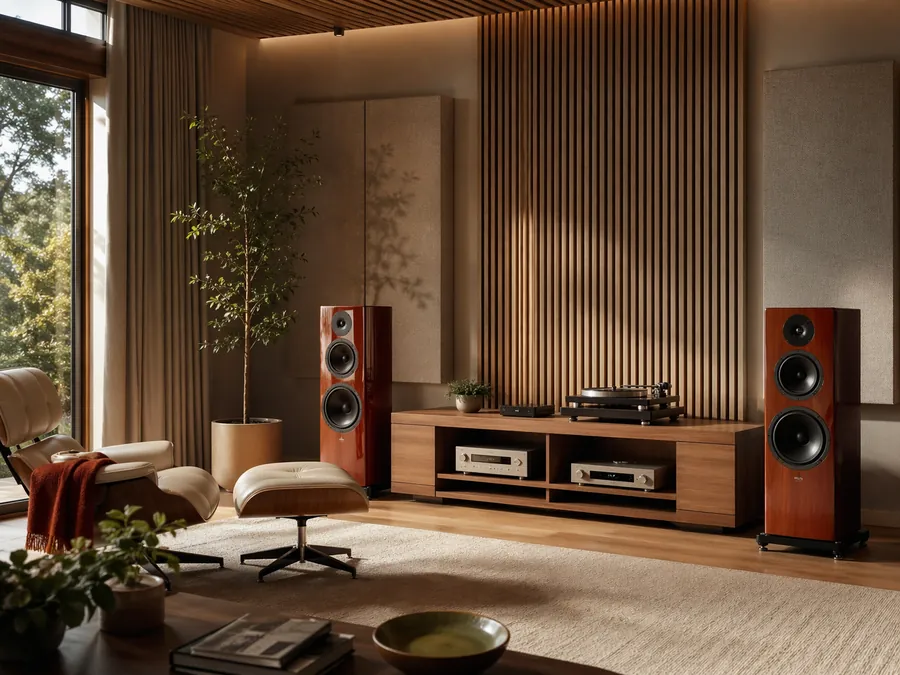
A listening room is not only a technical environment. It should also feel inviting. The best listening rooms combine acoustic control with comfort, atmosphere and a sense of place.
This may involve soft furnishings, rugs, curtains, timber, integrated panels, bookshelves, lighting, seating and carefully placed absorption or diffusion. The room should support long listening sessions without fatigue.
Accuracy and enjoyment are not opposites. A well-designed listening room allows the system to perform more consistently while still feeling residential and personal.
In high-quality homes, the acoustic treatment should feel integrated into the design language rather than added after the room is finished.
Foam is rarely the full answer
Foam is often used in home studios because it is cheap and visible, but it is rarely a complete acoustic solution. Thin foam may absorb some high frequencies, but it does little for bass and can leave the room sounding unbalanced.
A room with too much thin foam can become dull at the top while still having low-frequency problems. This is one reason many home studios feel treated but not accurate.
Better acoustic treatment usually involves a broader strategy: broadband absorption, low-frequency control, reflection management, appropriate surface coverage and sometimes diffusion or hybrid treatment.
The aim is not to add as much material as possible. The aim is to add the right treatment in the right places.
Design integration matters
A home studio or listening room does not need to look like a commercial studio unless that is the intended aesthetic. In residential projects, acoustic performance can often be integrated into the interior.
Treatment may be built into joinery, wall linings, ceiling features, fabric panels, timber slats, bookshelves, curtains, seating or custom furniture. A listening room may use softer residential materials, while a studio may need more focused treatment around the workstation.
The visual language should match the home. This is especially important when the room is shared, visible from other spaces or used for more than one purpose.
Good acoustic design can be technically effective and visually calm at the same time.
Ventilation and background noise are often overlooked
Home studios and listening rooms often contain people, equipment and sometimes closed doors or sealed windows. Without proper ventilation and cooling, the room can become uncomfortable.
However, ventilation can introduce noise. Fans, ducts, grilles, air conditioning units and equipment cooling can all affect the noise floor. This matters for recording, mixing and quiet listening.
A room that is too noisy in the background will mask detail and reduce the quality of the experience. A room that is too sealed may be uncomfortable to use for long sessions.
The design needs to balance comfort and quietness. This is easier when ventilation and services are considered early.
Buildability matters
Acoustic design needs to be buildable. Wall and ceiling treatment must coordinate with structure, lighting, power, ventilation, joinery and finishes. Isolation upgrades need careful sealing and junction detailing. Doors, windows and penetrations can undermine performance if they are not properly handled.
In home studios, small construction mistakes can create big acoustic consequences. A gap under a door, an unsealed cable penetration, a weak window or a poorly detailed ceiling can limit the result.
The right design should be practical for the scale of the project. A spare-bedroom studio does not need the same construction package as a commercial control room, but it still benefits from clear priorities and good detailing.
When to get acoustic advice
It is worth getting acoustic advice if the room will be used for mixing, critical listening, recording, loud music, subwoofers, drums or regular creative work. It is also useful when the room is in an apartment, near bedrooms, beside neighbours or part of a renovation.
Early advice can help with room selection, layout, speaker position, isolation expectations and treatment strategy before money is spent on products or equipment. For existing rooms, an acoustic review can help identify why the room sounds boomy, unclear, harsh, dull or unreliable.
The best results usually come from treating the room as part of the system from the beginning.
Final thought
A successful home studio or listening room is not defined by how much treatment it contains. It is defined by how well the room supports its purpose.
The right design gives the listener or creator more confidence. It improves clarity, bass balance, imaging, comfort and workflow. It also respects the limits of the home, the construction and the people around the room.
For Sydney homeowners, musicians, producers and serious listeners, the strongest approach is to start with the room. Once the room, layout and sound path are understood, the acoustic decisions become clearer, more practical and more effective.
Frequently Asked Questions
Home Studio & Listening Room Acoustic Design in Sydney
Specialist acoustic advice for home studios, listening rooms, music spaces and residential audio environments.

Home Studio & Listening Room Acoustic Design in Sydney
Specialist acoustic advice for home studios, listening rooms, music spaces and residential audio environments.
Read Nicholas Marriott's bio