
Home Theatre & Media Room Acoustic Design in Sydney: Isolation, Bass Control and Immersion
A practical guide to home theatre and media room acoustic design in Sydney, covering sound isolation, bass control, speaker layout, room treatment, background noise, buildability and the design decisions that create a more immersive listening experience.


.avif)
Home theatre acoustic design is about more than adding panels
A home theatre or media room is one of the most acoustically demanding spaces in a house. It has to feel immersive, controlled and powerful, but it also needs to work within the limits of a real building.
A good home theatre is not created by speakers alone. The room itself shapes the experience. Wall construction, room proportions, seating position, speaker layout, subwoofer placement, acoustic treatment, door seals, background noise, ventilation and construction detailing all influence how the final room performs.
In Sydney homes and apartments, these rooms can vary widely. Some are dedicated cinema rooms with controlled lighting and specialist AV systems. Others are flexible media rooms, family lounges or mixed-use spaces that need to support movies, gaming, streaming, music and everyday living.
The acoustic strategy should respond to the actual room, not a generic cinema formula.
Home theatre, media room or listening room?
The terms often overlap, but the acoustic priorities can be different.
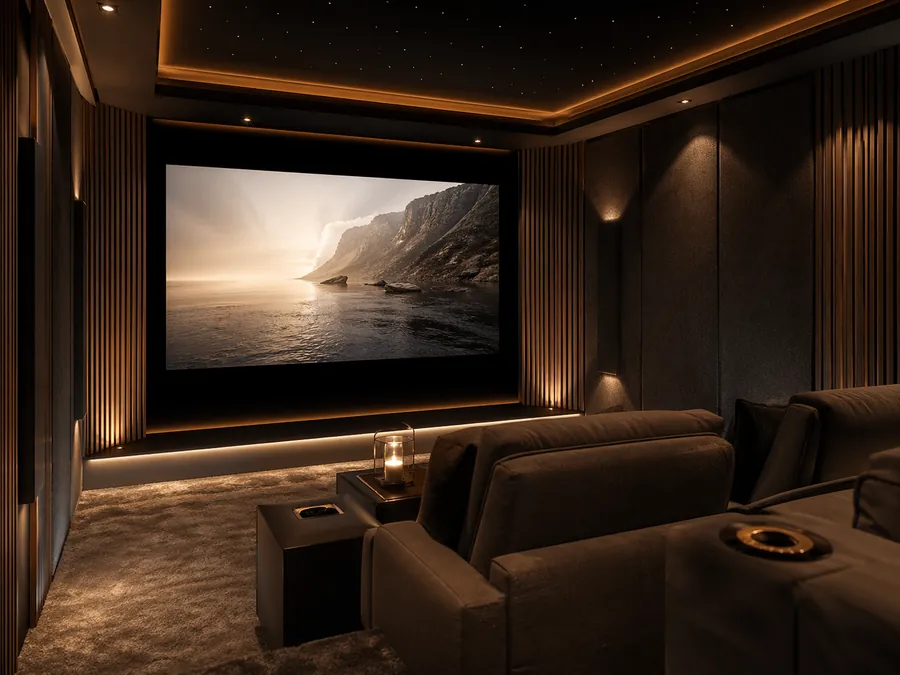
A dedicated home theatre is usually designed around immersion. It may include controlled lighting, a large screen, surround sound, subwoofers, tiered seating and more deliberate acoustic treatment.
A media room is often more flexible. It may function as a lounge, family room, gaming space or casual entertainment area. It still benefits from acoustic design, but the treatment may need to be more discreet and integrated into the interior.
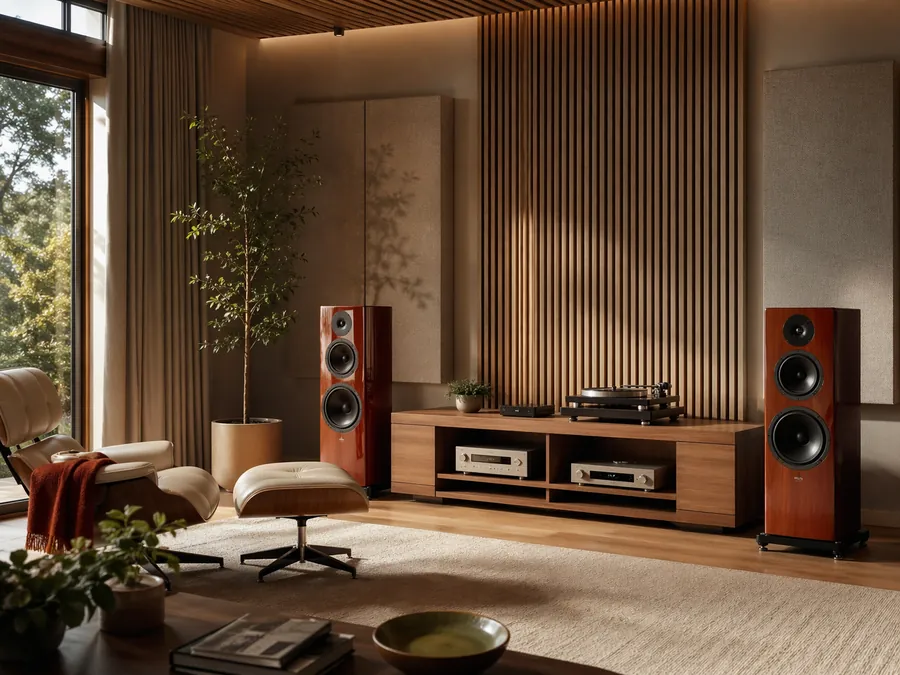
A listening room may focus more on stereo imaging, tonal balance, low-frequency control and critical audio performance. It may not need the same cinematic layout as a theatre, but it still requires careful room and speaker interaction.
Before designing the acoustic response, it is important to understand the room’s purpose. The best solution for a dedicated cinema may not suit a family media room, and the best solution for a listening room may not suit a surround-sound theatre.
The room is part of the system
Many people think of home theatre performance as an equipment question. Better speakers, a larger screen, more subwoofers or a more powerful amplifier may all help, but they cannot overcome a room that is working against the system.
The room affects clarity, bass response, imaging, dialogue intelligibility and listener comfort. Hard surfaces can create strong reflections. Poor proportions can exaggerate bass problems. Weak doors can leak sound to bedrooms or neighbours. Background noise from air conditioning can mask quiet film detail. Poor seating locations can place listeners in uneven bass zones.
A home theatre should be designed as a system: room, construction, services, speakers, seating and acoustic treatment working together.
Sound isolation comes before room treatment
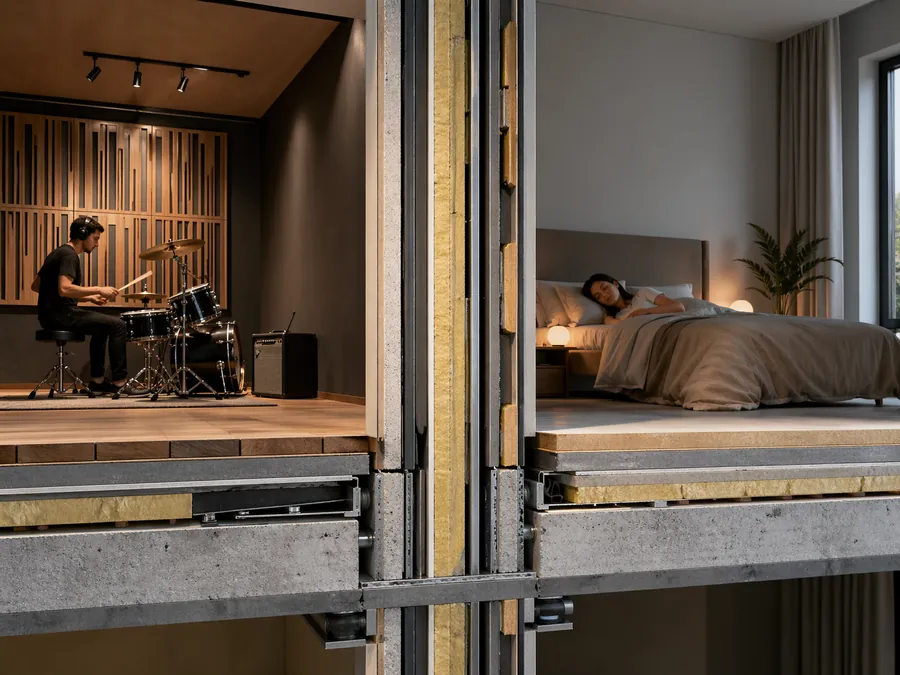
Sound isolation and acoustic treatment are different. Sound isolation is about reducing sound transfer between the theatre and other spaces. Acoustic treatment is about improving how sound behaves inside the room.
For home theatres, both often matter.
A room can be beautifully treated internally but still disturb bedrooms, neighbours or adjacent living areas if the isolation is weak. Conversely, a room can be heavily built for isolation but still sound poor internally if reflections, bass and speaker layout are not managed.
Sound isolation should be considered early because it is usually built into the structure. It can involve walls, ceilings, floors, doors, windows, seals, junctions, penetrations and mechanical services. Once the room is finished, meaningful isolation upgrades become more difficult and expensive.
Bass control is one of the hardest parts
Low-frequency sound is often the biggest challenge in home theatre acoustic design. Bass behaves differently from mid and high frequencies. It is strongly affected by room dimensions, boundaries, subwoofer placement and seating positions.
In an untreated or poorly planned room, bass may feel boomy in one seat and weak in another. Certain notes may dominate while others disappear. This can make explosions, music and effects feel uncontrolled rather than immersive.
Bass also travels more easily through structure than higher-frequency sound. This means a subwoofer can create disturbance outside the theatre even when voices and general sound seem reasonably contained.
Good bass control may involve room proportion planning, subwoofer placement, multiple subwoofers, bass trapping, seating position, boundary treatment and careful calibration. It is rarely solved by one product alone.
Room proportions influence the result
Room shape and proportions have a major influence on home theatre performance. A room with poor proportions can create strong standing waves, uneven bass and awkward speaker/listener relationships.
Perfect proportions are not always possible, especially in renovations and existing homes. But understanding the limits of the room helps guide better decisions.
A narrow room may limit speaker placement. A square room can create strong modal problems. A very low ceiling may affect overhead speakers and reflection control. A room with large openings may struggle with isolation and bass consistency. A room with a hard rear wall close to the seating position may need particular treatment.
The earlier these constraints are understood, the more likely the design can respond intelligently.
Speaker layout needs the room to support it
Speaker placement is not only an AV decision. It is also an acoustic and architectural decision.
Front speakers, centre channels, surrounds, height speakers and subwoofers all need suitable positions relative to the screen, seating, walls and treatment. If speakers are forced into poor locations because the room layout was fixed too early, performance can suffer.
Dialogue clarity depends heavily on the centre channel, room reflections and listening position. Surround immersion depends on placement, balance and the room’s ability to control unwanted reflections. Subwoofer performance depends on placement and room response.
A good home theatre design should allow the speaker system and room treatment to be planned together, rather than treating them as separate layers.
Early reflections affect clarity and immersion
When sound leaves a speaker, some of it travels directly to the listener and some of it reflects from walls, ceiling, floor and furniture. Early reflections can affect clarity, imaging and the sense of immersion.
In a home theatre, some reflection is useful. A room that is too dead can feel unnatural and uncomfortable. But uncontrolled reflections can blur dialogue, reduce detail and make the system feel less precise.
The aim is not to cover every surface. The aim is to treat the right surfaces in the right way. Side-wall reflection points, ceiling reflections, rear-wall behaviour and front-wall treatment all need to be considered in relation to the speaker layout and seating.
This is where acoustic design needs to be precise, not just decorative.
Media rooms need a softer, more integrated approach
Not every home has a dedicated cinema room. Many projects involve a media room that still needs to feel like part of the home.
In these spaces, the acoustic design usually needs to be more integrated. Treatment may be built into joinery, wall linings, curtains, rugs, ceiling features, upholstered seating or custom panels. The room may need to support both casual living and better film or music playback.
The design challenge is balance. The room should not feel like a technical booth. It should feel comfortable, residential and visually resolved, while still improving clarity, bass control and sound comfort.
This is especially important in architect-designed homes where the acoustic response must respect the interior language.
Doors, seals and weak points matter
Home theatre sound can escape through surprisingly small weak points. A lightweight door, poor perimeter seals, a gap under the door, recessed lighting, air-conditioning grilles, service penetrations or ceiling cavities can all reduce the effectiveness of a room.
A solid door leaf is useful, but it needs good seals and a suitable frame. A wall upgrade is useful, but only if junctions and penetrations are handled properly. A ceiling build-up is useful, but services and structure need to be considered.
Acoustic performance usually follows the weakest path. That is why isolation design needs attention to detail, not just thicker materials.
Background noise can reduce cinematic impact
A home theatre needs low background noise so quiet film detail, dialogue and dynamic range can be heard clearly. Air conditioning, ventilation, projectors, equipment fans, fridges, pumps and external noise can all reduce the quality of the listening experience.
This is often overlooked. A room may have excellent speakers and expensive finishes, but if the ventilation is noisy, the system cannot fully perform.
Mechanical services should be considered early. The room needs cooling, air movement and comfort, but the solution should not introduce intrusive noise. Duct paths, grilles, fan speeds, equipment locations and vibration control can all affect the result.
A quiet room does not mean an uncomfortable room. It means services are designed with the acoustic purpose of the space in mind.
Interior finishes shape the experience
Home theatres often use darker finishes, soft furnishings and controlled lighting, which can help acoustically. But material choice still needs care.
Too many hard surfaces can create strong reflections. Too much absorption can make the room feel flat and unnatural. Thick carpet may help with floor reflections but does not solve bass issues. Curtains can help with high and mid frequencies but do not replace isolation. Decorative panels may look acoustic but may not perform as expected.
The best interiors combine visual design and acoustic performance. Wall linings, fabric systems, timber battens, acoustic plaster, concealed absorption, bass treatment, seating and curtains can all contribute when designed as part of one system.
Home cinemas in apartments need realistic expectations
Home theatre and media room projects in apartments require particular care. Bass, subwoofers and impact through structure can affect neighbours, even when the room seems controlled internally.
Apartment construction, strata rules, shared slabs, flanking paths and access limitations can all influence what is possible. In some cases, the goal may be to improve control and reduce risk rather than create a fully isolated cinema.
This does not mean apartment media rooms cannot be improved. But they need realistic acoustic planning. Subwoofer use, room location, floor and wall construction, neighbour proximity and listening levels all need to be considered.
A design that works in a detached house may not be appropriate in a shared building.
Buildability is critical
Home theatre acoustic design can become complex quickly. Walls, ceilings, doors, lighting, speakers, screens, seating, joinery, ventilation and equipment all need coordination.
A detail that looks good on paper may not be buildable once structure, services, trades and budget are considered. Speaker positions may clash with studs or lighting. Acoustic treatment may conflict with joinery. Ceiling treatment may need to coordinate with air conditioning. Isolation details may be compromised by penetrations.
This is why practical acoustic design matters. The solution should be technically informed, but also clear enough for builders and trades to execute.
The best home theatre is not only designed well. It is built well.
Existing rooms can still be improved
Many media rooms are created within existing rooms. A spare room, basement, garage, rumpus room or living area may be adapted for cinema use. These spaces rarely start with ideal proportions or construction, but meaningful improvement is still possible.
The first step is to identify the main constraints. Is the issue sound leakage? Dialogue clarity? Bass boom? Neighbour impact? Poor speaker layout? Hard surfaces? Background noise?
From there, the design can prioritise the upgrades that will matter most. In some cases, treatment and layout changes may be enough. In others, isolation, doors, ceiling work or construction upgrades may be required.
Existing rooms benefit from a realistic, staged approach. Not every project needs to become a full custom cinema, but most can be made more comfortable and more controlled.
When to get acoustic advice
It is worth getting acoustic advice for a home theatre or media room when performance matters, when isolation is important, when subwoofers are planned, when the room is near bedrooms or neighbours, or when the project is still in design.
Early advice is especially valuable because many important decisions are hard to change later. Room layout, wall build-ups, door locations, speaker positions, ceiling design, services and seating all shape the final result.
An on-site acoustic consultation can also be useful for existing rooms where the problem is unclear. It can help identify whether the priority is isolation, treatment, bass control, background noise or layout.
Final thought
A home theatre or media room should feel immersive, comfortable and controlled. That result comes from the relationship between the room, the system and the construction.
The best acoustic design does not simply add panels at the end. It shapes the room from the beginning. It considers isolation, bass, speaker layout, treatment, services, seating and buildability as one connected design problem.
For Sydney homeowners, architects and builders, the strongest results come when acoustic design is considered early enough to influence the room itself. That is when the theatre can feel cinematic without becoming visually or practically compromised.
Frequently Asked Questions
Home Theatre & Media Room Acoustic Design in Sydney
Specialist acoustic advice for immersive residential cinema rooms, media rooms and high-performance listening spaces.

Home Theatre & Media Room Acoustic Design in Sydney
Specialist acoustic advice for immersive residential cinema rooms, media rooms and high-performance listening spaces.
Read Nicholas Marriott's bio