
Kitchen Acoustic Design in Sydney: Hard Surfaces, Appliances and Family Noise
A practical guide to kitchen acoustic design in Sydney, covering hard surfaces, appliances, dining noise, family activity, reverberation, material balance and integrated acoustic treatment for more comfortable residential interiors.


.avif)
Kitchens are often the loudest rooms in the home
Kitchens are designed for function. They need durable surfaces, easy cleaning, strong lighting, storage, appliances, water, extraction and clear circulation. But those same practical requirements can make kitchens acoustically challenging.
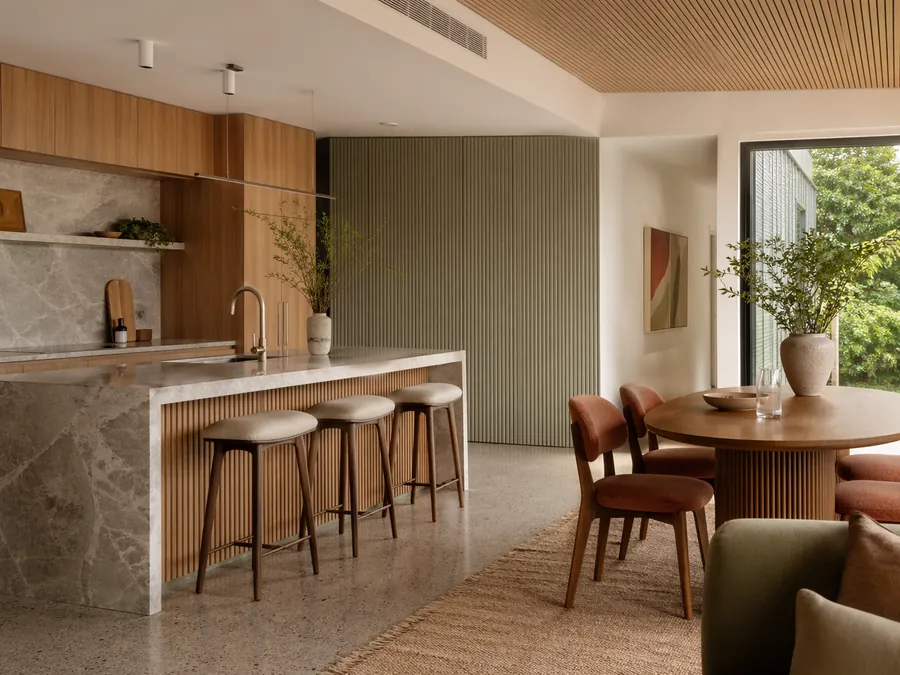
Stone benchtops, tiled splashbacks, timber or concrete floors, plasterboard ceilings, glass doors, hard joinery and large open connections to dining or living areas can all reflect sound. Once conversation, cooking, children, appliances and dining activity are added, the room can quickly feel louder than expected.
In many Sydney homes and apartments, the kitchen is no longer a separate utility room. It is part of the main living space. That means kitchen acoustics affect more than cooking. They influence conversation, family comfort, entertaining, media use and the overall feel of the home.
Good kitchen acoustic design is not about making the space silent. It is about balancing hard, functional surfaces with enough acoustic softness to make the room easier to use.
Why kitchens become acoustically harsh
Kitchens become harsh when too many surfaces reflect sound and too few surfaces absorb it. This is common because the materials that work well practically are often acoustically reflective.
Stone, porcelain, ceramic tile, glass, polished concrete, metal, timber veneer and plasterboard can all contribute to a bright acoustic character. In small amounts, this is not necessarily a problem. But when every major surface is hard, sound has nowhere to go.
The result may be a kitchen where cutlery sounds sharp, chairs scrape loudly, appliances feel intrusive and conversation becomes tiring. In open-plan layouts, the sound can spill into the dining and living areas, making the whole home feel noisier.
The issue is not that the materials are wrong. It is that the room needs acoustic balance.
Kitchen acoustics are about activity, not just room shape
A kitchen is acoustically different from a quiet room because it creates sound continuously. Appliances hum, rangehoods run, taps flow, plates and pans move, drawers close, chairs shift, people talk across the bench and children often move in and out of the space.
This means the acoustic strategy needs to respond to real use. A kitchen that looks calm in photographs may still become difficult during breakfast, dinner or entertaining.
The most useful question is: what does the room feel like when people are actually using it?
If the space becomes tiring, sharp or chaotic, the design may need more absorption, better zoning, softer adjacent finishes, quieter appliance choices or improved separation from bedrooms and study areas.
Hard surfaces can stay, but they need balance
High-quality kitchens often rely on hard finishes. Stone benchtops, timber joinery, polished floors and large glazing can be central to the architectural character of the home. Acoustic design should not fight those choices.
Instead, the aim is to balance them. If the benchtop, splashback, floor and ceiling are all reflective, other parts of the room may need to do more acoustic work. This could include a rug in the dining area, upholstered dining chairs, curtains near glazing, acoustic ceiling treatment, soft banquette seating, textured wall finishes or absorptive treatment integrated into joinery.
Balance is the key. A kitchen does not need to look soft everywhere. It needs enough acoustic relief in the right places so that the hard surfaces do not dominate the room.
Open-plan kitchen and dining areas need acoustic zoning
Many kitchen acoustic problems are really open-plan problems. The kitchen, dining and living areas operate as one connected volume, but each zone has different acoustic needs.
The kitchen needs durability and function. The dining area needs conversation comfort. The living area needs calm, television clarity and a softer everyday feel. If all three zones are treated as one hard-surfaced space, noise can build up quickly.
Acoustic zoning helps each area work better without closing the room off. A dining rug can define the dining zone. Upholstered seating can soften conversation. Curtains can reduce reflections from glazing. Ceiling treatment can be placed above the kitchen, dining table or circulation zone. Joinery can be designed to include absorptive surfaces where they are useful.
The space remains open, but the sound becomes more organised.
Ceilings are often the best place to start
In kitchens and dining areas, wall space is often limited. Benchtops, splashbacks, cabinets, shelves, windows and appliances can make it difficult to add acoustic treatment to vertical surfaces.
The ceiling is often the largest available surface. This makes it a powerful opportunity for acoustic improvement, especially in open-plan kitchens with hard floors and large glazing.
Acoustic ceiling treatment can be subtle. It might involve acoustic plaster, perforated plasterboard, timber acoustic linings, ceiling rafts, integrated panels or carefully placed absorptive zones. The right approach depends on the architecture, lighting, air conditioning, exhaust, sprinklers, speakers and construction sequence.
In a refined residential interior, the ceiling treatment should feel intentional. It should support the architecture rather than look like a commercial retrofit.
Appliances contribute to the acoustic experience
Kitchen acoustics are not only about surfaces. Appliances can strongly affect how the room feels.
Rangehoods, dishwashers, fridges, wine fridges, coffee machines, waste disposal units and mechanical ventilation can all add background noise. Some sounds are short and occasional. Others are continuous or repetitive. In open-plan homes, these sounds may affect the living room, dining area or nearby bedrooms.
Quieter appliance selection can make a meaningful difference, especially where the kitchen is part of the main living space. Placement also matters. A noisy fridge beside a dining area or study nook may be more noticeable than one located in a more buffered position.
Acoustic design should consider the kitchen as a working system: surfaces, layout, appliances, services and human activity all interact.
Rangehoods and extraction need particular care
Rangehood noise is one of the most common complaints in open-plan kitchens. A loud rangehood can make conversation difficult and may discourage people from using it properly.
The acoustic issue may come from the fan, duct path, motor location, grille, air speed or vibration. Some rangehoods are inherently louder than others, but installation quality and ducting can also affect the result.
Where possible, kitchen design should consider extraction early. A better duct route, quieter fan arrangement, appropriate sizing and vibration control can help reduce avoidable noise. This is especially important in open-plan living areas where the kitchen is visually and acoustically connected to the rest of the home.
A beautiful kitchen should not require people to talk over its mechanical systems.
Dining areas are part of the kitchen acoustic strategy
In many homes, the dining table is where kitchen noise becomes most noticeable. Hard chairs, hard floors, glass, stone and close proximity to appliances can make dining feel loud and uncomfortable.
Conversation around a dining table depends on clarity. If reflections build up, people raise their voices. As voices get louder, the room becomes more tiring. This is a common feedback loop in reflective dining spaces.
Softening the dining area can help. Upholstered chairs, a rug, curtains, acoustic ceiling treatment, soft wall elements or built-in seating can all improve comfort. The aim is not to make the dining area feel muffled. It is to reduce the sharpness and build-up that make conversation harder.
Family kitchens need acoustic resilience
Family kitchens often have more intense acoustic demands than showpiece kitchens. Children move quickly through the space. Chairs scrape. Drawers close. Multiple conversations overlap. Appliances run while homework, cooking and television may be happening nearby.
In these homes, acoustic comfort is not a luxury detail. It affects the daily atmosphere of the house.
A more resilient kitchen design considers noise from the beginning. Durable materials can still be used, but they should be balanced with strategic softness. Layout should reduce conflict between noisy and quiet zones. Dining and living areas should not be left acoustically exposed. The room should be able to handle everyday family activity without becoming overwhelming.
The best family kitchen acoustics feel natural. People may not notice the acoustic design directly, but they notice that the space is easier to live in.
Acoustic treatment can be integrated into joinery
Joinery is one of the most useful opportunities in kitchen and dining acoustic design. While kitchen cabinets themselves are often hard and reflective, surrounding joinery can sometimes be designed to absorb or diffuse sound.
This might include acoustic wall panels near dining areas, absorptive backing behind slatted timber, fabric-backed joinery elements, soft banquette seating, display shelving, integrated wall linings or acoustic treatment concealed within architectural features.
The benefit of joinery-based treatment is that it can feel custom and intentional. It does not need to look like a separate acoustic product. It can become part of the interior language.
This is especially valuable in high-end residential projects where acoustic performance and visual refinement need to work together.
Sound transfer from kitchens also matters
A kitchen can affect other rooms in the home. Bedrooms, studies, media rooms and neighbouring apartments may all be disturbed by kitchen activity if the planning and separation are weak.
Kitchen noise can travel through open doors, corridors, shared walls, ceilings, floors and service penetrations. Plumbing noise, appliance vibration and impact from cupboards or benches may also be relevant.
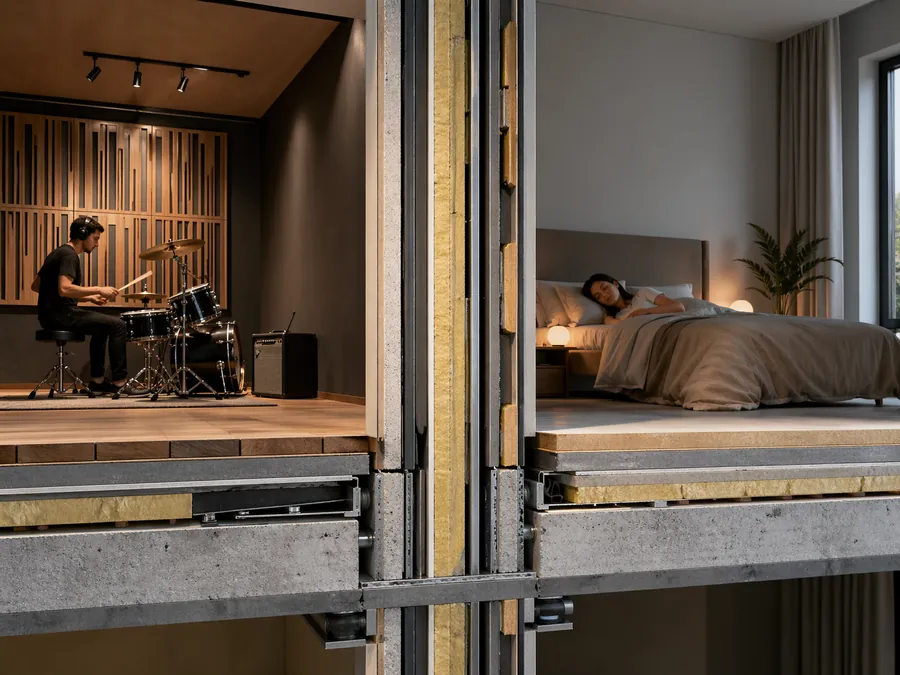
This is a different issue from echo within the kitchen. Reducing reverberation can make the kitchen feel calmer, but it may not stop sound travelling to a bedroom. If kitchen noise is disturbing another room, sound isolation and planning may also need to be considered.
A good acoustic strategy separates the internal room comfort question from the room-to-room transfer question.
Renovations are the best time to improve kitchen acoustics
Kitchen acoustic upgrades are easiest to integrate during renovation or design development. Once joinery, lighting, ceilings, appliances and finishes are installed, the options can become more limited.
During renovation, acoustic design can influence ceiling systems, curtain tracks, dining layouts, appliance selection, ducting routes, wall linings, floor finishes and joinery details. It can also identify areas where a small change may prevent a larger acoustic problem later.
For existing kitchens, improvement is still possible. Rugs, curtains, furniture, soft seating and targeted acoustic treatment can all help. But if a major renovation is already planned, acoustic comfort should be considered before the final material and services decisions are locked in.
Buildability matters
Kitchen acoustic design has to work with real construction constraints. Ceiling treatment must coordinate with lighting, extraction, sprinklers, air conditioning and access panels. Wall treatment must work around splashbacks, power points, cabinetry and cleaning needs. Curtains need the right track, fabric, fullness and clearance. Joinery-based treatment needs the correct backing, cavity and detailing.
Acoustic products alone do not guarantee a good result. The detail must be suitable for the room and installed properly.
This is why buildability is so important. A practical acoustic solution should improve comfort without creating maintenance problems, visual conflict or construction confusion.
When to get acoustic advice for a kitchen
It is worth getting acoustic advice if a kitchen or open-plan dining area feels loud, sharp, echoey or tiring. It is especially useful when a renovation is planned, when the design includes stone, glass, polished floors or high ceilings, or when the kitchen connects directly to living, study or sleeping areas.
Acoustic advice can help clarify whether the issue is reverberation, appliance noise, sound transfer, layout or material balance. It can also help identify where treatment should be integrated so the finished space feels resolved rather than retrofitted.
For homeowners, architects and builders, the best time to address kitchen acoustics is before the kitchen is built.
Final thought
A kitchen can be durable, beautiful and acoustically comfortable. The challenge is balance.
Hard surfaces are often necessary. Appliances are unavoidable. Family activity is part of the room’s purpose. But with thoughtful acoustic design, these elements do not need to make the space harsh or exhausting.
The strongest kitchen acoustic design works quietly in the background. It uses ceilings, furnishings, dining zones, joinery, curtains, appliance choices and planning to create a room that is easier to talk in, cook in and live around.
A well-designed kitchen should not only look calm. It should sound calm enough to use every day.
Frequently Asked Questions
Kitchen Acoustic Design for Sydney Homes
Practical acoustic advice for hard-surface kitchens, dining areas and open-plan residential interiors.

Kitchen Acoustic Design for Sydney Homes
Practical acoustic advice for hard-surface kitchens, dining areas and open-plan residential interiors.
Read Nicholas Marriott's bio