
Shared-Space Acoustics: Communication, Calm and Everyday Wellbeing
A practical guide to shared-space acoustics, covering reception areas, corridors, breakout zones, communal rooms, waiting areas, kitchens, lounges and the design decisions that shape stress, speech clarity, comfort and everyday wellbeing.


.avif)
Shared spaces shape how people feel in a building
Shared spaces are often treated as secondary rooms. They are the areas people pass through, wait in, gather in, talk in or use between the main functions of a building.
But acoustically, these spaces matter.
Reception areas, corridors, waiting rooms, breakout zones, kitchens, lounges, communal rooms, libraries, foyers, stair landings and shared amenities all influence how a building feels. They affect first impressions, ease of communication, stress, wayfinding, privacy, social comfort and recovery between more focused activities.
A shared space does not need to be silent. In many cases, it should feel social and alive. But it should not be so loud, echoey or chaotic that people avoid it, rush through it or struggle to communicate.
Good shared-space acoustic design is about balance: enough activity to feel welcoming, enough control to feel comfortable, and enough separation so one activity does not dominate the whole environment.
Everyday wellbeing is affected by ordinary sound
Acoustic wellbeing is not only about extreme noise. It is often shaped by everyday sound: voices, footsteps, doors, chairs, coffee machines, phones, children, music, air conditioning, movement, laughter, waiting-room conversations, kitchen sounds and corridor activity.
These sounds may be normal, but they can become tiring when the space is too reflective, too crowded, poorly zoned or lacking acoustic relief.
A reception area with hard floors and a high ceiling may feel impressive but stressful. A corridor may carry noise into nearby rooms. A breakout space may disturb work areas. A communal kitchen may become the loudest point in an office. A waiting room may make private conversations too exposed. A shared lounge may be visually comfortable but acoustically harsh.
Shared-space acoustics are about making everyday sound easier to live with.
Shared spaces need acoustic purpose
A shared space should be designed around its purpose. Not all shared rooms need the same acoustic condition.
A reception area needs welcome, clarity and enough privacy for conversations at the desk. A waiting area needs calm and comfort. A corridor needs movement without spreading noise unnecessarily. A breakout space needs social energy without overwhelming nearby focus areas. A communal kitchen needs activity and durability, but not uncontrolled noise. A shared lounge needs conversation comfort and a sense of ease.
The first question is: what should this space allow people to do?
Once the purpose is clear, the acoustic design can support it through zoning, materials, furniture, ceiling treatment, wall treatment, separation, background noise control and layout.
Reception areas need clarity and calm
Reception areas often combine several acoustic demands at once. People arrive, ask questions, wait, move through, answer calls, speak to staff and sometimes discuss private information.
A reception area that is too reverberant can make speech less clear and increase noise build-up. A reception desk that is too exposed may reduce privacy. A waiting area too close to the desk may make conversations awkward. Hard finishes may make the space feel impressive but acoustically uncomfortable.
Good reception acoustics support both welcome and communication. The room should feel calm enough to wait in, clear enough for conversation and private enough for basic interactions.
Useful strategies may include acoustic ceilings, soft furniture, rugs, curtains, wall treatment, spatial separation between waiting and desk areas, careful music levels and attention to mechanical noise.
The space should feel open, but not acoustically exposed.
Waiting rooms need lower acoustic intensity
Waiting rooms can be stressful even before acoustics are considered. People may be anxious, tired, unwell, overstimulated or uncertain. The sound environment can either add to that stress or help reduce it.
A waiting room with hard surfaces, echo, loud reception conversations, television noise, children’s activity or mechanical hum can feel more stressful than it needs to. A calmer waiting area can help people feel more settled.
This does not mean a waiting room must be silent. It means the acoustic intensity should be controlled. Speech should not bounce sharply around the room. Background noise should not dominate. Private conversations should not feel overly exposed. Children and adults should have enough spatial definition that different activities do not collide.
Soft furniture, ceiling absorption, curtains, acoustic wall treatment, zoning and low-noise services can all help waiting rooms feel more humane.
Corridors can carry noise through a building
Corridors are often underestimated acoustically. They are movement spaces, but they can also become sound corridors.
Voices, footsteps, doors, trolley movement, children, calls and activity can travel along corridors and enter adjacent rooms. A hard corridor with parallel walls, hard floors and no absorption can make movement sound louder and more intrusive.
This matters in schools, workplaces, clinics, apartments, hospitality spaces and homes. A noisy corridor can disturb classrooms, bedrooms, consulting rooms, meeting rooms, hotel rooms, offices or quiet study areas.
Corridor acoustic design can involve soft or absorptive finishes, controlled door detailing, thresholds, ceiling treatment, wall treatment, rugs where appropriate, changes in geometry, door offsets and separation from quiet zones.
A corridor should support movement without becoming the main noise path of the building.
Breakout spaces need boundaries
Breakout spaces are meant to encourage conversation, informal meetings, rest and social connection. Their sound is part of their purpose.
The problem occurs when breakout noise spills into areas that need focus or privacy. A breakout table beside open workstations, a kitchen beside a meeting room or a social zone beside a study area can quickly create conflict.
Breakout spaces need acoustic boundaries. These boundaries do not always need to be walls. They may be created through distance, furniture, partial screens, ceiling treatment, rugs, curtains, joinery, planting, acoustic wall zones or changes in floor and ceiling materials.
The goal is not to suppress social energy. It is to locate and shape it so that the breakout area supports the building rather than disturbing it.
Communal kitchens are often acoustic hotspots
Communal kitchens can be some of the loudest shared spaces in a building. They include hard surfaces, appliances, coffee machines, fridges, microwaves, dishwashers, cutlery, chairs, bins, taps and conversation.
In workplaces, schools, residential buildings and community spaces, kitchens often become informal meeting points. That can be positive, but if the kitchen is too close to quiet areas or has too many hard reflective surfaces, it may create constant acoustic spill.
Acoustic design for communal kitchens should consider zoning, ceiling absorption, soft adjacent seating, acoustic separation from focus areas, appliance noise, furniture selection and the relationship between kitchen activity and nearby rooms.
A kitchen can remain functional and social while being less acoustically harsh.
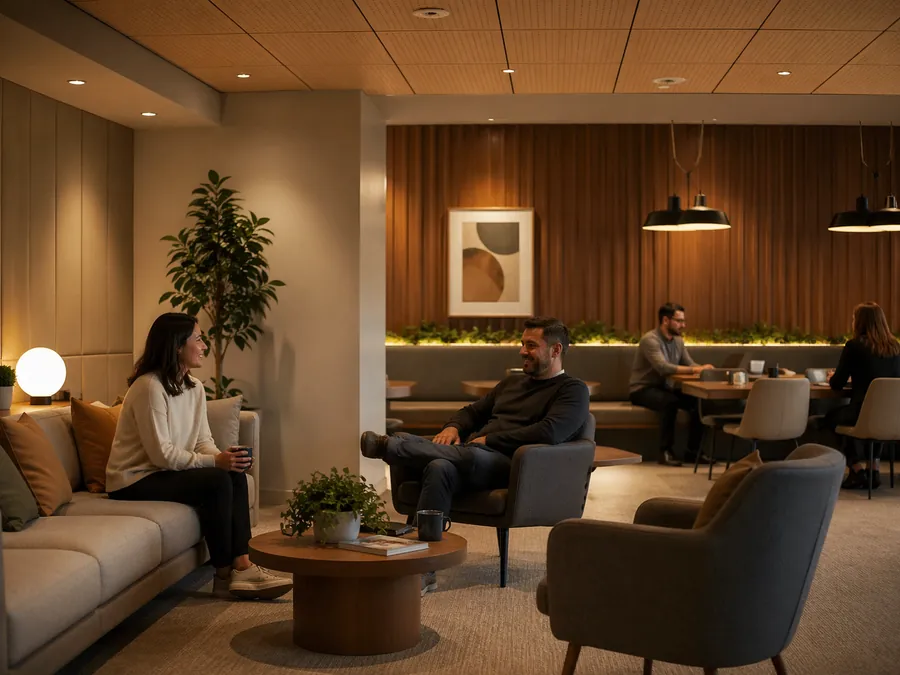
Shared lounges need conversation comfort
Shared lounges are often intended to feel relaxed. They may be used for informal conversation, waiting, socialising, reading, recovery or quiet breaks. If the acoustics are poor, the lounge may fail to feel restful.
Conversation comfort is central. People should be able to speak without raising their voices. Nearby conversations should not dominate the whole room. The space should feel soft enough for comfort but not so dead that it feels lifeless.
Furniture is important here. Sofas, rugs, curtains, upholstered chairs, bookshelves, plants and soft materials can all help. Ceiling and wall treatment may also be needed in larger or harder spaces.
A good shared lounge should feel easy to occupy. The sound environment should support staying, not leaving.
Communal rooms need flexibility without chaos
Communal rooms often serve multiple purposes: meetings, workshops, social events, children’s activities, presentations, shared meals, exercise, study, support groups or community gatherings.
This flexibility is useful, but acoustically challenging. A room that works for a small meeting may not suit a children’s activity. A room that works for social events may be too reverberant for speech. A room that is heavily treated for quiet use may feel flat for music or community events.
The acoustic design should identify the most important uses and provide a balanced response. This may include acoustic ceilings, wall treatment, curtains, movable elements, storage, furniture zoning and suitable audio systems.
A flexible room does not need to be perfect for every use. It needs to be usable for the activities that matter most.
Shared spaces need acoustic zoning
Zoning is one of the most important tools in shared-space acoustics. It separates active, calm, social, private and transitional areas so they do not all compete.
A reception desk may need separation from a waiting area. A breakout zone may need distance from focus rooms. A corridor may need buffering from consulting rooms. A communal kitchen may need to be away from quiet work areas. A children’s area may need a softer boundary from adult seating. A lounge may need quieter corners and more active conversation areas.
Zoning can be created through layout, furniture, ceiling treatment, screens, shelving, curtains, joinery, level changes, materials and acoustic treatment.
Good zoning makes the space easier to understand and easier to use.
Privacy matters in shared spaces
Shared spaces often include conversations that are not fully public. Someone may speak to reception staff, discuss an appointment, take a phone call, speak with a colleague, comfort a child or have a private conversation in a communal room.
If the space is too hard and reflective, speech can carry too clearly. If waiting areas sit too close to service desks, privacy can feel compromised. If meeting rooms open directly into shared lounges, speech may leak in both directions.
Privacy in shared spaces is often about reducing intelligibility, not blocking all sound. People may hear that a conversation is happening, but they should not necessarily understand every word.
This can be supported through distance, background sound, absorption, partial screening, door placement, thresholds and better room separation.
Shared spaces affect sensory comfort
Shared spaces can be difficult for sensory-sensitive people because they often contain many unpredictable sound sources. Conversations, movement, doors, music, appliances, children, phones and mechanical systems can all overlap.
A sensory-aware shared space should reduce unnecessary acoustic intensity. This may involve lower reverberation, quieter services, defined quiet zones, softer materials, calmer transitions and clear separation between active and calm areas.
Not every shared space needs to be low-stimulation. But buildings should provide options. A person should not have to choose between staying in an overwhelming shared area or leaving the building entirely.
Calmer corners, retreat spaces and better acoustic zoning can make shared environments more inclusive.
Background music can help or harm
Background music is often used in reception areas, hospitality settings, shared lounges and waiting rooms. It can create atmosphere and provide some speech masking. But it can also become a source of stress if it is too loud, too bright, repetitive or poorly controlled.
Music should not be used to cover up poor acoustics. If a room is too reverberant, adding music can make the sound environment more cluttered. If speech privacy is weak, music may help slightly but not solve the underlying layout or separation issue.
Where music is used, the speaker placement, volume, tone, room acoustics and user expectations all matter.
The best shared spaces do not rely on sound to create atmosphere at the expense of comfort.
Mechanical noise should feel unobtrusive
Shared spaces need ventilation, cooling and air movement. But mechanical noise can shape how the room feels.
A loud air-conditioning grille, humming equipment, noisy fridge, coffee machine, hand dryer or fan can make a shared space feel more stressful. Intermittent mechanical noise can be especially distracting because it interrupts the room unpredictably.
Mechanical systems should support the acoustic environment rather than dominate it. This may involve quieter equipment, better grille selection, reduced air velocity, plant separation, vibration control or careful zoning of noisy appliances.
Comfort is not only thermal. It is also acoustic.
Material choices influence shared-space energy
The material palette of a shared space strongly affects its acoustic character.
Hard floors, glass, stone, plasterboard, concrete and exposed ceilings can make a space feel lively but may also increase reverberation. Soft furnishings, curtains, acoustic ceilings, fabric panels, rugs, timber systems with absorptive backing, upholstered seating and integrated joinery can help restore balance.
The right material strategy depends on the room’s purpose. A reception area may need clarity and calm. A café-style breakout zone may need liveliness with control. A corridor may need durability and reduced footfall harshness. A waiting room may need softness and privacy.
Materials should be selected not only for appearance and maintenance, but also for how they shape the sound of the space.
Furniture can create acoustic structure
Furniture is not only functional. It can create acoustic structure.
Sofas and upholstered chairs absorb sound. Bookshelves and display units can break up reflections. Tall furniture can create partial screening. Banquettes can soften dining and waiting areas. Rugs can define zones. Plants and soft accessories can contribute to comfort, even if they are not major acoustic treatment.
Furniture can also guide behaviour. A lounge layout can support quieter conversation. A breakout table can be located away from focus zones. A waiting area can be arranged so people are not forced to sit directly beside reception conversations.
Furniture is one of the easiest ways to make shared spaces feel more acoustically legible.
Acoustic treatment can be integrated quietly
Shared spaces often need acoustic treatment to feel integrated, not added.
Treatment may be built into ceilings, acoustic plaster, wall linings, timber slats with absorptive backing, curtains, fabric panels, joinery, banquettes, screens, shelving or custom furniture.
This is especially useful in high-design interiors where visible acoustic products may feel out of place. The acoustic solution should support the room’s visual character while improving comfort.
The key is to provide enough treatment in the right places. A small decorative acoustic element may not meaningfully improve a large reverberant room. Surface area, depth, backing and placement all matter.
Integrated treatment works best when planned early.
Thresholds help manage acoustic transitions
Shared spaces often sit between other spaces. A reception area sits between outside and inside. A corridor connects rooms. A breakout area sits between work and social activity. A waiting room sits between arrival and consultation.
Thresholds help manage these transitions acoustically. They can reduce direct sound paths, signal a change in activity and create a softer shift between sound environments.
A threshold might be a lobby, curtain, door offset, change in ceiling treatment, joinery edge, furniture arrangement or material shift.
Good thresholds prevent sound from rushing directly from one condition into another. They make shared spaces feel more controlled and less abrupt.
Circulation should not undermine quiet rooms
Shared circulation can undermine the acoustic comfort of nearby rooms if it is not planned carefully.
A corridor outside bedrooms, classrooms, consulting rooms, focus rooms or meeting rooms can create constant interruption. Door slams, voices, footsteps and waiting activity can all pass into adjacent spaces.
This is not only a wall issue. The door location, seals, threshold, corridor finish, ceiling treatment and behaviour of the circulation space all matter.
Acoustic design should consider circulation as part of the building’s sound system. Movement is necessary, but it should not destroy the function of the rooms it connects.
Shared spaces in residential buildings need neighbour awareness
Apartment buildings, co-living spaces, aged-care settings, student housing and shared residential facilities often include communal lounges, corridors, gyms, kitchens, laundries, entries and outdoor areas.
These spaces can affect residents’ comfort if sound travels into private dwellings. A communal room beside bedrooms, a corridor outside apartment doors, a rooftop terrace above units or a shared gym below apartments can create acoustic conflict.
Good planning should separate communal activity from private retreat where possible. Where adjacency is unavoidable, walls, floors, ceilings, doors, seals, opening hours, surface finishes and management expectations may all need attention.
Shared amenity should not come at the expense of everyday residential comfort.
Shared spaces in workplaces need both energy and retreat
Workplaces depend on shared spaces for culture and collaboration. Kitchens, lounges, breakout areas and informal meeting spaces are useful because they support connection.
But if they are poorly located or too acoustically lively, they can undermine focus. The most successful workplaces provide both energy and retreat.
A social zone can be lively if it is separated from quiet work. A lounge can support informal meetings if it does not leak into focus rooms. A kitchen can be active if it is not the acoustic centre of the whole office.
Workplace shared spaces should be planned as part of the acoustic ecosystem, not as leftover zones.
Shared spaces in schools need clear acoustic roles
Schools and learning environments include many shared spaces: corridors, libraries, breakout areas, halls, canteens, play zones, foyers and multipurpose rooms.
These spaces can either support learning or create constant acoustic spill. A corridor may disturb classrooms. A library may need separate zones for group work and quiet reading. A hall may need clarity for speech. A canteen may need enough absorption to reduce excessive noise build-up.
Children and staff both benefit when shared spaces have clear acoustic roles.
The design should identify which areas are active, which are quiet, which are transitional and which need flexibility.
Shared spaces in clinics and care environments need dignity
Clinics, therapy centres, care environments and support spaces often include reception areas, waiting rooms, corridors, consulting rooms and shared lounges.
In these settings, acoustic comfort is tied to dignity and privacy. People may be discussing sensitive information, waiting while anxious, supporting children or family members, or managing sensory or health needs.
A hard, echoey, exposed waiting room can make the experience more stressful. A reception area with poor privacy can feel uncomfortable. A corridor that leaks sound into consulting rooms can undermine confidentiality.
Acoustic design in these environments should support calm, privacy and clear communication.
Existing shared spaces can be improved
Many shared spaces only reveal their acoustic problems after occupation. A reception area may become too loud. A breakout room may disturb nearby work. A corridor may carry noise. A communal room may be avoided because it feels harsh. A waiting room may feel stressful.
Improvement is possible, but the first step is diagnosis.
Is the issue reverberation? Speech privacy? Mechanical noise? Hard finishes? Poor zoning? Appliance noise? Door leakage? Circulation paths? A lack of quiet options?
Once the main issue is clear, upgrades can be targeted. Options may include acoustic ceiling treatment, wall panels, curtains, rugs, softer furniture, door improvements, services review, zoning changes, sound masking, layout changes or integrated treatment.
The best solution is specific to the shared space and its use.
Buildability and maintenance matter
Shared spaces are heavily used. Acoustic solutions need to be durable, cleanable, safe and maintainable.
A reception wall panel may need to resist impact. A waiting-room fabric surface may need to be cleanable. Curtains need to be operable and maintained. Ceiling treatment must allow service access. Furniture needs to withstand daily use. Wall linings need to coordinate with signage, lighting, power and joinery.
A treatment that looks good but fails under everyday use is not a good shared-space solution.
Buildability and maintenance should be considered at the same time as acoustic performance.
When to get acoustic advice
It is worth getting acoustic advice when a shared space feels noisy, echoey, stressful, difficult for conversation, lacking privacy or disruptive to nearby rooms.
Advice is especially useful for reception areas, waiting rooms, workplace breakout zones, communal rooms, school shared spaces, libraries, corridors, clinics, residential amenity spaces and hospitality-adjacent interiors.
An acoustic review can help identify whether the issue is reverberation, speech privacy, zoning, mechanical noise, material balance, circulation or sound transfer. From there, the design can focus on practical changes that improve comfort and usability.
Final thought
Shared spaces are where people experience a building between its formal functions. They wait, move, talk, rest, gather, transition and recover.
If these spaces are acoustically harsh, the whole building can feel harder to use. If they are acoustically balanced, the building feels calmer, more welcoming and more humane.
Good shared-space acoustic design does not remove life from a room. It gives sound structure. It helps people communicate without strain, gather without overwhelming others and move through a building without carrying noise everywhere.
The best shared spaces feel easy. Acoustics are a major part of that ease.
Frequently Asked Questions
About Nicholas Marriott
Practical acoustic advice for reception areas, waiting rooms, corridors, breakout zones, communal rooms and shared interiors.
About Nicholas Marriott
Practical acoustic advice for reception areas, waiting rooms, corridors, breakout zones, communal rooms and shared interiors.
Read Nicholas Marriott's bio