
Vocal Booth & Recording Room Acoustic Design: Size, Ventilation, Isolation and Tone
A practical guide to vocal booth and recording room acoustic design, covering size, ventilation, isolation, background noise, treatment balance and the decisions that shape vocal tone.


.avif)
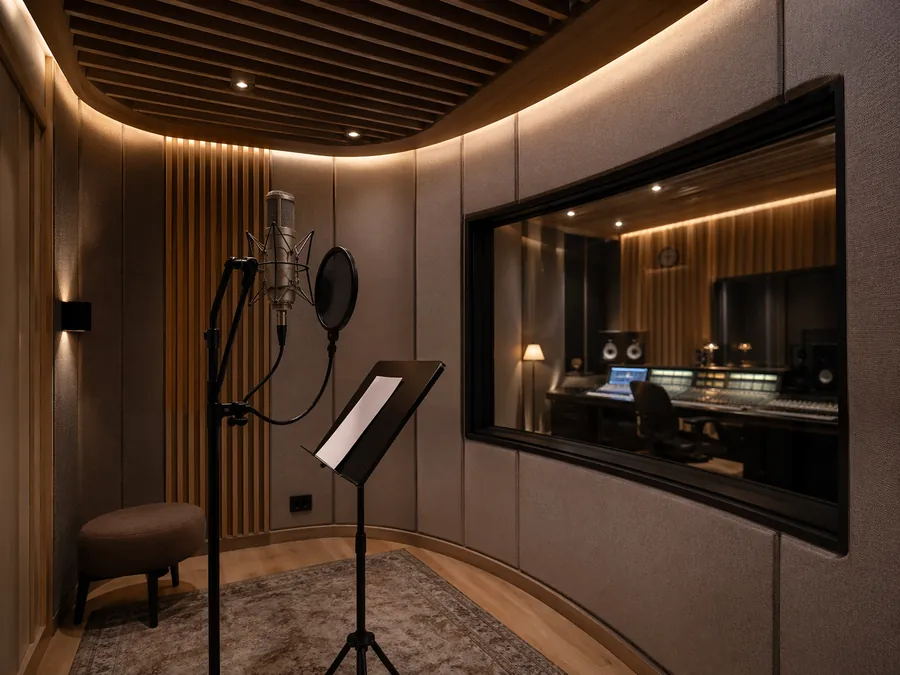
A vocal booth is not just a small soundproof box
A vocal booth looks simple from the outside. It is often imagined as a small isolated room with a microphone, a window and acoustic treatment on the walls. But in practice, vocal booth design is more delicate than that.
A good vocal booth needs to control room tone without making the voice sound dull, boxy or unnatural. It needs to reduce unwanted sound without becoming uncomfortable to use. It needs quiet ventilation, suitable lighting, practical access, cable paths and enough space for a performer to work naturally.
Many vocal booths fail because they focus on one issue and ignore the others. A booth may be well isolated but too hot. It may be heavily treated but tonally lifeless. It may look professional but have a noisy fan. It may be small enough to fit the floor plan but too small to sound good.
Good vocal booth acoustic design is about balance: size, isolation, treatment, ventilation, comfort and tone all need to work together.
Vocal booths and recording rooms are not the same thing
A vocal booth is usually a smaller, controlled space designed for vocals, voiceover, podcasting, narration or close-mic recording. A recording room is usually larger and may be used for vocals, instruments, ensembles, drums, guitar cabinets, strings, percussion or more flexible recording setups.
The acoustic goals can be different.
A vocal booth often needs a controlled sound with limited room character. It should reduce unwanted reflections around the microphone and help produce a clean, usable recording.
A recording room may need more life, more space and more tonal flexibility. For acoustic instruments, a completely dead room is not always desirable. A little room character can be useful if it is controlled and flattering.
Some studios need both. Others need one flexible recording space rather than a dedicated booth. The right choice depends on what will be recorded, how often, at what volume and in what building context.
Smaller is not always better
One of the most common mistakes in vocal booth design is making the booth too small.
A very small booth may seem efficient, but it can create acoustic problems. Low-mid build-up, strong early reflections and short reflection paths can make vocals sound boxy, nasal or closed-in. If the booth is also heavily covered with thin absorption, the result can be dull at the top while still sounding congested in the lower midrange.
A performer also needs space. Singing, speaking, breathing, reading scripts, holding an instrument, adjusting position and working with a microphone all require comfort. A cramped booth can affect performance as well as sound.
Size is not just a practical constraint. It is an acoustic decision. The booth should be large enough to avoid obvious boxiness, comfortable enough to use and designed so treatment can work effectively.
Smaller is not always better
One of the most common mistakes in vocal booth design is making the booth too small.
A very small booth may seem efficient, but it can create acoustic problems. Low-mid build-up, strong early reflections and short reflection paths can make vocals sound boxy, nasal or closed-in. If the booth is also heavily covered with thin absorption, the result can be dull at the top while still sounding congested in the lower midrange.
A performer also needs space. Singing, speaking, breathing, reading scripts, holding an instrument, adjusting position and working with a microphone all require comfort. A cramped booth can affect performance as well as sound.
Size is not just a practical constraint. It is an acoustic decision. The booth should be large enough to avoid obvious boxiness, comfortable enough to use and designed so treatment can work effectively.
The goal is controlled tone, not a dead room
A common assumption is that a vocal booth should be completely dead. In reality, an over-deadened booth can sound unnatural and uninspiring.
For many vocal recordings, the aim is a clean, controlled sound that gives the engineer flexibility later. But that does not mean the booth should remove all life from the voice. A booth that absorbs only high frequencies may sound dull and closed while still leaving low-mid problems unresolved. A booth that is too dry may make the voice feel disconnected or flat.
The best vocal booths usually control strong reflections, reduce flutter, manage low-mid build-up and keep the recording tone consistent. They do not simply cover every surface with foam.
A good recording space should make the voice sound focused, present and usable before heavy processing is needed.
Acoustic treatment must match the room size
Treatment strategy depends on the size and purpose of the booth or recording room. A small vocal booth usually needs a different approach from a larger live room.
In small booths, broadband absorption is often more useful than thin surface treatment. Low-mid control is important because small rooms can quickly sound boxy. Corners, ceiling areas and wall zones may need deeper treatment than expected.
In larger recording rooms, the design may include a balance of absorption, reflection and diffusion. The room may need multiple usable positions rather than one fixed microphone location. It may need to support different instruments, different microphone techniques and different tonal options.
Treatment should be designed around the recording purpose. A voiceover booth, a vocal booth, a podcast room and an instrument recording room may all require different acoustic balances.
Isolation is a construction problem
Acoustic treatment improves the sound inside the booth or recording room. It does not automatically stop sound from entering or leaving.
Sound isolation is a construction issue. It depends on walls, ceilings, floors, doors, windows, seals, glazing, ventilation paths, penetrations and structural flanking. A booth can be heavily treated internally and still leak sound if the door, window or air path is weak.
The isolation requirement depends on use. A booth used for voiceover may need low background noise and protection from household or street noise. A room used for loud singing, brass, drums, guitar cabinets or amplified instruments may need much stronger isolation. A booth in a detached studio has different requirements from a booth inside an apartment or shared building.
Before designing isolation, the expected sound levels and surrounding rooms need to be understood.
Background noise matters more than people expect
A vocal recording space needs a low enough noise floor for the intended use. Background noise can come from traffic, neighbours, air conditioning, computer fans, fridges, pumps, plumbing, lighting, equipment or ventilation.
For voiceover, narration, audiobook work and podcasting, background noise is especially important because the voice is often exposed and close-mic detail is critical. A low rumble, fan noise or intermittent building noise can become difficult to edit around.
For sung vocals, background noise may be less obvious during loud passages, but it can still affect quiet sections, breaths, intimate performances and editing.
A booth should not be judged only by how it sounds when someone is singing loudly. It should also be assessed when the room is quiet and the microphone is open.
Ventilation is not optional
Ventilation is one of the most commonly overlooked parts of vocal booth design. A small booth can become hot, stuffy and uncomfortable very quickly, especially with a performer, lighting and closed doors.
The challenge is that ventilation openings can also become sound leaks. A simple fan or grille may introduce noise, reduce isolation or create an unwanted path between the booth and adjacent space.
Good booth ventilation needs to be quiet, comfortable and acoustically considered. That may involve slower air movement, remote fans, lined duct paths, attenuated air routes, suitable grilles and careful placement. The solution depends on the booth size, isolation requirement, building services and budget.
A booth that sounds good but cannot be used comfortably is not a successful booth.
Doors, seals and windows are critical weak points
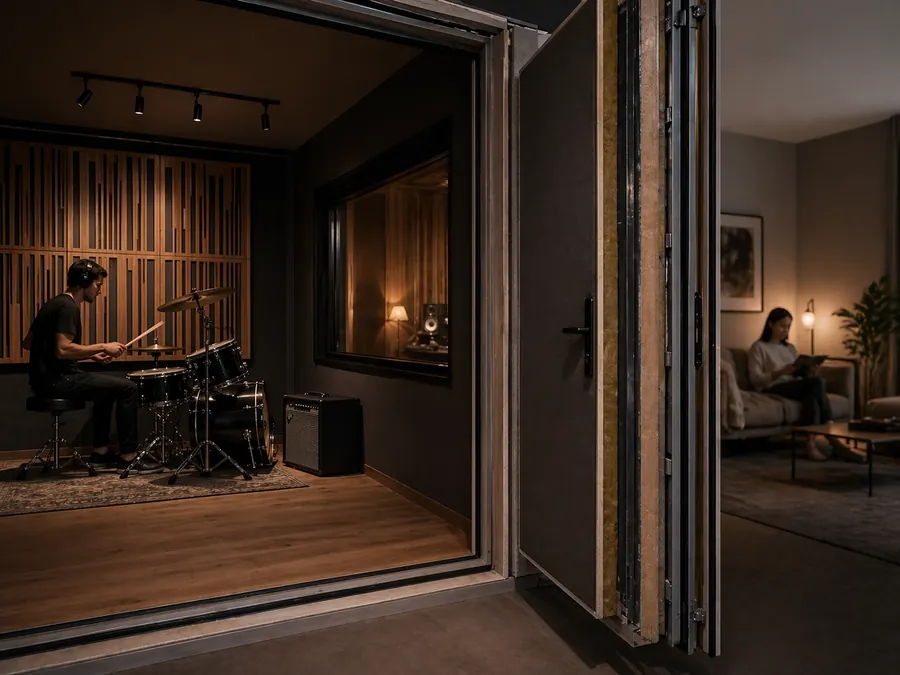
In many vocal booths, the door is the weakest part of the isolation system. A solid door leaf may still leak sound if the perimeter seals, threshold or frame are weak. A gap under the door can undermine the whole booth.
Studio windows can also be weak points if they are not designed properly. Glazing thickness, air gap, frame construction, seals and installation all influence performance. A window may be useful for sightlines, communication and comfort, but it needs to be considered as part of the acoustic system.
Cable penetrations, air paths, lighting penetrations and small gaps also matter. Isolation usually fails at weak points before it fails through the middle of a wall.
The booth should be detailed as a complete system, not as separate pieces.
Prefabricated vocal booths can help, but they have limits
Prefabricated vocal booths can be useful in some situations. They can provide a controlled space without a full building project, and they may be appropriate for voiceover, podcasting, home recording or temporary studio setups.
But they are not automatically the best solution. Some prefab booths are too small, too hot, too dead, too noisy internally or not isolated enough for the intended use. Others perform well within their limits but still require careful placement, ventilation, cable management and realistic expectations.
A prefab booth may reduce some problems, but it does not change the surrounding building. Bass, structure-borne sound, background noise and neighbour impact may still need consideration.
The decision should be based on use, sound quality, comfort, isolation needs and the room the booth will sit inside.
Vocal performance needs comfort
A vocal booth is a performance space. If the performer feels cramped, overheated, visually isolated or uncomfortable, the recording may suffer.
Comfort is acoustic as well as physical. A booth that feels oppressive or unnaturally dead can affect how a singer or speaker performs. A booth with poor sightlines may make communication harder. A booth with distracting fan noise may make the performer less confident. A booth with no usable music stand, screen location or headphone cable path can slow down the session.
The best vocal booths feel controlled but not claustrophobic. They support concentration and performance without drawing attention to the room.
Voiceover and podcast rooms have different priorities
Voiceover and podcast spaces often need a very controlled tone and low background noise. The recording may be exposed, spoken-word detail matters, and the room should not add obvious reflections or coloration.
However, voiceover rooms can still suffer from the same problems as vocal booths: too much thin foam, poor ventilation, boxiness, noisy equipment and weak isolation.
For podcasting, the room may need to support one person or multiple speakers. Table reflections, microphone positions, chair noise, computer fans and room layout all become important. A podcast room may not need the same isolation as a music recording booth, but it still needs a stable acoustic environment.
The design should match the content being recorded. Spoken word, singing and instrument recording are not identical acoustic tasks.
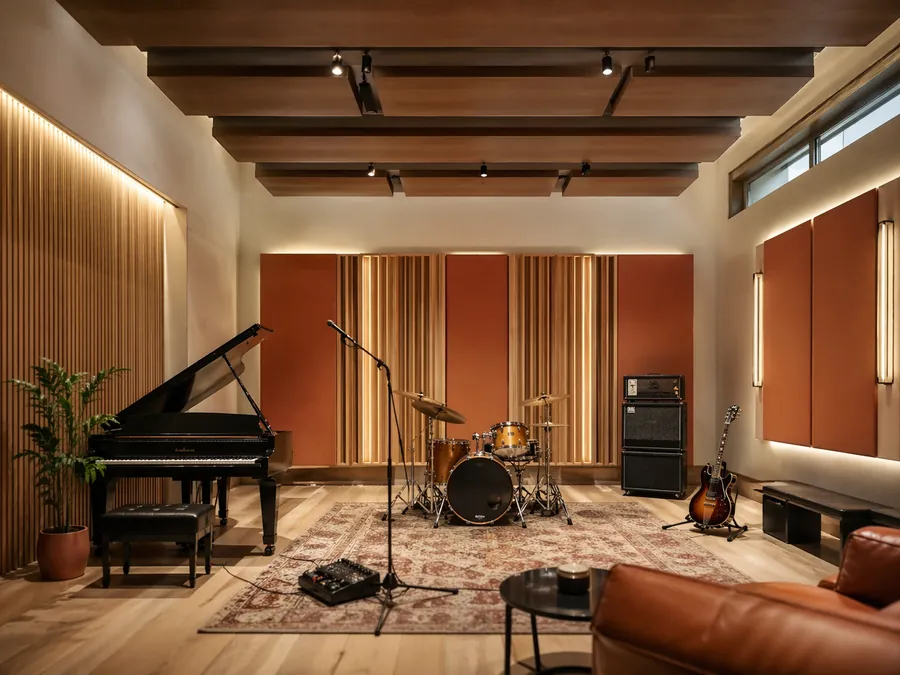
Instrument recording rooms need more flexibility
A recording room used for instruments often benefits from more tonal flexibility than a small vocal booth. Acoustic guitar, strings, percussion, brass, piano, guitar cabinets and drums all interact with the room differently.
For some instruments, a completely dry room can feel lifeless. For others, strong reflections or room coloration can be difficult to manage. A flexible recording room may need different microphone positions, moveable treatment, variable absorption or surfaces that provide both control and character.
If a room needs to support multiple instruments, it should not be designed only around one microphone position. The acoustic strategy should create useful recording zones.
Flexibility is often more valuable than making the room extremely dead.
Control room connection matters
A vocal booth or recording room rarely works alone. It usually connects to a control room, home studio, production space or adjacent workstation. That relationship matters.
The performer may need sightlines to the engineer. The engineer may need to hear and communicate clearly. The booth may need headphone feeds, talkback, lighting control, cable paths and visual connection. If the booth is isolated from the control room, the window and communication system need to be planned carefully.
The recording room and control room should be designed as a working pair. A booth with good internal treatment but poor workflow can slow down sessions and make recording less enjoyable.
Buildability is central to performance
Vocal booth and recording room design depends heavily on build quality. Small details matter.
Seals must be continuous. Doors need proper hardware. Wall and ceiling systems need correct junctions. Services must not create sound leaks. Treatment needs the right depth and backing. Ventilation paths need acoustic control. Cable penetrations need planning.
A design that looks simple on paper can underperform if trades do not understand the acoustic purpose of each detail. This is especially true in small booths, where every weak point is close to the microphone.
The best acoustic design is not only technically correct. It is clear enough to build.
When to get acoustic advice
It is worth getting acoustic advice before building a vocal booth, purchasing a prefab booth or converting a room for recording. Advice is especially useful if the room will be used for professional vocals, voiceover, podcasting, loud instruments, client work or recording near neighbours.
Early advice can help with room size, booth location, isolation expectations, treatment strategy, ventilation, background noise and buildability. It can also help decide whether a dedicated booth is actually the best solution or whether a larger, more flexible recording room would be better.
For existing booths, an acoustic review can help identify why the space sounds boxy, dull, noisy, hot or uncomfortable.
Final thought
A successful vocal booth or recording room is not defined by how much absorption it contains. It is defined by whether it supports the recording.
The room should sound controlled but not lifeless. It should be quiet enough for the intended work. It should be comfortable enough for performers. It should have ventilation that works. It should be built without weak points that compromise isolation or noise control.
For studios, home studios and creative spaces, the best vocal booth design starts with the real use of the room. Once the purpose, sound path, noise floor and comfort requirements are understood, the acoustic decisions become much clearer.
Frequently Asked Questions
Vocal Booth & Recording Room Acoustic Design in Sydney
Specialist acoustic advice for vocal booths, voiceover rooms, podcast rooms and flexible recording spaces.
Vocal Booth & Recording Room Acoustic Design in Sydney
Specialist acoustic advice for vocal booths, voiceover rooms, podcast rooms and flexible recording spaces.
Read Nicholas Marriott's bio