
Bedroom Acoustic Design: Quieter Rooms for Sleep, Privacy and Recovery
TL;DR
Bedroom acoustic design should identify the real sound path before glazing, doors, walls, ceilings or soft finishes are changed.
- Separate external noise, household activity, neighbour noise, impact sound and services.
- Review the whole window system, not the glass alone.
- Treat the door leaf, frame, perimeter seals and threshold as one assembly.
- Use layout, wardrobes and circulation as practical buffers where possible.
- Use curtains, rugs and upholstery for internal comfort, not as complete soundproofing.
- Plan ventilation and cooling alongside any sealing or isolation work.
The key point: a quieter bedroom is created by the whole room and sound path rather than one product.


.avif)
Bedroom acoustic design should begin with the sound path. External noise, household activity, neighbours, impact sound and services enter through different elements, so a quieter room usually comes from coordinated planning, construction and finishes rather than one product.
What Is Bedroom Acoustic Design?
Bedroom acoustic design improves the conditions for sleep, privacy and recovery by addressing unwanted sound entering the room, sound moving from other parts of the home and the internal acoustic feel of the space.
It can involve windows, doors, seals, walls, ceilings, floors, room position, services, curtains, rugs, furniture and construction details.
What Should a Successful Bedroom Achieve?
- Fewer sudden or understandable sound intrusions.
- Better privacy from corridors, living areas and adjacent rooms.
- A calmer internal sound without excessive sharp reflections.
- Windows, doors and seals matched to the dominant path.
- Services and ventilation that support comfort without adding disturbance.
- Realistic expectations for apartments and existing buildings.
Who Does This Guidance Apply To?
This guidance applies to homeowners, apartment residents, architects and renovation teams planning new bedrooms or dealing with traffic, neighbour, household, plumbing or impact noise.
How Do Different Bedroom Noise Sources Change the Response?
| Noise source | Common path | Potential response | Important limitation |
|---|---|---|---|
| Traffic or outdoor activity | Windows, balcony doors, façade gaps and ventilation openings. | Seals, glazing, secondary glazing or a broader façade strategy. | Glass alone does not correct weak frames, seals or installation. |
| Household speech and television | Bedroom door, undercut, corridor and adjoining walls. | Door leaf, perimeter seals, threshold, layout and wall review. | A heavy door in a weak wall may provide limited benefit. |
| Neighbour airborne noise | Party walls, ceilings, floors, façades, services and flanking paths. | Targeted lining, sealing or junction work after diagnosis. | Treating only the visible wall may leave bypass paths. |
| Footsteps from above | Floor structure, ceiling, walls and connected building elements. | Source-floor treatment or a carefully assessed resilient ceiling. | Impact noise can be difficult to control fully from below. |
| Plumbing and mechanical services | Pipes, walls, ceilings, ducts, plant and rigid connections. | Source control, routing, isolation, enclosure or services review. | Soft furnishings do not correct structure-borne service noise. |
Why Are Bedrooms More Sensitive to Noise?
Bedrooms are expected to support rest when background levels are lower and small sounds become more noticeable. A level of activity that feels acceptable during the day may feel intrusive at night, especially when speech is understandable or sound is sudden.
The practical goal is not guaranteed silence. It is a room that feels calmer, more private and less exposed to unnecessary disturbance.
How Should Windows and Ventilation Be Planned?
A window’s performance depends on glass, frame, seals, operable sections, air gaps and installation. Heavy curtains can soften the room internally but are not a substitute for a suitable window system where external noise is dominant.
Sealing also affects fresh air and cooling. A quieter bedroom still needs comfortable ventilation, and new air paths should not recreate the noise path being treated.
How Do Doors and Layout Affect Privacy?
Lightweight doors, large undercuts and direct connection to living areas can undermine privacy. A solid door, reliable perimeter seals and a suitable threshold can help where the door is dominant.
Planning can also reduce conflict. Wardrobes, storage, corridors and room orientation can create useful buffers between beds and active spaces.
What Role Do Soft Finishes Play?
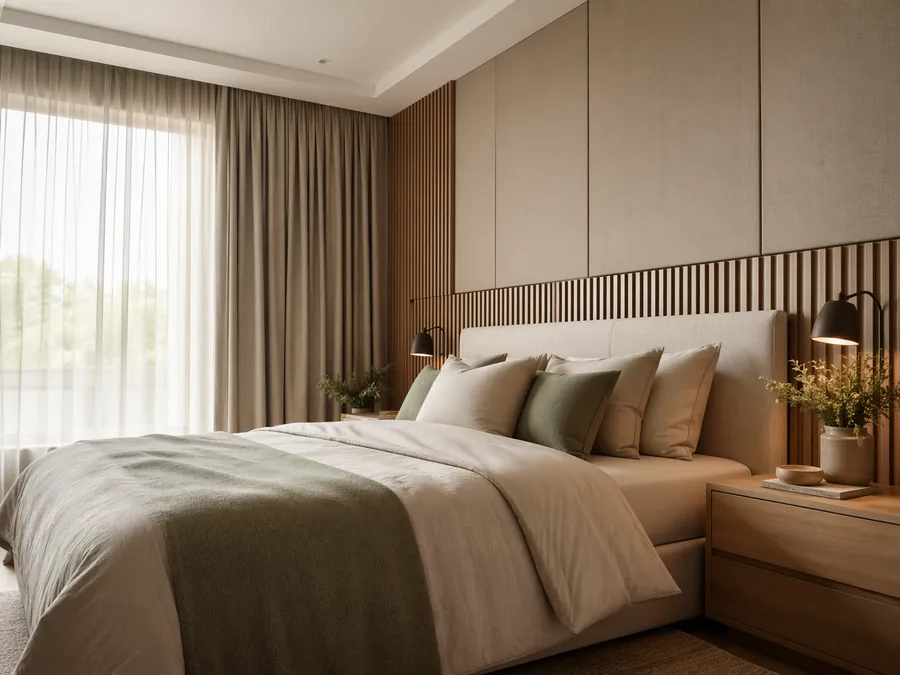
Curtains, rugs, bedding, upholstered furniture and bedheads can reduce some internal reflections and make a room feel more settled. They improve the room’s internal character but do not usually stop traffic, neighbour or impact noise entering through the building.
What Are the Important Limitations?
Complete soundproofing is rarely realistic in an existing bedroom. The result depends on the noise type, weakest path, construction, access and work permitted. Panels and soft furnishings can improve internal comfort but do not replace glazing, doors, walls, ceilings, floors, seals or services work where sound transfer is the problem.
What Should Be Prepared Before Requesting Advice?
- The sounds affecting sleep or privacy and when they occur.
- Plans, dimensions and photographs of the bedroom.
- Windows, doors, walls, ceilings and floors between source and room.
- Adjacent living areas, bathrooms, laundries, corridors and neighbours.
- Existing curtains, rugs, furniture and finishes.
- Ventilation, cooling and service information.
- Previous work or products already tried.
- The project stage and desired improvement.
When Should Acoustic Advice Be Sought?
Advice is useful when the source is unclear, sleep or privacy is affected, apartment or neighbour noise is involved, or before investing in glazing, doors, wall linings or ceiling work.
Explore residential acoustic design, apartment and neighbour-noise diagnosis and privacy and spatial planning.
Final Takeaway: Design the Whole Sound Path
A quieter bedroom comes from understanding where sound enters, then coordinating windows, doors, seals, layout, construction, services and soft finishes according to their real roles.
Discuss a bedroom noise or privacy problem before selecting an upgrade.
Frequently Asked Questions
Bedroom and Residential Acoustic Design
Practical acoustic advice for sleep, privacy, external noise, neighbour noise and bedroom renovations.
Bedroom and Residential Acoustic Design
Practical acoustic advice for sleep, privacy, external noise, neighbour noise and bedroom renovations.
Read Nicholas Marriott's bio