
Home Studio Acoustic Design Guide
TL;DR
Home studio and listening room design should begin with the room, intended use and layout before treatment products or equipment upgrades are selected.
- Define whether the priority is production, recording, listening or a hybrid use.
- Plan speakers and the listening position together, with symmetry where monitoring accuracy matters.
- Treat bass and early reflections with a balanced strategy rather than thin foam alone.
- Separate internal acoustic treatment from construction-based sound isolation.
- Coordinate recording positions, equipment, storage, cables, ventilation and comfort with the acoustic layout.
- Set realistic expectations in apartments and other shared buildings.
The key point: the room is part of the audio system, so its purpose and constraints should guide every acoustic decision.


.avif)
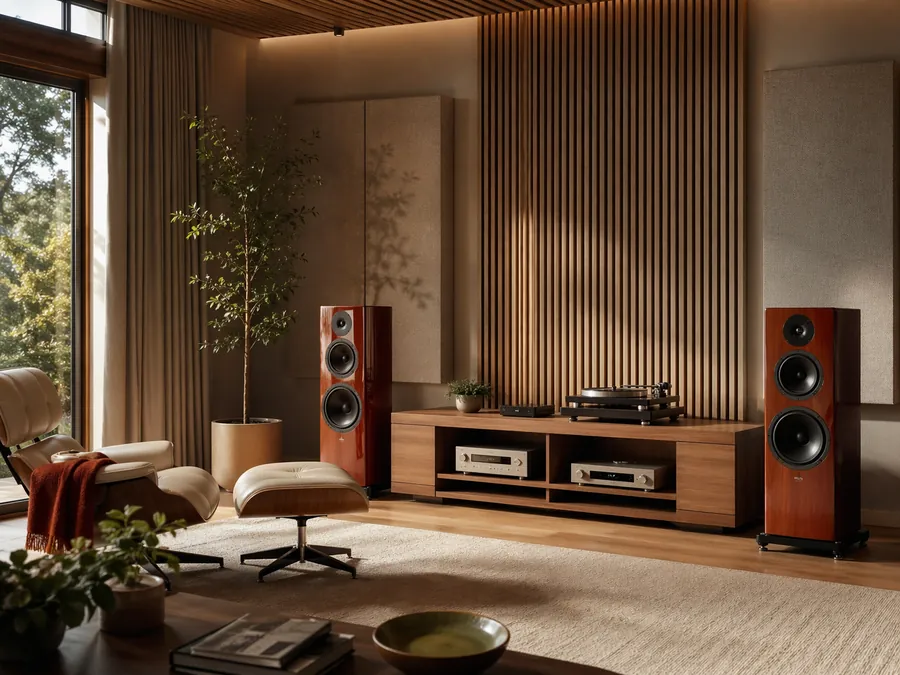
Home studio and listening room design begins with the room, its purpose and its limits. This guide explains how layout, speaker position, bass control, treatment, isolation and workflow can be coordinated before money is committed to products or construction.
What Is Home Studio and Listening Room Acoustic Design?
Home studio and listening room acoustic design shapes a residential room so it can support reliable monitoring, recording or music playback. The practical outcome is a space with controlled reflections, more trustworthy bass and imaging, comfortable use and realistic sound-isolation expectations.
A spare bedroom, garage, apartment room or study will not behave like a purpose-built commercial studio automatically. Good results depend on making decisions that suit the actual room, use, building and budget. Music and studio acoustic design can coordinate these decisions from room selection through treatment and buildable detailing.
Is It a Home Studio, Listening Room or Hybrid Space?
The correct brief depends on what the room must do. A production room prioritises reliable decisions and workflow; a listening room prioritises playback, imaging, tonal balance and comfort; a hybrid room must balance several uses without assuming one layout suits all of them.
| Room type | Primary purpose | Key design focus |
|---|---|---|
| Home studio | Mixing, production and possible recording | Monitoring position, symmetry, equipment layout and recording needs |
| Listening room | Focused music playback | Speaker and seating position, bass balance, imaging and comfort |
| Hybrid room | Production, listening and occasional recording | Flexible layout and a clear priority when uses conflict |
The related guide on where to start with home studio acoustic design provides a broader project overview.
Why Should the Room Be Chosen Before the Products?
The room should come first because its size, shape, ceiling height, construction, openings and neighbours determine the available strategy. Treatment cannot fully correct poor symmetry, severe low-frequency problems, weak isolation or difficult door and window locations.
Before buying panels, foam, bass traps or new speakers, compare the available rooms against the intended use. A room for quiet editing and nearfield monitoring has different requirements from one intended for subwoofers, drums or amplified instruments.
How Should Speakers and the Listening Position Be Planned?
Speakers and the listening position should be established together, then the desk, furniture and treatment should support that arrangement. Their relationship to the front, side and rear walls and ceiling affects imaging, clarity and bass.
Symmetry is especially important for monitoring. If one side reflects differently because of a wall, opening or window, the stereo image can become uneven. The listener’s position also matters because bass can change substantially around a small room.
What Factors Affect Bass, Reflections and Tone?
Room dimensions, boundaries, speaker position, listener position and treatment depth all affect tonal balance. Thin decorative treatment alone is unlikely to address the full problem.
Bass control
Small rooms often produce uneven low-frequency response, with some notes emphasised and others reduced. Useful measures may include careful placement, bass trapping, boundary treatment and, in some listening rooms, coordinated use of multiple subwoofers.
Early reflections
Reflections from side walls, ceiling, desk and rear wall can affect imaging, clarity and tonal balance. Treatment at first-reflection areas should be planned around the actual speaker and listener positions.
Balanced treatment
The aim is control, not a completely dead room. Too much thin foam may dull high frequencies while leaving bass and lower-frequency problems in place. Broadband absorption, low-frequency control and, where appropriate, reflective, diffusive or hybrid surfaces create a more balanced approach.
How Do Recording Needs Change the Design?
Recording introduces different positions, room-tone needs and background-noise constraints. The best monitoring position is not necessarily the best place for vocals, acoustic instruments, podcasting or voice work.
A controlled vocal area may need limited room sound, while some instruments can benefit from a measured amount of room character. Loud instruments also increase the importance of room volume and isolation. For a dedicated booth or recording space, see the guide to vocal booth and recording room design.
What Is the Difference Between Treatment and Isolation?
Acoustic treatment changes the sound inside the room; sound isolation reduces transfer into or out of it. Panels that improve monitoring do not normally stop music or bass reaching neighbours, bedrooms or other parts of the home.
Isolation is a construction problem involving walls, ceilings, floors, doors, windows, seals, penetrations, ventilation and flanking paths. The required approach depends on use and surrounding rooms. The studio sound-isolation guide explains these limits in more detail.
What Are the Important Residential Limitations?
Residential rooms must balance acoustic performance with structure, space, comfort, aesthetics and the people around them. Apartments and shared buildings need particular care because sound and vibration can travel through shared walls, floors, ceilings and structural paths.
- Treatment-only work does not guarantee protection from neighbour impact.
- Loud playback, subwoofers and instruments can require a more substantial isolation strategy.
- Strata rules, access and existing construction may restrict what is practical.
- Sealed rooms still need quiet ventilation and cooling for people and equipment.
- Doors, windows and cable penetrations can limit otherwise careful isolation work.
For a home project that must integrate the music room with the wider renovation or interior, residential acoustic design may also be relevant.
What Should Be Prepared Before Requesting Advice?
A useful brief explains the room, the equipment, the work and the surrounding constraints.
- Define whether the priority is mixing, recording, listening or a hybrid use.
- List speakers, subwoofers, instruments and expected playback levels.
- Provide room dimensions, photographs, openings and available plans.
- Identify adjacent bedrooms, neighbours and any shared building elements.
- Note desk, seating, storage, cable, lighting and ventilation requirements.
- State whether the room is existing, being renovated or still at planning stage.
When Should Acoustic Advice Be Sought?
Advice is useful before choosing the room, buying treatment or fixing a renovation layout. It is especially relevant when reliable monitoring, bass control, recording, loud use or neighbour protection matters, or when an existing room sounds boomy, harsh, dull or inconsistent.
To discuss the room and intended use, send the available plans and constraints through the studio project enquiry form.
Final Takeaway: Treat the Room as Part of the System
A successful home studio or listening room is defined by how well it supports its purpose, not by how much treatment it contains. Begin with room choice and layout, then coordinate speakers, bass control, reflections, recording needs, isolation, comfort and buildability.
Frequently Asked Questions
Home Studio and Listening Room Acoustic Design
Specialist acoustic advice for monitoring, recording and high-quality listening in residential rooms.
Home Studio and Listening Room Acoustic Design
Specialist acoustic advice for monitoring, recording and high-quality listening in residential rooms.
Read Nicholas Marriott's bio