
Timber, Stone & Glass: Acoustic Balance in High-Design Interiors
TL;DR
Timber, stone and glass can remain central to a refined interior when the room includes enough well-integrated acoustic balance.
- Recognise that glass, stone, concrete, plaster and flat timber reflect sound.
- Use ceilings, curtains, rugs, upholstery or joinery to provide acoustic relief.
- Detail slatted and perforated timber with suitable backing, cavity and open area.
- Match the treatment to room use rather than making every surface soft.
- Separate internal reverberation from external noise and sound isolation.
- Coordinate acoustic elements with lighting, services, cleaning and maintenance.
The key point: the issue is not the hard materials themselves; it is whether the room gives any substantial surface the job of controlling sound.


.avif)
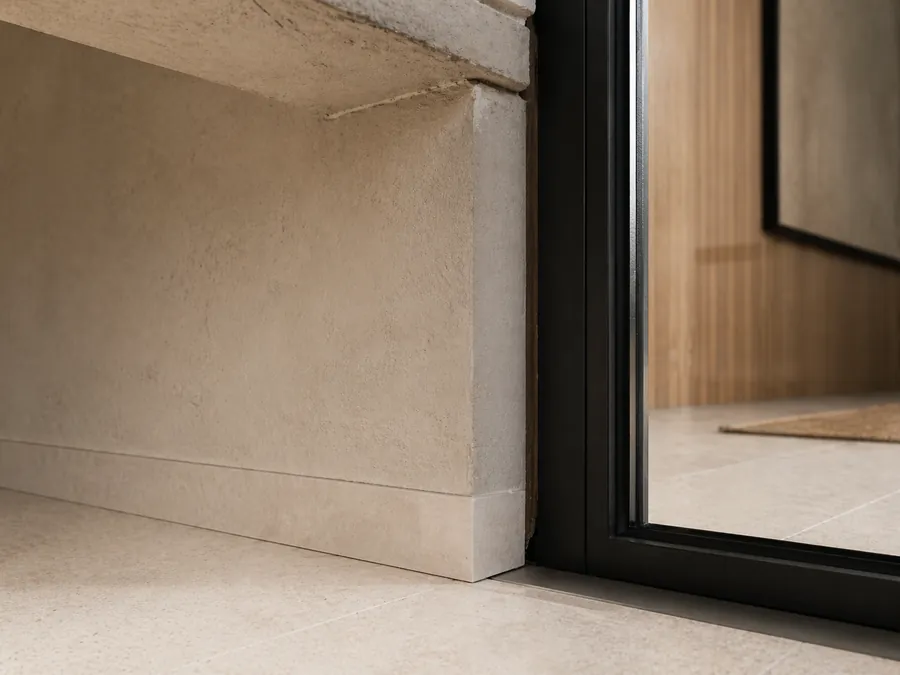
Timber, stone and glass can remain central to a refined interior while the room also supports conversation, listening and everyday comfort. The acoustic task is to balance reflective materials with enough absorption, scattering and spatial planning rather than make every surface soft.
How Do Timber, Stone and Glass Affect Acoustics?
Glass, stone, tile, concrete, plaster and many flat timber surfaces reflect sound. When they cover most of a room’s floor, walls and ceiling, speech and activity can build up, making the interior feel louder or sharper than its visual character suggests.
The materials are not inherently unsuitable. Their acoustic effect depends on surface area, room volume, geometry, furnishings and the elements used to balance them.
What Should Acoustic Balance Achieve?
- Comfortable speech without removing the room’s atmosphere.
- Hard materials preserved where they serve the architecture.
- Enough absorption to control excessive reverberation.
- Scattering and texture used with a defined acoustic purpose.
- Treatment integrated into ceilings, joinery, curtains and furniture.
- Clear separation between internal room acoustics and sound isolation.
Who Does This Guidance Apply To?
This guidance applies to homes, workplaces, hospitality interiors, galleries, studios and other design-led spaces using significant areas of timber, stone, tile, concrete, plaster or glass.
How Should Different Materials Be Balanced?
| Material or element | Typical acoustic behaviour | Useful design response | Important limitation |
|---|---|---|---|
| Glass | Reflects sound and can strengthen harsh or fluttering reflections. | Curtains, ceiling treatment, furniture and nearby absorptive surfaces. | Internal treatment does not improve external-noise isolation through weak glazing. |
| Stone, tile and concrete | Durable, visually strong and highly reflective. | Balance with ceilings, rugs, upholstery, curtains or soft wall areas. | Wet and high-use spaces limit suitable absorptive finishes. |
| Flat timber | Often reflects despite its visually warm character. | Use texture, geometry or separate absorptive elements. | Timber is not automatically acoustic. |
| Slatted or perforated timber | Can scatter and absorb when detailed as a system. | Coordinate open area, backing, cavity depth and surface coverage. | Battens on a hard wall may provide little meaningful absorption. |
| Curtains, rugs and upholstery | Reduce some mid- and high-frequency reflections. | Use adequate area, fabric weight, fullness and placement. | They may not control bass or a large reflective volume alone. |
| Acoustic ceiling or plaster | Provides broad treatment across a large surface. | Integrate with lighting, services, edges and access. | Performance depends on the complete system and installation. |
Why Is the Ceiling Often the Most Valuable Surface?
The ceiling is usually large, continuous and visually capable of carrying treatment without competing with glazing, art or joinery. Acoustic plaster, perforated systems, timber linings, panels, rafts or baffles can restore balance where the floor and walls need to remain hard.
Ceiling treatment should be coordinated before lighting, air conditioning, sprinklers, speakers and access panels occupy the available area.
How Can Curtains, Furniture and Joinery Help?
Full-height curtains, rugs, upholstery, banquettes and furniture add useful softness near people and conversation. Joinery can incorporate fabric, perforated panels, slatted timber with absorptive backing or concealed treatment.
These elements need enough area and the right construction. A visually acoustic detail may provide limited performance if it is shallow, unbacked or placed away from the dominant reflection paths.
How Does Acoustic Balance Change With Room Use?
A bedroom, dining room, gallery, workplace, studio and hospitality venue should not all sound the same. The appropriate balance depends on speech, music, occupancy, activity and the desired atmosphere.
The question is not how to remove every reflection. It is which surfaces should remain reflective and which should carry the acoustic work.
How Do Room Acoustics and Sound Isolation Differ?
Balancing materials changes how sound behaves inside the room. It does not automatically reduce traffic, neighbours, plant or sound transfer through walls, doors and glazing. Isolation requires separate construction and services decisions.
What Are the Important Limitations?
Hard finishes can remain, but a few small soft items may not balance a large reflective room. Timber systems need real backing and cavity design, curtains do not replace acoustic glazing, and thin treatment may reduce higher frequencies while leaving low-frequency or low-mid problems unresolved.
What Should Be Prepared Before Requesting Advice?
- Plans, room dimensions and ceiling heights.
- Finish schedules and glazing areas.
- Furniture, curtains, rugs and joinery proposals.
- The room’s main uses and occupancy.
- Where speech, music or activity feels difficult.
- Lighting, services, access and maintenance constraints.
- Existing or proposed acoustic products.
- The project stage and visual priorities.
When Should Acoustic Advice Be Sought?
Advice is useful before material palettes, ceilings, curtains and joinery are finalised, or when an existing high-design interior feels loud, harsh or tiring.
Explore technical acoustic consulting, interior finishes and reverberation and integrated acoustic treatment.
Final Takeaway: Keep the Materials, Restore the Balance
Timber, stone and glass can remain visually dominant when selected ceilings, curtains, furniture, joinery and absorptive systems are given enough area and a clear acoustic purpose.
Discuss the material and acoustic strategy before finishes and services are fixed.
Frequently Asked Questions
Acoustic Design for High-Design Interiors
Design-led acoustic advice for interiors using timber, stone, glass and other reflective architectural materials.
Acoustic Design for High-Design Interiors
Design-led acoustic advice for interiors using timber, stone, glass and other reflective architectural materials.
Read Nicholas Marriott's bio