
Vocal Booth and Recording Room Acoustic Design
TL;DR
A vocal booth or recording room succeeds when tone, isolation, ventilation, comfort and workflow are designed together for the intended source.
- Choose between a compact booth and a larger recording room based on actual use.
- Avoid making the booth so small that tone, treatment depth and performer comfort suffer.
- Control reflections and low-mid build-up without making the room lifeless.
- Treat isolation as a construction system, not an outcome of internal panels.
- Plan quiet ventilation, doors, windows and penetrations as part of the acoustic design.
- Assess prefabricated booths against the same tone, noise, comfort and isolation brief.
The key point: design the enclosure around the recording and performer, not around the smallest available footprint.


.avif)
Vocal booth and recording room design balances tone, isolation, ventilation, comfort and workflow. This guide explains why a small treated enclosure is not automatically a usable recording space and what should be resolved before construction or purchase.
What Is Vocal Booth and Recording Room Acoustic Design?
Vocal booth and recording room acoustic design shapes the room, construction and services so recordings are controlled, consistent and suitable for their intended use. The practical outcome is a space that supports the microphone and performer without becoming boxy, lifeless, noisy or uncomfortable.
These decisions are part of a wider music and studio acoustic design process that can connect room tone, isolation, ventilation and buildability.
What Is the Difference Between a Vocal Booth and a Recording Room?
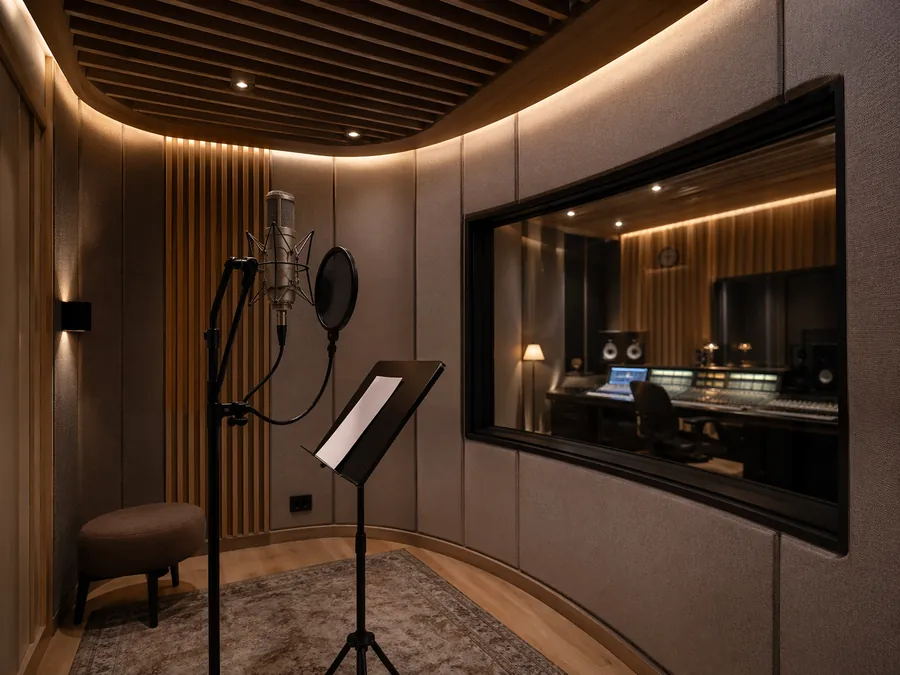
A vocal booth is usually a compact, controlled space for vocals, voiceover, narration, podcasting or other close-mic work. A recording room is generally larger and may need more tonal flexibility for instruments, louder sources or varied microphone positions.
| Space | Typical use | Acoustic priority | Common limitation |
|---|---|---|---|
| Vocal or voice booth | Vocals and spoken word | Controlled tone and low background noise | Boxiness, heat and over-absorption in a small volume |
| Podcast room | One or more speakers | Stable tone across microphone positions | Table reflections, chair noise and equipment fans |
| Flexible recording room | Vocals and instruments | Useful positions and adjustable tonal character | One fixed treatment balance may not suit every source |
Some projects need a booth and a separate control room; others are better served by one larger, adaptable recording space. The decision depends on what will be recorded, how loudly, how often and in what building context.
Why Can a Vocal Booth Be Too Small?
A very small booth can create short reflection paths and low-mid build-up that make a voice sound boxy, nasal or closed-in. Covering it with thin absorption may dull the upper frequencies without resolving the lower-frequency congestion.
Size also affects performance and treatment depth. The performer needs room to sing, speak, breathe, read, use a music stand or instrument and move naturally around the microphone. The booth must also accommodate suitable treatment, ventilation, lighting, access and cable paths.
Should a Vocal Booth Be Completely Dead?
No. A booth should control strong reflections, flutter and low-mid build-up, but removing all room character can make the result feel dull or unnatural. The goal is a focused, usable recording tone rather than maximum surface coverage.
Small booths often benefit from broadband treatment rather than thin foam alone. Larger recording rooms may combine absorption with reflective, diffusive or movable elements so different sources and microphone positions remain useful.
How Do Isolation and Treatment Differ?
Acoustic treatment improves the sound captured inside the room; isolation reduces sound entering or leaving it. A well-treated booth can still leak through a weak door, window, ventilation path or penetration.
Isolation depends on the full construction system: walls, ceiling, floor, doors, seals, glazing, services and flanking paths. A quiet voiceover booth and a room for drums, brass or amplified instruments do not present the same requirement. The guide to studio sound isolation and neighbour impact explains this distinction further.
Why Are Background Noise and Ventilation Critical?
Background noise and ventilation are critical because the microphone captures the room when the source is quiet, while a small closed booth can become hot and uncomfortable quickly. Traffic, neighbours, air conditioning, computers, lighting, pumps, plumbing and fans may all enter the recording.
Ventilation openings can also weaken isolation. A suitable design may require slower air movement, remote fans, lined or attenuated paths, appropriate grilles and careful placement, depending on the room, services and budget. Comfort cannot be separated from acoustic performance.
Which Details Commonly Limit Performance?
Booths often underperform at their weakest junction or service path rather than through the centre of a wall.
- Door leaves, frames, perimeter seals and thresholds must work as one assembly.
- Windows require suitable glazing, air gaps, frames, seals and installation.
- Ventilation, lighting and cable penetrations need planned acoustic paths.
- Treatment depth and backing must suit the room size and tonal problem.
- Headphone feeds, talkback, sightlines and controls must support the session workflow.
- Construction details need to communicate the acoustic purpose clearly to trades.
The booth and control room should operate as a working pair. For the monitoring side of that relationship, see the guide to control room acoustic design.
When Is a Prefabricated Booth Appropriate?
A prefabricated booth may suit voiceover, podcasting, home recording or a temporary setup when its size, internal tone, ventilation and isolation match the actual need. It should not be assumed to solve every sound problem simply because it is enclosed.
The surrounding building still matters. Bass, structure-borne sound, background noise, neighbour impact, placement and cable or ventilation connections can remain unresolved. A prefab option should therefore be assessed against the same performance and comfort brief as a constructed room.
What Are the Important Limitations?
General guidance cannot prescribe a booth size, wall build-up or ventilation system without knowing the source levels, building construction, surrounding rooms and recording use. Testing or an on-site review may be needed where noise paths or existing construction are uncertain.
- More absorption does not guarantee a better recording tone.
- Internal treatment does not guarantee sound isolation.
- A compact footprint can conflict with tone, treatment depth and performer comfort.
- Quiet ventilation may require coordination beyond the room finishes.
- Professional work, loud sources or nearby neighbours can increase the design demand.
What Should Be Prepared Before Requesting Advice?
A useful recording-room brief connects the sources, workflow and building constraints.
- List vocals, spoken word, instruments and expected sound levels.
- Describe whether the space is a booth, podcast room or flexible recording room.
- Provide room dimensions, photographs, plans and adjacent room uses.
- Identify external noise, neighbours and quiet recording requirements.
- Note ventilation, cooling, lighting, doors, windows and cable needs.
- Map microphone positions, sightlines, headphone feeds and control-room connection.
- State whether the project is a new build, conversion or prefab-booth purchase.
When Should Acoustic Advice Be Sought?
Advice is useful before building a booth, purchasing a prefabricated unit or converting a room, particularly for professional vocals, voice work, client sessions, loud instruments or recording near neighbours. An existing booth that sounds boxy, dull, noisy, hot or uncomfortable may also benefit from diagnosis.
An on-site acoustic consultation can help where existing noise paths or room behaviour need diagnosis. To discuss a planned room, use the studio project enquiry form.
Final Takeaway: Design the Room Around the Recording
A successful booth or recording room is defined by whether it supports the recording and performer. Resolve the purpose, room volume, tone, isolation, background noise, ventilation, workflow and buildability as one system before construction begins.
Frequently Asked Questions
Vocal Booth and Recording Room Acoustic Design
Specialist studio acoustic advice for vocals, spoken word, podcasts and flexible recording spaces.
Vocal Booth and Recording Room Acoustic Design
Specialist studio acoustic advice for vocals, spoken word, podcasts and flexible recording spaces.
Read Nicholas Marriott's bio