
Quiet Study & Focus Environments: Acoustic Design for Concentration, Comfort and Calm
TL;DR
Quiet study and focus environments should provide usable calm rather than absolute silence.
- Reduce understandable speech and direct sound paths from active areas.
- Control reverberation so small sounds do not spread through the room.
- Keep mechanical and external noise stable and unobtrusive.
- Separate quiet study from group work, circulation and service points.
- Use doors, ceilings, walls, furniture and layout as one acoustic system.
- Provide predictable conditions and practical choices for different users.
The key point: focus improves when the room reduces avoidable distraction without becoming acoustically sterile.


.avif)
Quiet study and focus environments are not defined by silence. They are designed to reduce avoidable distraction, control reverberation and intrusive noise, and provide stable conditions for reading, learning, work and concentration.
What Is a Quiet Study or Focus Environment?
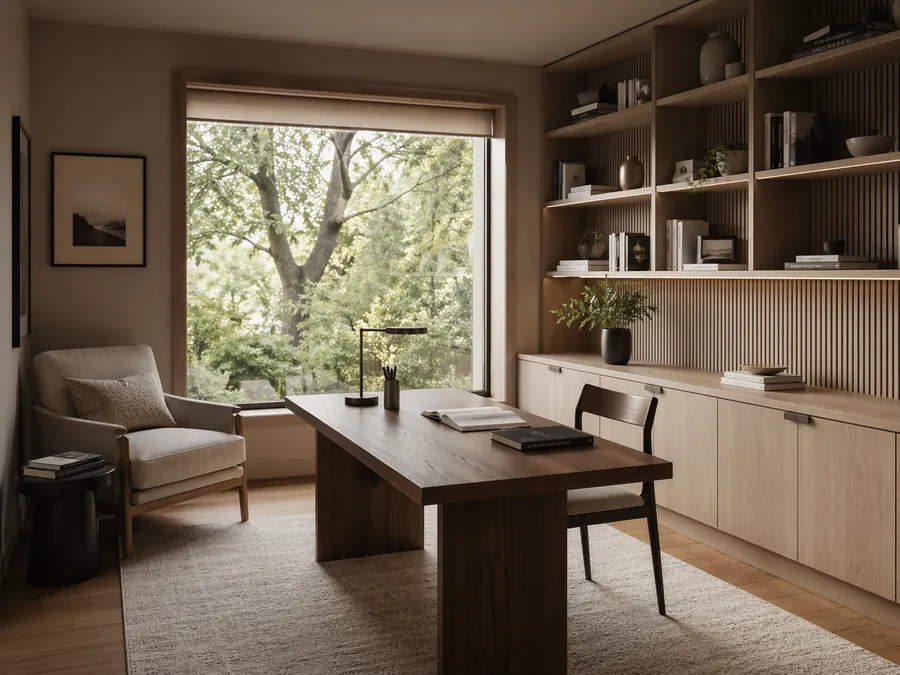
A quiet study or focus environment is a room or zone where speech, movement, services and external noise are managed well enough for sustained attention. It may be a home office, library area, study room, workplace focus room, tutoring room, exam space or sensory-aware retreat.
The goal is usable calm rather than complete silence. Some steady background sound can be acceptable, while clear speech, sudden noise or tonal mechanical sound may remain highly distracting.
What Should a Successful Focus Space Achieve?
- Lower speech distraction and fewer direct sound paths from active areas.
- Controlled reverberation so small sounds do not spread unnecessarily.
- Background noise that is stable rather than intrusive or intermittent.
- Suitable separation from kitchens, corridors, group work and services.
- Comfortable lighting, ventilation, furniture and visual conditions.
- More predictable sound for people with different sensory and concentration needs.
Who Does This Guidance Apply To?
This guidance applies to homeowners, schools, libraries, universities, workplaces, tutoring settings and project teams planning spaces for individual study, focused work, assessment or quiet retreat.
How Do Different Focus Settings Change the Brief?
| Setting | Primary need | Common distraction | Useful priorities |
|---|---|---|---|
| Home office | Sustained focus and call privacy. | Kitchen, living, children, traffic or household services. | Room choice, door separation, curtains, absorption and quiet ventilation. |
| Library quiet zone | Reading and individual study. | Service desks, circulation, group work and technology. | Zoning, distance, ceilings, furniture and clear behavioural boundaries. |
| Group study room | Clear speech inside and containment outside. | Reverberation and speech leakage through doors or glazing. | Internal absorption, suitable separation, seals and quiet services. |
| Workplace focus room | A calmer alternative to open-plan work. | Adjacent meeting, kitchen or breakout activity. | Location, door performance, absorption, lighting and ventilation. |
| Assessment or sensory-aware space | Predictable, lower-intensity sound. | Sudden noise, mechanical cycling and exposed transitions. | Quiet placement, controlled reverberation and genuine retreat. |
Why Is Speech So Distracting?
Speech carries meaning, so understandable conversations can pull attention away from a task even when they are not especially loud. A focus space beside a kitchen, corridor, meeting room or service desk may therefore underperform despite appearing visually enclosed.
Reducing speech distraction can involve distance, zoning, better doors and seals, suitable partitions, ceiling and wall absorption, furniture layout and controlled background sound.
How Do Reverberation and Background Noise Affect Focus?
Too much reverberation allows small sounds to spread and makes activity feel larger. A hard ceiling, glass, bare walls and minimal furniture can make a quiet room feel exposed or sharp.
Background noise also matters. Fans, air conditioning, traffic, plumbing, lifts and equipment may be acceptable when steady and low, but intermittent or tonal sounds can repeatedly interrupt concentration.
How Should Libraries and Shared Study Areas Be Zoned?
Libraries and shared learning spaces often support quiet study, group work, circulation, technology, tutoring and service desks. These uses should not all occupy the same uncontrolled acoustic zone.
Distance, shelves, partial screens, furniture, ceilings, wall absorption and room separation can organise activity. Group study needs containment; quiet study needs protection from understandable speech and frequent movement.
How Do Doors, Windows and Services Affect the Result?
A visually private room may still leak speech through a lightweight door, large undercut, glazing, ceiling path or ventilation opening. Windows can introduce traffic and external activity while also creating strong internal reflections.
Mechanical systems should provide comfort without becoming the most noticeable sound in the room. Air speed, grilles, plant location and cycling behaviour can all affect usability.
What Are the Important Limitations?
Panels can reduce reverberation but will not correct every door, window, wall or mechanical-noise problem. Absolute silence may make small sounds more noticeable, and no single acoustic condition will suit every user. The design should provide practical choices and predictable conditions rather than promise complete quiet.
What Should Be Prepared Before Requesting Advice?
- The room or zone and its main study or work activities.
- Plans, dimensions, photographs and adjacent uses.
- The sounds that cause distraction and when they occur.
- Doors, windows, ceilings, services and circulation routes.
- Group, individual, assessment or sensory-aware requirements.
- Existing furniture, finishes and treatment.
- Ventilation, lighting, maintenance and accessibility constraints.
- The project stage and desired improvement.
When Should Acoustic Advice Be Sought?
Advice is useful when a study room, library, home office or focus space feels distracting, echoey, exposed or difficult to use, or before new quiet areas and refurbishments are fixed.
Explore technical acoustic consulting, classroom acoustics and sensory-sensitive acoustic design.
Final Takeaway: Design for Usable Calm
A successful focus environment reduces avoidable distraction, controls reflections and background noise, and gives users a stable setting for attention without making the room sterile.
Discuss a study, library or focus-space project before the layout, doors, ceilings and services are fixed.
Frequently Asked Questions
Quiet Study and Focus Environment Acoustic Advice
Technical acoustic guidance for libraries, study rooms, home offices, workplace focus rooms and assessment spaces.
Quiet Study and Focus Environment Acoustic Advice
Technical acoustic guidance for libraries, study rooms, home offices, workplace focus rooms and assessment spaces.
Read Nicholas Marriott's bio