
Residential Acoustic Comfort — Terrace Interior, Sydney
Acoustic comfort and discreet treatment integration for a Sydney terrace interior.
A residential acoustic design study for a Sydney terrace. The work focused on acoustic comfort, sound privacy and integrating treatment with the existing interior — without making the home feel like a technical space.

The building context
Terrace houses in Sydney’s inner suburbs present a particular set of acoustic conditions. Shared walls, timber floors, high ceilings and period detailing all affect how sound behaves — and what is realistic to change without compromising the character of the space.
This project centred on a Paddington-style terrace interior.
What the work focused on
The acoustic design addressed two related concerns: how sound moved between spaces within the home, and how the interior itself felt to be in — whether it was clear, comfortable and quiet enough for the way it was being used.
In terrace houses of this type, these two questions often pull in different directions. Improving sound privacy between rooms or from the street tends to involve construction — changes to walls, windows, doors and junctions. Improving the acoustic quality of a room — its clarity, warmth and absence of harshness — involves surface treatments, materials and proportions. The two are sometimes confused, and addressing the wrong one first is a common source of disappointment.
The acoustic strategy centred on separating these two questions clearly before recommending anything.
Acoustic intent
The intent was a calmer and more comfortable interior — one where acoustic treatment, where needed, sits within the architecture rather than in front of it.
In a period terrace, this rules out most conventional acoustic product approaches. Visible foam panels, fabric-wrapped frames or exposed treatment systems are often acoustically effective but visually incompatible with heritage detailing, tall cornices, timber floors and the general character of the space.
The design approach considered how acoustic performance could be achieved through finishes, joinery, soft furnishings, curtain weight, ceiling treatments and surface materials that the interior already wanted — or that a skilled tradesperson could integrate without disrupting the building fabric.

Design response
The acoustic strategy began with diagnosis: understanding where sound was likely to travel, which surfaces were contributing most to reverberation or noise transfer, and what the realistic limits of intervention were in an occupied period home.
From that starting point, the design response worked through several layers:
- Which junctions, windows and doors represented the weakest points for sound privacy
- Which surface conditions were generating most of the harshness or echo in the main living spaces
- What could be addressed through finishes and furnishings without structural work
- What would require construction detailing if a higher level of acoustic separation was needed
- How acoustic intent could be communicated to a builder or tradesperson in practical terms
The aim was not to specify a product solution but to produce a clear acoustic strategy — one that could inform decisions at the right stage of a renovation or interior fit-out.
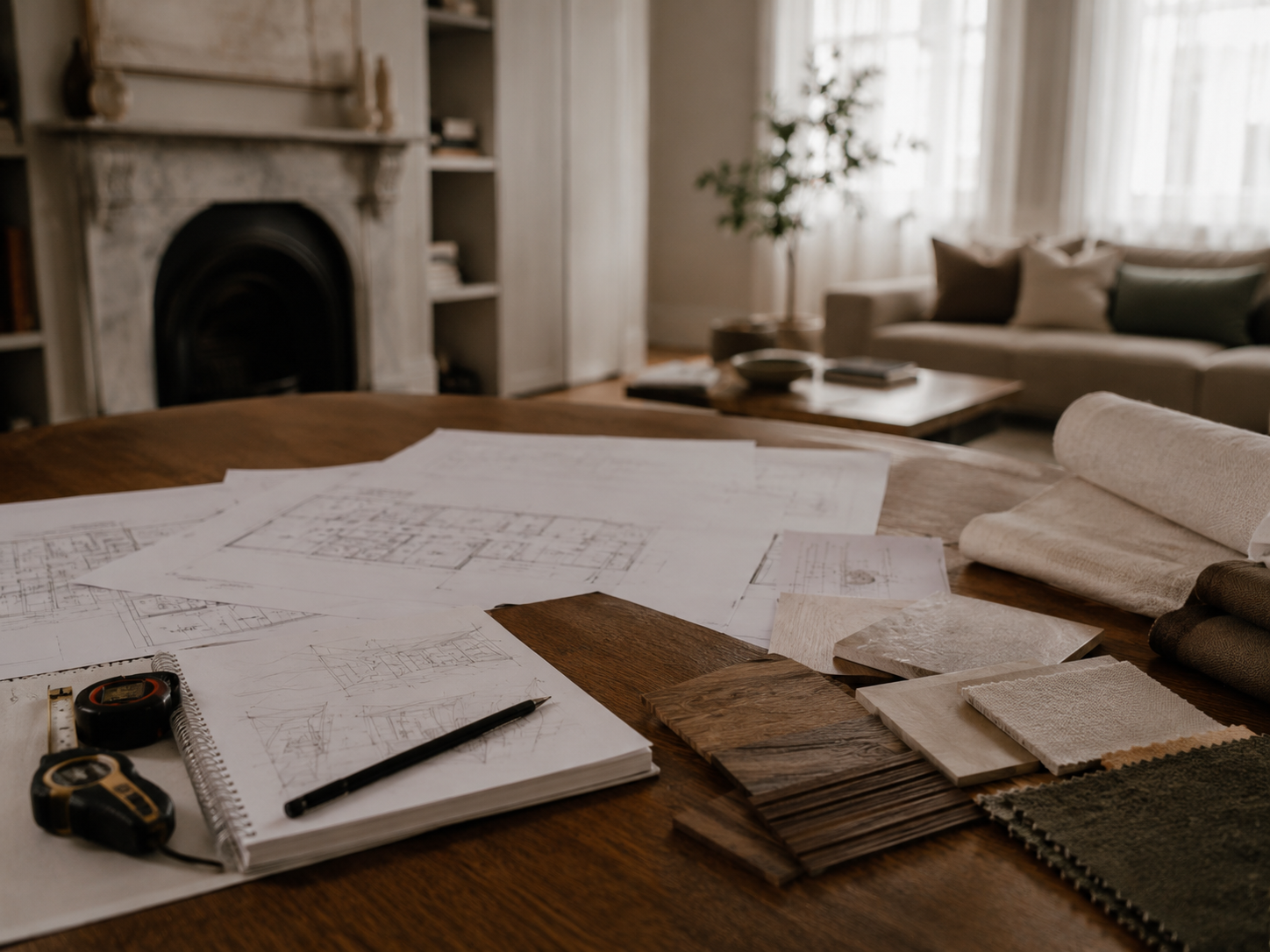
Buildability and integration
In a period terrace, buildability is part of the acoustic design.
The building fabric presents real constraints: ceiling voids that may be inaccessible, party walls that are shared with neighbours, floor structures that transmit impact sound, and existing finishes that define the character of the space. Working within those constraints — rather than around them — produces better outcomes.
The design approach considered what could be achieved with existing wall and ceiling finishes in place, what would require careful coordination with trades, and where acoustic intent could be carried into details that a builder could practically execute. Discretion in the choice of treatment — materials that look like they belong — was treated as a design consideration, not an afterthought.

The experience
The acoustic design study produced a clearer picture of what the interior needed — and what it did not need.
Acoustic comfort in a period terrace is not primarily about silence or measured noise reduction. It is about how the space feels to move through and to spend time in: whether conversation is clear, whether sound from the street or from adjoining spaces is intrusive, whether the room has warmth and presence without harshness.
The outcome of this work is described in terms of design intent rather than measured performance. The study shows how acoustic reasoning, applied to a specific building type and spatial condition, can produce a design strategy that is both buildable and in keeping with the architecture.
The design value was in clarifying which acoustic issues belonged to construction, which belonged to room treatment, and which could be resolved through finishes, furnishings and detailing.
Treatment integration in a period terrace depends on coordination with existing finishes, junctions and ceiling voids. The design approach considered what could be changed without compromising the interior character, and what detailing a builder could realistically carry out.
The design study produced a clearer acoustic strategy for the interior — separating what the room needed in terms of sound privacy from what it needed in terms of reverberation and comfort. The outcome is described in terms of design intent rather than measured performance.
That acoustic comfort in a period terrace can be designed around the existing architecture — with treatment that responds to heritage character, realistic construction limits, and the way a home is actually used.
Working through an acoustic project in a terrace or period home? The constraints are specific — and so is the approach.