
Music Practice Room Acoustic Design for Rehearsal and Teaching
TL;DR
A music practice room should be designed around the instrument, playing level, room location and people affected by the sound.
- Define whether the priority is room tone, sound isolation or both.
- Match treatment and construction to the instrument and expected loudness.
- Balance absorption with enough room response to support confident playing.
- Treat doors, windows, junctions and ventilation as parts of the acoustic system.
- Plan teaching and rehearsal rooms for speech clarity, ensemble balance and repeated use.
- Use realistic expectations in apartments, shared buildings, garages and small rooms.
The key point: a successful practice room coordinates musical response, isolation, comfort and buildability rather than relying on acoustic panels alone.


.avif)
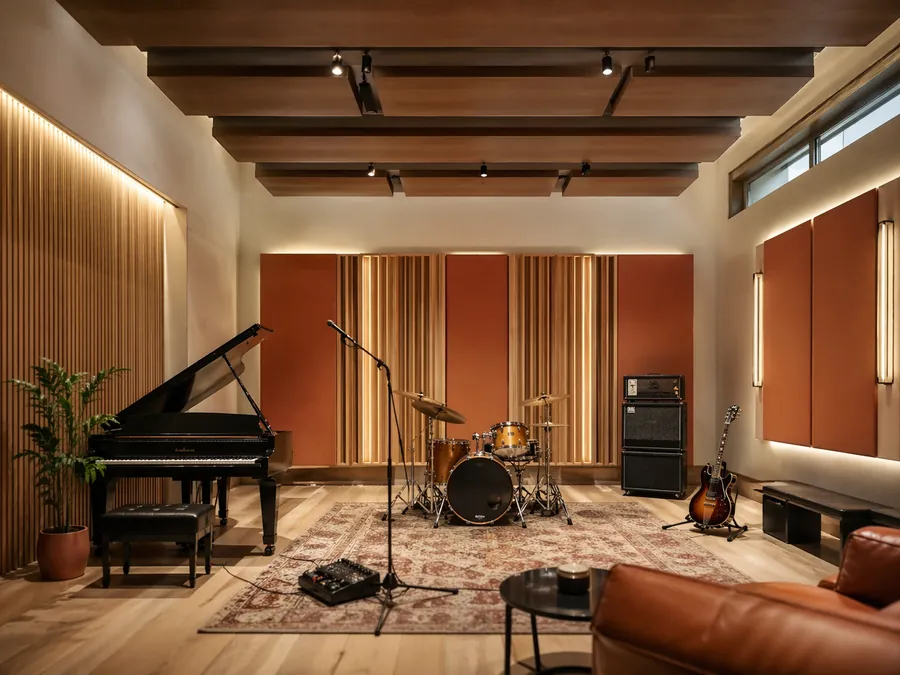
Music practice room acoustic design coordinates the sound inside the room with the sound that may reach family, neighbours or adjoining spaces. This guide explains how instrument type, loudness, room tone, isolation, ventilation and construction shape a practical room for rehearsal, teaching and regular playing.
What Is Music Practice Room Acoustic Design?
Music practice room acoustic design is the process of shaping a room for repeated playing, rehearsal or teaching. It may address internal room tone, reverberation, sound isolation, treatment placement, background noise, ventilation, comfort and durability.
The design should begin with a clear brief: what will be played, how loudly, how often, at what times, and whether the priority is the sound inside the room, sound escaping from it, or both.
What Should a Successful Practice Room Achieve?
A successful practice room should make playing easier without becoming harsh, tiring or acoustically flat. It should provide a useful response for the musician, appropriate clarity for teaching or rehearsal, and a realistic level of protection for surrounding spaces.
- Enough control to reduce harsh reflections and fatigue.
- Enough liveliness to preserve articulation, dynamics and musical confidence.
- Isolation suited to the instrument, building and expected playing times.
- Quiet, comfortable ventilation for regular use.
- Durable treatment that works around instruments, storage and circulation.
Who Does This Guidance Apply To?
This guidance applies to musicians, teachers, families, architects and project teams planning a spare-room conversion, teaching studio, rehearsal room, drum room, piano room, garage or outbuilding. The required scope differs substantially between quiet individual practice and loud or amplified use.
How Do Treatment and Sound Isolation Differ?
Acoustic treatment changes how a room sounds inside, while sound isolation reduces transfer to other rooms or properties. Many practice rooms need both, but they require different decisions.
| Acoustic task | What it addresses | Typical design considerations | Important limitation |
|---|---|---|---|
| Room treatment | Harsh reflections, reverberation, clarity and playing comfort. | Wall and ceiling absorption, low-frequency control, furnishings and placement. | It does not by itself stop sound reaching neighbours or adjoining rooms. |
| Sound isolation | Airborne and structure-borne transfer into or out of the room. | Walls, ceiling, floor, doors, glazing, seals, junctions, penetrations and services. | The result can be limited by flanking paths and existing construction. |
| Background-noise control | Traffic, services, fans, plumbing, computers and external activity. | Room location, glazing, doors, equipment and quiet ventilation. | Sealing a room without planning air movement can make it uncomfortable. |
What Factors Affect the Design?
Instrument Type and Loudness
The instrument determines the acoustic demand. Piano covers a wide frequency range; drums combine high levels, sharp transients, low-frequency energy and impact; brass and saxophone can be intense and directional; voice needs clarity and comfort; amplified instruments may place greater emphasis on isolation.
A quiet writing room and a drum room should not receive the same treatment or construction scope. Loud sources create more reflected energy inside the room and more transfer to surrounding spaces.
Room Size, Tone and Layout
Small rooms can become loud, sharp or boxy because reflections return quickly and low-mid energy can build up. Thin treatment may reduce high frequencies while leaving lower-frequency problems, creating a room that sounds dull and boxy at the same time.
The aim is a useful room tone. Teaching rooms need speech clarity as well as musical response, while rehearsal rooms need players to hear timing, pitch, articulation and each other without being forced to play louder.
Doors, Windows and Ventilation
A lightweight door, poor seals or a large undercut can limit the room even when the walls are reasonably solid. Windows can affect isolation and create strong reflections; their glass, frame, seals, operable sections and installation all matter.
Ventilation should be planned early when isolation is required. Opening a window or adding a noisy fan later may undermine isolation, recording use or focused practice.
What Are the Important Limitations?
General treatment advice cannot establish the isolation performance of a particular room. The result depends on the instrument, playing level, existing construction, direct and flanking paths, doors, windows, services and what can be built.
- A few panels will not isolate an acoustic drum kit.
- Electronic drums may still transfer impact through pedals and structure.
- Apartment and shared-building constraints may limit loud or late use.
- Garages and outbuildings may require sealing, lining, doors, ventilation and thermal work before treatment is useful.
- Heavy curtains may soften reflections but are not a complete isolation solution.
What Should Be Prepared Before Requesting Advice?
- Room plans, approximate dimensions and photographs.
- Instrument types, amplification and expected playing levels.
- How often the room will be used and at what times.
- Nearby bedrooms, neighbours, shared walls and sensitive spaces.
- Whether recording, streaming or online teaching is expected.
- Existing doors, windows, floors, ceilings and ventilation.
- Storage, lighting, power and circulation requirements.
- The proposed renovation stage, budget and desired outcome.
When Should Acoustic Advice Be Sought?
Seek acoustic advice before converting a room, buying treatment or starting construction when loud instruments, regular teaching, rehearsal, neighbour impact or recording use is involved. Early advice can clarify the best room, the main acoustic task and a buildable upgrade path.
Explore music and studio acoustic design, or arrange an on-site acoustic consultation where diagnosis is needed. Related guidance covers studio sound isolation and neighbour impact, critical listening room design and vocal booth and recording room design.
Final Takeaway: Design Around the Music and the Building
A practice room works when its musical response, isolation, comfort and construction are considered together. Define the instrument, loudness, location and constraints first, then use that brief to guide treatment, openings, services and buildable details.
Discuss a music practice room project before the layout or construction scope is fixed.
Frequently Asked Questions
Music Practice Room Acoustic Design
Acoustic design for practice, rehearsal and teaching rooms, coordinated with isolation, ventilation, interiors and construction.
Music Practice Room Acoustic Design
Acoustic design for practice, rehearsal and teaching rooms, coordinated with isolation, ventilation, interiors and construction.
Read Nicholas Marriott's bio